In this article
The Software Development Lifecycle (SDLC): Build Software That Lasts
Tech & Infrastructure
Every missed deadline, blown budget, and “we built the wrong thing” product is usually born not from bad code but from the absence of a system. The software development lifecycle (SDLC) is exactly that system: a set of sequential stages that turns a hazy idea into a working, maintainable product. It does not guarantee success […]
Every missed deadline, blown budget, and “we built the wrong thing” product is usually born not from bad code but from the absence of a system. The software development lifecycle (SDLC) is exactly that system: a set of sequential stages that turns a hazy idea into a working, maintainable product. It does not guarantee success on its own, but it gives a team a shared map — everyone knows which step they are on, what is already done, and what comes next. Without that map, even talented engineers drift into chaos, rework, and mutual misunderstanding.
What the Software Development Lifecycle (SDLC) Actually Is
The software development lifecycle is a structured process that describes how a software product travels from concept to retirement. It breaks the large, fuzzy task of “build an app” into manageable phases with clear inputs, outputs, and completion criteria. Classically, teams distinguish planning, requirements analysis, design, development, testing, deployment, and maintenance, though the number and names of the stages vary across sources. The core idea stays the same: each phase relies on the results of the previous one and prepares the ground for the next.
The value of the SDLC is not in bureaucracy but in predictability. When the process is formalized, risks surface earlier, changes cost less, and quality stops depending on the heroics of individuals. A software development lifecycle lets managers gauge progress objectively rather than by gut feeling, while protecting the team from endless edits when requirements shift every day. It is the foundation on which specific methodologies are later built — from strict waterfall to flexible Agile.
Planning in the Software Development Lifecycle
Planning is the stage where an idea first collides with the reality of constraints. Here the team defines the product’s goal, target audience, rough budget, timeline, and available resources. Mistakes baked in at this step of the SDLC are the most expensive, because they ripple through every phase that follows: a team can flawlessly design and build a product the market simply does not need. That is why mature teams spend time researching competitors, assessing technical feasibility, and aligning expectations with stakeholders.
A practical example: a startup that wants to launch a marketplace has to decide during planning not “which language to write the backend in,” but whether the budget covers moderation, payment integration, and support. Often this is where the decision to cut the first version down to a viable minimum (MVP) is born, so the hypothesis can be tested faster. Planning in the software development lifecycle is the art of dropping what is unnecessary before it eats your resources.
Typical outputs of this stage worth writing down:
- A product vision and measurable business goals.
- A risk assessment and a mitigation plan.
- Rough timelines, budget, and team composition.
- The success criteria the result will be measured against.
Requirements Analysis: The Foundation of the SDLC
Requirements analysis turns a general vision into concrete, verifiable statements about what the system must do. Here the team gathers functional requirements (what the product does) and non-functional ones (how fast, secure, and reliable it is at doing it). Underrating non-functional requirements is a classic trap: the team implements every feature and then discovers the system buckles under a hundred concurrent users. Solid analysis at this stage of the software development lifecycle saves months of rework.
The key difficulty is that requirements are almost always incomplete and contradictory, because the client themselves does not always know what they want until they see a first prototype. So analysts use interviews, use-case scenarios, mockups, and user stories to draw implicit expectations out into the open. A well-formed requirement is unambiguous and testable: not “the site should be fast,” but “the page loads in under two seconds on 4G.”
The output of this phase is an agreed specification that becomes the source of truth for every later step of software development. Its value lies in recording the agreements: when a dispute erupts during testing — “was it supposed to work like this?” — the answer is sought right here. Without this document, a team risks arguing for years about what was actually promised to the client.
Designing the Architecture in the Development Lifecycle
At the design stage, requirements turn into a technical plan for how the system will actually be built. Here the team defines the architecture — monolith or microservices — chooses databases, works out the module structure, the interaction interfaces, and the approach to security. This is the moment in the SDLC when the hardest-to-reverse decisions are made: swapping a button is easy, but rewriting the architecture for a new type of load is often months of work.
Design is usually split into two levels. High-level design describes the system as a whole: what components exist, how they communicate, where the boundaries of responsibility run. Low-level design drills down into the details of individual modules — specific classes, tables, algorithms. Good design in the software development lifecycle balances future flexibility against present-day simplicity, without trying to foresee absolutely everything, yet without cornering the product either.
A practical illustration of why this stage matters: a team designing a payment-processing system has to build in idempotency on paper — the guarantee that a repeated request will not charge the money twice. If this is not considered at the design stage and only discovered in production, the cost of the mistake is measured in real customer funds and reputation. That is exactly why design is regarded as one of the most consequential steps in software development.
Development and Coding of the Software
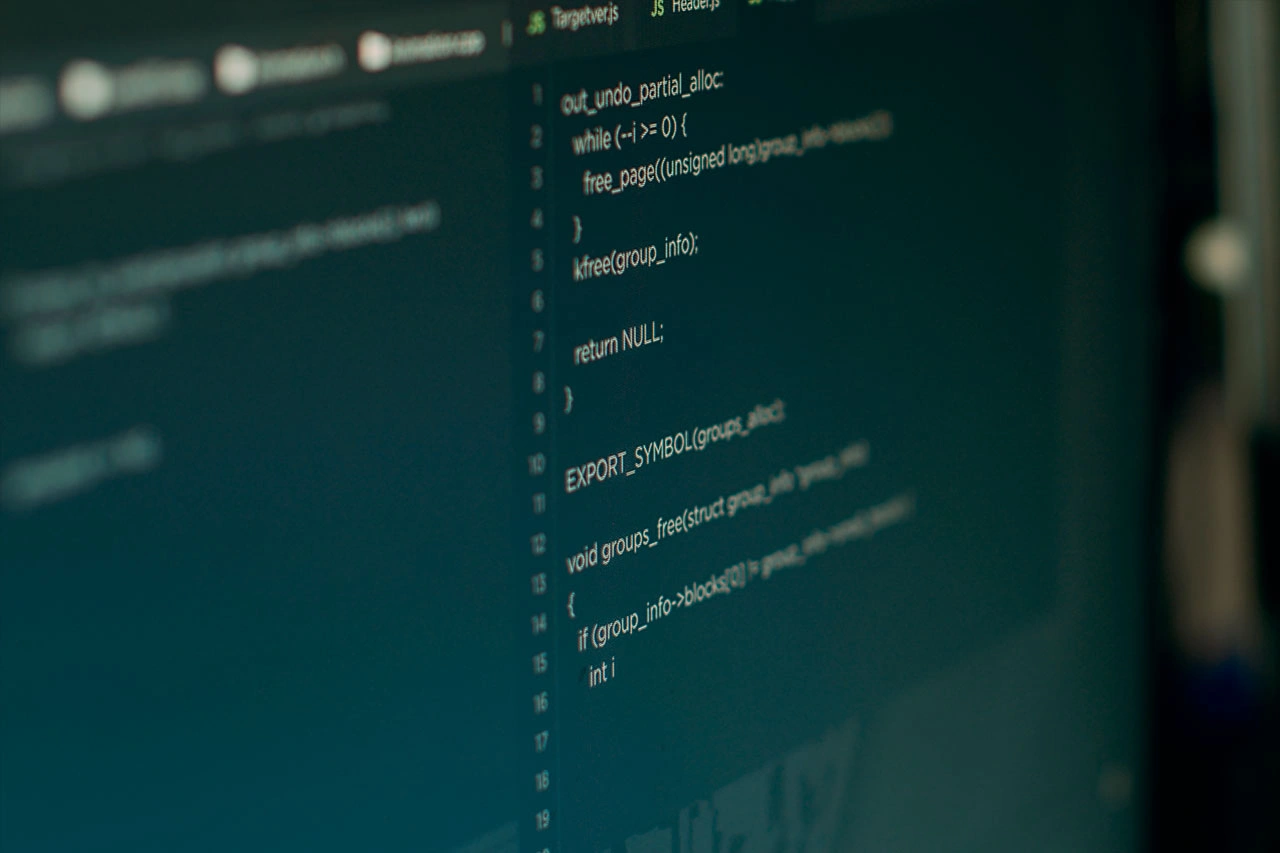
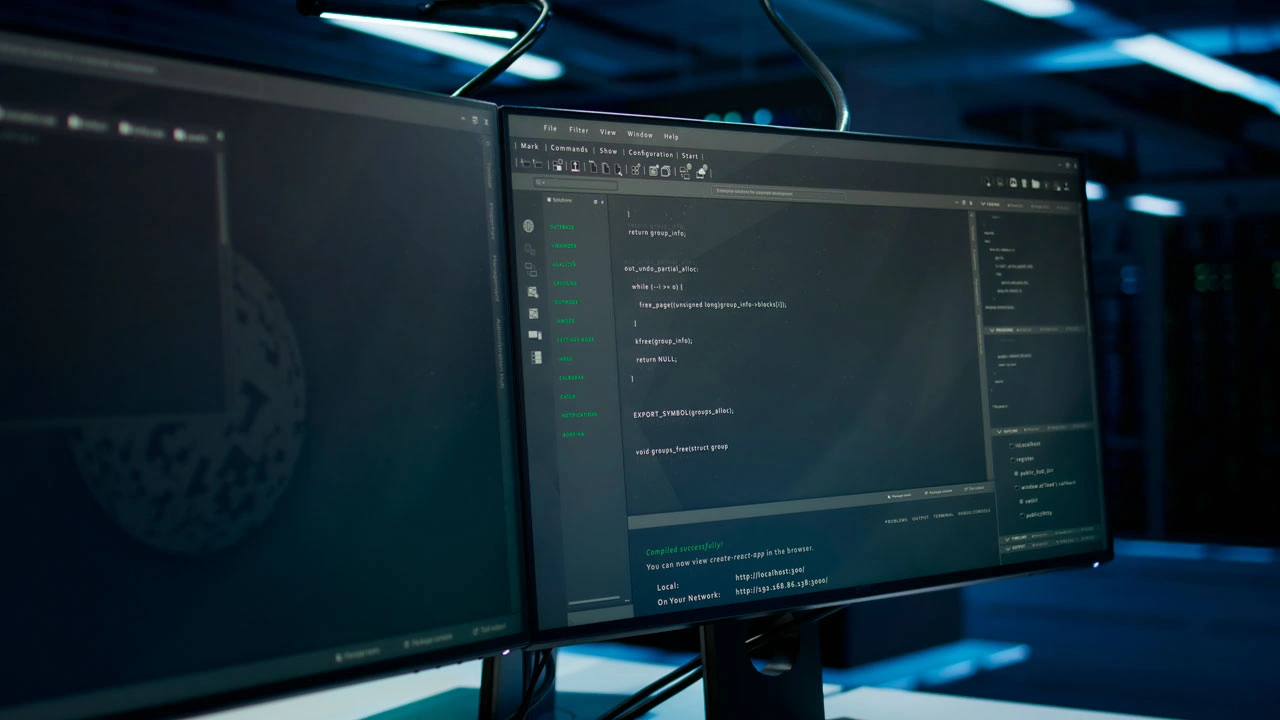
Development is the phase most people picture when they hear the word “programming”: engineers write code according to the approved design. In reality this is often the most predictable stage of the SDLC when the earlier steps were done well, because the team already knows what to build and how. Coding standards, version control, code review, and automation gain weight here, because they determine how easily the product will evolve afterward.
The key to healthy development is not the speed of writing lines but the clarity and maintainability of the result. Code is read far more often than it is written, so investment in cleanliness, tests, and documentation pays off many times over during maintenance. Practice shows that teams which skip code review to save time later spend that time several times over hunting for bugs a colleague could easily have caught during review.
It is important to understand that in a modern software development lifecycle, coding is rarely an isolated block. In agile approaches, development, testing, and even requirements gathering happen in parallel across short iterations. But even then the act of writing code obeys the same principles: lean on the design, follow the standards, and leave behind a product the next engineer can make sense of.
Testing as a Critical Stage of the SDLC
Testing exists to find defects before the user does. It is not a one-off check at the end but a system of measures at different levels that together provide confidence the product works as intended. The later a bug is found, the more expensive it is to fix: a bug caught at the design stage costs pennies, while the same bug in production can cost thousands of times more. That is why a mature software development lifecycle embeds quality checks into every phase rather than leaving them “for later.”
Testing can be manual or automated, and in modern teams the balance is shifting ever more toward automation, because it lets you verify the product on every code change without exhausting routine. Automated tests become insurance: they signal instantly when a new feature has broken an old one. This is especially critical in projects where a release happens daily or even hourly.
The main levels of verification worth building into the software development process:
- Unit tests — check individual functions and components in isolation.
- Integration tests — make sure modules work correctly together.
- System tests — evaluate the behavior of the product as a whole.
- Acceptance tests — confirm the system meets the original requirements.
Deployment and Rollout of the Software
Deployment is the moment the product finally reaches real users. At first glance it looks like a technical trifle, but a wealth of risks hides here: the server configuration differs from the test environment, the database needs migration, and peak traffic behaves nothing like synthetic load. So in a mature SDLC, deployment long ago stopped being a manual event and became an automated, repeatable process.
Modern practices — continuous integration and continuous delivery (CI/CD) — let teams ship updates in small, frequent portions instead of rare, sweeping releases. This lowers risk: if something goes wrong, rolling back a tiny change is far simpler than untangling the fallout of a massive update. Strategies such as staged rollouts or running a new version alongside the old one make it possible to catch problems on a small slice of users before they hit everyone.
In practice, the difference between teams is most visible right here. Some fear releases and do them once a quarter, turning each into a sleepless, stressful night. Others have built the process so that deployment in the software development lifecycle is a routine, boring, safe operation that can be repeated at any hour. The second model almost always means a more stable product and a calmer team.
Maintenance and Support in the Development Lifecycle
A common illusion is that the work ends at release. In reality, maintenance usually occupies the larger part of a product’s life and often consumes the bulk of the total budget. At this stage of the SDLC the team fixes bugs that surfaced only under real conditions, adapts the product to new market demands, updates dependencies for security, and gradually grows the feature set. A product that is not maintained ages and becomes unsafe faster than it seems.
Maintenance is usually split into several types: corrective (fixing defects), adaptive (adjusting to environmental changes, such as a new OS version), perfective (adding capabilities on user request), and preventive (refactoring that reduces future risk). A healthy team does not wait for technical debt to become critical, but pays it down steadily, like interest on a loan. Otherwise every new feature costs progressively more.
It is precisely during maintenance that all the earlier investments in quality pay off. Clean code, test coverage, and clear documentation turn support from a pain into a manageable task. And conversely: a product built “just to ship it fast” turns the software development lifecycle into endless firefighting, where every fix spawns two new problems.
Software Development Lifecycle Models: From Waterfall to DevOps
The stages of the SDLC are the “what” you have to do; the models are the “in what order and rhythm.” The choice of model determines how rigidly the phases follow one another and how the team reacts to change. There is no universally correct model: an approach ideal for medical equipment with fixed requirements is ruinous for a startup searching for its product in a live market. Team maturity is the ability to consciously pick a model to fit the context, rather than blindly copying a fashionable methodology.
The most common software development lifecycle models have different strengths:
- Waterfall — strictly sequential phases; predictable but inflexible to change.
- Iterative and incremental — the product is grown in parts, each adding value.
- Spiral — emphasis on early risk detection through repeated cycles.
- V-model — each development stage has its matching level of testing.
- Agile — short iterations, close contact with the client, flexibility to change.
- DevOps — erasing the line between development and operations for fast, reliable releases.
Agile and DevOps in particular lean on visual workflow tools, and Kanban is the most recognizable of them. A Kanban board maps every task onto columns that mirror the flow of work — from a backlog through active development, review, and release — so the whole team sees at a glance where each item stands and where the bottlenecks are.
In practice, most modern teams do not follow any single model in its pure form but combine them to suit their needs. A startup might work in Agile with elements of DevOps, while a bank might blend an iterative approach with the strict documentation of waterfall for regulatory requirements. Understanding the logic of each model matters more than knowing its name: it lets you tune the software development process deliberately instead of fighting an ill-fitting template.
Conclusion: The SDLC as the Basis of Mature Development
The software development lifecycle is not a bureaucratic formality but a way to make building a product predictable, manageable, and resilient to mistakes. Each of its stages, from planning to maintenance, solves its own task and relies on the previous one, and together they turn chaotic creativity into engineering discipline. Teams that grasp this logic catch expensive mistakes earlier, implement changes more cheaply, and build products that live for years rather than crumbling after the first release.
The main point is simple: the SDLC does not dictate a single correct path but provides a structure within which the team chooses the model and practices to fit its context. A startup and a bank will build the process differently, but both benefit from a clear understanding of which stage they are on and what comes next. To master the software development lifecycle is to stop relying on luck and start managing the outcome deliberately — and that is exactly what separates a mature team from a group of talented individuals.
Author