


Hire Django Developers
62 days. That is how long the average Django developer hire takes. Senior candidates are off the market in 10. Meduzzen matches you with pre-vetted senior Django engineers in 48 hours, at $35/hr, with no platform fees and full code ownership.
Hire Django developers-
Top-rated
agency on Upwork -
370+
verified client reviews -
100%
Job Success
Django developers for hire, vetted and ready to start
Explore the Talent Lab




Value Proposition
What changes when you hire Django developers the right way

Vetted Django developers
Hire Django developers with real deployment experience across DRF APIs, Celery backends, and AI-integrated applications at scale.

Senior-backed matching
We match you with the right Django engineers and support every engagement with senior architecture review and technical guidance.

Fast onboarding
Skip the 62-day Django hiring cycle and start with pre-vetted engineers in 48 hours without delivery delays or friction.

Full Django stack coverage
Hire one Django developer, add a DRF specialist, or build a dedicated Django team around your product and roadmap.

Direct communication
Work directly with your Django developers for faster feedback, clearer coordination, and smoother execution across teams.

Fast replacement
If the fit is not right, we replace the developer within days so delivery keeps moving. No restarts. No lost momentum.
Vetted Django developers
Hire Django developers with real deployment experience across DRF APIs, Celery backends, and AI-integrated applications at scale.
Senior-backed matching
We match you with the right Django engineers and support every engagement with senior architecture review and technical guidance.
Fast onboarding
Skip the 62-day Django hiring cycle and start with pre-vetted engineers in 48 hours without delivery delays or friction.
Full Django stack coverage
Hire one Django developer, add a DRF specialist, or build a dedicated Django team around your product and roadmap.
Direct communication
Work directly with your Django developers for faster feedback, clearer coordination, and smoother execution across teams.
Fast replacement
If the fit is not right, we replace the developer within days so delivery keeps moving. No restarts. No lost momentum.
Engagement models
Flexible ways to hire dedicated Django developers
Industries we serve
Hire Django developers with experience in your industry
Skills Grid
Hire Django developers by framework, library, and stack
Core Django:
- Django 5.x
- Django REST Framework
- Django ORM
- Celery
- Django Admin
Databases:
- PostgreSQL
- Redis
- MySQL
- ElasticSearch
- Kafka
Cloud and DevOps:
- AWS
- Docker
- Kubernetes
- CI/CD
- Nginx
APIs and integrations:
- GraphQL
- REST APIs
- WebSockets
- OAuth2 / JWT
- OpenAI / LangChain
How it works
How we match you with the right Django developers
Share requirements
Tell us about your Django project, backend architecture, tech stack, and the type of engineers you need.
Review matched developers
We shortlist Django developers who match your framework experience, working style, and delivery goals.
Interview developers
Meet the Django engineers, assess technical depth on your specific use case, and choose the right fit.
Start in 48 hours
Move forward quickly with pre-vetted Django developers, clear next steps, and no hiring delays.
Stories behind the success
What Meduzzen Django teams have shipped
What our clients say
100% Job Success on
Upwork
Reviewed on


100% Job Success

Top Rated Plus
I had the pleasure of working with Meduzzen team, and I can confidently say they are one of the most talented Full Stack Developers I've come across. Their expertise in React and Python is outstanding, seamlessly handling both front-end and back-end development with precision and efficiency.

Full Stack development
Farhan Mahmood
AcademixHub · United Kingdom
Roman completed a Google Maps API project for us and helped with other front-end development work that required Jekyll and Django knowledge. He is responsive and easy to work and communicate with. I am sure we will work again in the future.

Front-End Developer for Google Maps API integration
Nikola Stefanov
Long Tail Marketing Limited · Canada
Great engineer, strong logic when approaching tasks and epics with the ability to bring new ideas and his experience to ensuring each project is built to the best standard.

Senior Back-End Engineer (Python, AWS CDK, FastAPI)
Jakub Lenski
Saber AI · United Kingdom
Very technical developer, helped build a custom Telegram script and additional development work. Will continue to work with – great communication and support. Thanks

Telegram Bot – scripting and automation expert
Tom Curry
Atlanta Group · United Kingdom
Very good communication. Very good web scraping work on a YouTube proxy project with Google Cloud support. I highly recommend Maksym for future web scraping projects.

YouTube Scraper – Production Debugging & DevOps Project
Gil Hildebrand
Supercharger Studio · United States
Working with Mark has been a great experience. He’s a talented developer who communicates tasks clearly and effectively. He takes initiative in solving complex problems and collaborates well with the team. His insights into our software design have been invaluable. Thank you for your dedication and hard work!

Python Expert with Fast API know-How
Emre Isik
skillbyte GmbH · Germany
Extremely experienced and professional freelancer. Hands-on approach with great attention to detail. Delivered high-quality results efficiently and independently. Highly recommended for any project requiring expertise and reliability.

Experienced Python Developer Hotfix Development
George Barsan
Damudo GmbH · Austria
Andrey is a reliable developer that is not afraid to take on any challenging task. He helped me with various n8n and zapier integrations with ghost and sendy and was always professional in his demeanour.

Ongoing dev troubleshooting
Barnaby Nagy
Common Sense UX Ltd · Colombia
Dmytro provided a python script that exactly satisfied my requirements. The code was very clean and logically structured. He made sure it worked in my application. I don't think he could have done a better job.

Full Time: Data Management and Business Analyst
David Greenbaum
OnPlan · United States
Vitaliy was excellent, he went over and above to deliver the project swiftly and provide a high-quality end product. Thank you!

Web Development using web scrapers and data analytics
Georgia Richards
Richello Limited · United Kingdom
An exceptional designer with a great eye for detail and creativity. Consistently delivers high-quality work, meets deadlines, and is a pleasure to collaborate with. Highly recommended!

UI/UX Designs figma
Farhan Mahmood
AcademixHub · United Kingdom
We enjoy working with Kirill very much. He is a reliable and skilled developer.

Developer for ML cloud platform developed in python and node.js
Kim Fanger
elunic AG · Germany
Its a pleasure to work with Andrew, he is a skilled engineer and he always deliver up to the expectations.

Cypress tests automated in github actions
Roch Delsalle
Roch & Cie · France
Working with Yurii has been a real pleasure. He is incredibly professional, responsive, and reliable. Every task was completed with attention to detail, clear communication, and a proactive mindset. What really stood out was his positive attitude, patience, and willingness to go the extra mile to make sure everything was just right. It’s rare to find someone who combines technical skills with high professionalism and kindness. I would highly recommend Yurii to anyone.

WordPress Developer
Ihor Zhabrovets
Amevalue · Ukraine
Comparison Section
How much does it cost to hire Django developers in 2026?
|
Key hiring factors
|

|
Talent Networks
|
Freelance Marketplaces
|
|---|---|---|---|
|
Developer vetting
|
Senior Django engineer screening
|
Algorithm tests + interviews
|
No platform vetting
|
|
Architecture involvement
|
Senior Django architecture review
|
Depends on developer
|
No architecture support
|
|
Matching speed
|
~48 hours
|
2 days–2 weeks
|
Instant access, slow vetting
|
|
Platform fees
|
No platform fees
|
Placement fees / subscription
|
Transaction fees
|
|
Dedicated developers
|

|

|
|
|
Replacement guarantee
|
|
Depends
|
|
|
Direct communication
|
Direct with developers
|
Platform-managed communication
|
Direct but unmanaged
|
|
Team scaling
|
1 Django developer → full Django team
|
Mostly individual hires
|
Individual freelancers
|
|
Project accountability
|
Shared delivery responsibility
|
Freelancer responsible
|
Client responsible
|
|
Long-term collaboration
|
|
Mostly project-based
|
|
Start working with vetted Django developers in 48 hours
- No recruitment fees
- Start in 48 hours
- Transparent process.
Remote Django developer rates
How much does it cost to hire Django developers in 2026?
| Experience | Meduzzen | Toptal | Upwork | Lemon.io | In-house (US) |
|---|---|---|---|---|---|
| Mid-level Django developer | $30-35/hr | $60-120/hr | $39-55/hr | $40-49/hr | $111/hr (loaded) |
| Senior Django developer | $35/hr | $120-150+/hr | $55-75/hr | $49-67/hr | $148/hr (loaded) |
| Hiring time | 48 hours | 1-3 weeks | 1-4 weeks | 48 hours | 59-90 days |
| Platform fees | None | $500 deposit + $79/mo | 3-10% client fee | ~40-60% embedded markup | N/A |
| Hidden costs | None | 30-50% markup in rate | Contract initiation fee | Off-platform fee, hour minimums | Benefits, recruiting ($26-44K), overhead |
Hiring Guide
How to hire Django developers in 2026
Contents
You need a backend for your product. You need it built fast, built securely, and built to scale without rewriting everything in six months. That is what Django does. It powers over 270,000 live websites and is deployed by 42,880 companies globally, from Instagram and Pinterest to Robinhood and Mozilla (JetBrains State of Django 2025).
The framework is not the problem. Finding a developer who understands it at a production level is.
This guide covers what a Django developer actually does, what the role costs, how to tell if a candidate is real, and where to find one in 2026. Whether you are a CTO scaling a team or a founder building your first product, every number here is sourced and every recommendation is based on data.
What is a Django developer?
A Django developer is a Python backend engineer who builds and maintains web applications using the Django framework. If you are not technical, think of it this way: Django is the engine that runs the backend of your product. It handles your database, your user accounts, your security, and the way your application talks to the outside world through APIs.
Django is a “batteries-included” framework. That means it comes with everything a development team needs out of the box: a system for managing your database (the ORM), user authentication, an admin panel for your operations team, URL routing, form handling, and built-in security protections against the most common web attacks. Your development team does not have to build these from scratch, which saves weeks of development time.
What a Django developer is not
A Django developer is not a frontend engineer. They do not build the visual part of your product that users see and click on. That is a React or frontend developer. A Django developer is also not a general Python developer. A data scientist who writes Python for machine learning pipelines does not know how to design a REST API, manage database migrations safely, or configure background task processing for a production system.
If someone says “I know Python” it does not mean they know Django. Django is one of several Python specializations, and it requires a distinct set of production skills.
Django developer vs FastAPI developer
Both write Python. Both build backends. But they operate in different contexts. A Django developer builds complete applications with complex data models, admin tooling, and deep user permission systems. A FastAPI developer builds lightweight, high-performance microservices and AI inference endpoints.
In 2026, most production architectures use both: Django as the central application layer that manages data, authentication, and business logic, and FastAPI for isolated high-concurrency endpoints like AI model serving or real-time data streaming. Django holds 74% market share among Python web developers. FastAPI holds 14.8% adoption with 40% year-over-year growth (Stack Overflow Developer Survey 2025).
Full-stack Django developer
A full-stack Django developer handles both the backend and the frontend. In 2026, the standard full-stack Django pattern is Django combined with HTMX, a lightweight library that lets Django developers build interactive user interfaces without writing JavaScript frameworks like React or Vue. HTMX adoption among Django developers grew from 5% to 24% between 2021 and 2025 (JetBrains State of Django 2025).
This makes a full-stack Django developer a strong choice for internal tools, admin-heavy platforms, and SaaS products that do not require a separate JavaScript frontend.
What does a Django developer own in your product?
If you are building a SaaS platform, a marketplace, or a data-driven web application, a Django developer owns the parts of your product that users do not see but that make everything work.
The backend API
This is how your frontend (the part users see) communicates with your database and business logic. A Django developer builds this using Django REST Framework or Django Ninja. Every button click, form submission, and data request from your mobile app or website goes through these API endpoints.
The database layer
Your product stores data: user accounts, transactions, content, settings. Django’s ORM (Object-Relational Mapping) lets the developer manage this data through Python code instead of writing raw database queries. 76% of Django developers use PostgreSQL as their primary database (JetBrains State of Django 2025).
Background processing
Tasks that cannot run in real time: sending emails, generating reports, processing payments, syncing data with third-party services. A Django developer builds these using Celery with Redis, a task queue system that runs these operations in the background without slowing down your application.
Authentication and permissions
Who can log in, who can see what, who can change what. Django’s built-in authentication system handles user accounts, passwords, sessions, and role-based access control. For multi-tenant SaaS applications where different companies share the same platform, the permission layer is one of the most critical parts of the architecture.
The admin panel
Django generates an admin interface automatically from your database models. Your operations team, customer support staff, and internal analysts can manage application data without needing engineering support. This is one of Django’s most significant advantages for business owners: it saves thousands of dollars in custom internal tool development.
What a Django developer does not own
They do not own the frontend (that is a React developer), the cloud infrastructure (that is a DevOps engineer), or the machine learning models (that is a data scientist or AI engineer). But they own every integration point where those systems connect to the Django backend.
Django vs FastAPI: which framework does your project need?
This is the most searched Python framework question in 2026. “FastAPI vs Django” returns 300 monthly US searches with keyword difficulty 1 and a growing trend (Ahrefs, June 2026). The question matters because choosing the wrong framework wastes months of development time and forces an expensive rewrite.
When Django is the right choice
Django is right for your project if you need:
- Complex relational data (users, organizations, transactions, content with relationships between them)
- A multi-tenant permission system (different companies or user roles accessing different data)
- An admin panel for non-technical staff to manage data
- Built-in security defaults (CSRF protection, SQL injection prevention, XSS protection)
- A team that needs strong architectural conventions to work consistently
Django saves 3 to 6 weeks of development compared to building equivalent infrastructure from scratch (Django Developer Hiring Data Request, 2026). For SaaS platforms, marketplaces, fintech applications, and content-heavy products, Django is the established standard.
When FastAPI is the right choice
FastAPI is right if you need:
- A lightweight API for a microservice with a bounded scope
- High-concurrency endpoints handling thousands of simultaneous requests
- Real-time WebSocket connections
- AI model inference APIs or ML pipeline serving
FastAPI does not include an ORM, an admin panel, built-in authentication, or session management. If your project needs these, you either build them yourself or you use Django.
The production architecture most companies actually use in 2026
The answer is not “Django or FastAPI.” It is both, separated by workload type.
Django serves as the control plane: it manages all relational data, complex business workflows, multi-tenant authorization, billing logic, and the admin panel. FastAPI runs as the execution plane: isolated microservices handling AI inference, real-time streaming, and high-concurrency data ingestion.
An API gateway routes requests to the correct service. This hybrid architecture is the standard for 50-to-500 person companies running complex platforms (Python Web Framework Comparison for CTOs, 2026).
What this means for hiring: If your product needs both, hire a senior Django developer with FastAPI exposure. The Django developer manages the ORM, migrations, permissions, and the admin. FastAPI endpoints are bounded additions to that foundation.
What does a senior Django developer need to know in 2026?
Seniority is not measured by years on a resume. It is measured by the ability to prevent and diagnose failure in production systems. If you are a non-technical founder, this section tells you what to look for so you can evaluate whether a candidate’s skills match what your product actually needs.
ORM depth and database performance
The most common performance problem in Django applications is the N+1 query problem. In plain terms: the application sends too many individual requests to the database instead of one efficient request. Under real traffic, this slows your application exponentially.
A senior Django developer prevents this proactively using select_related and prefetch_related, two Django tools that combine multiple database requests into one. A candidate who cannot explain the difference between them during a 10-minute conversation has not managed a production Django application under real load.
Async Django and modern deployment
Django 5.x introduced native async ORM operations and full ASGI compatibility. In non-technical terms: Django can now handle many more simultaneous connections than before, which matters for real-time features and high-traffic applications.
A senior developer knows when async makes sense and when it does not. They understand the difference between deploying with Uvicorn (async, modern) versus Gunicorn (synchronous, traditional) and can configure hybrid routing through Nginx when both are needed.
Background task architecture with Celery
Background tasks are operations that cannot run in real time: sending emails, generating PDF reports, processing payment webhooks. A senior Django developer designs these tasks with the assumption that networks will fail, third-party APIs will rate-limit, and servers will restart unexpectedly.
The critical test: ask about retry strategy. A senior developer implements exponential backoff (increasing delays between retries: 2 seconds, 4 seconds, 8 seconds) and retry jitter (randomizing the retry timing). Without jitter, if 10,000 background tasks fail simultaneously during an outage, they all retry at the exact same millisecond, creating a thundering herd that re-crashes the system.
Django REST Framework vs Django Ninja
Django REST Framework (DRF) is the established standard, used by approximately 49% of Django developers. Django Ninja is a newer alternative that provides FastAPI-style ergonomics (automatic API documentation, type-safe validation) while keeping the full Django ORM and permission ecosystem.
A senior developer does not view these as competing choices. They can run both in the same application, mounting Django Ninja alongside DRF on different URL paths during an incremental migration.
Zero-downtime database migrations
Every production Django application needs database changes over time: new columns, renamed fields, new tables. Running these changes on a live application with millions of rows cannot block the application or cause downtime.
A senior developer uses a three-phase migration pattern: add the new structure and backfill data (phase one), deploy code that reads from both old and new structures (phase two), then remove the old structure after verifying data integrity (phase three). A candidate who cannot explain this has not managed a Django application in production under real load.
Django developer salary and hiring costs in 2026
The cost difference between hiring models is dramatic. A US in-house senior Django developer costs 4 to 5 times more per year than a staff augmentation engagement with equivalent talent from Ukraine.
Hourly rates by platform
| Platform | Senior rate | Details |
|---|---|---|
| Meduzzen | $35/hr | Staff augmentation, no platform fee |
| Lemon.io | $38-61/hr | 2,400 active contracts, 2026 |
| Upwork | $60-120/hr | No vetting, variable quality |
| Arc.dev | $80-150/hr | Vetting included |
| Toptal | $100-200/hr | Plus $500 deposit, $79/mo |
Annual salary by region
| Region | Senior base salary | Fully loaded cost |
|---|---|---|
| US (in-house) | $145K-175K | $229K-270K |
| UK | $90K-95K | $120K-140K |
| Germany | $76K-85K | $100K-120K |
| Poland | $70K-85K | $85K-100K |
| Ukraine (remote) | $57.6K-78K | $62K-84K |
| India | $18K-30K | $22K-36K |
Sources: Glassdoor, Robert Half, DOU.ua, Djinni Q1 2026, BLS ECEC December 2025. Fully loaded = base + 29.9% employer burden + recruiting fee + onboarding.
Why in-house hiring costs more than the salary
For a US in-house senior Django developer at $160,000 base: add $15,000 in payroll taxes, $22,000 in health benefits, $7,200 in 401(k) matching, and $5,000 in equipment and onboarding (Django Developer Hiring Data Request, 2026). That brings the real annual cost to approximately $229,000 before you account for the recruiting fee ($24,000 to $32,000 at 15 to 20% of base) and the 62-day hiring timeline.
The engineering sector averages 62 days from job post to start date for senior backend roles (Django Developer Hiring Models Comparison, 2026). Top candidates leave the market within 10 days of starting their search (Daily.dev, 2026). If your process takes 62 days, you are not choosing between candidates. You are choosing from whoever is left.
Django’s market position
An analysis of approximately 440,000 job postings on LinkedIn and Indeed in late 2024 and early 2025 found Django specifically requested in 56 listings out of 5,000 premium engineering roles, with a median advertised salary of $160,000 (Django Hiring Guide Data Request, 2026). Django is not a commodity skill. It is a specialized, high-value backend competency.
Why is it hard to hire Django developers?
Three structural problems create the difficulty: a talent pipeline gap, a tutorial-to-production skills gap, and candidate fraud.
The missing generation of mid-level engineers
Between 2022 and 2024, major technology companies executed layoffs and halted junior developer hiring. The share of junior developers in IT employment dropped from 15% to 7% over that period (SlashData 2025, Django Hiring Guide Data Request 2026). The developer population aged: developers aged 18 to 24 dropped from 33% in early 2022 to 23% in 2025.
Because the industry stopped training junior developers, there is now a missing generation of mid-level engineers in 2026. The pipeline from junior to senior takes 2 to 3 years. Without that pipeline, the senior talent businesses actually need is 40% scarcer than it was in 2025.
The total global developer population reached 47.2 million in 2025 (SlashData Q1 2025), up 50% since 2022. The volume at the top of the funnel does not translate to qualified candidates at the offer stage.
The tutorial-to-production gap
Django’s documentation and tutorial ecosystem are excellent. This creates a specific hiring problem: thousands of developers have completed tutorials, built portfolio CRUD applications, and listed Django as a primary skill on their resume. They have used Django. They have never maintained it in production.
For every 20 candidates who list Django as a primary skill, 3 to 4 have genuine production depth. The rest can build a blog application but cannot design a multi-tenant permission architecture, debug a Celery retry storm, or run a zero-downtime migration on a table with 50 million rows.
CV fraud and proxy interviews
The shift to remote work has enabled documented fraud across the software engineering industry. Hiring managers report fabricated resumes, AI-generated work histories, and proxy interviewing where the person visible on video is different from the individual answering technical questions (HackerNews, Reddit r/django, Reddit r/ExperiencedDevs).
Community discussions in r/django document hiring managers who received candidates claiming 5+ years of Django experience who could not explain the difference between select_related and prefetch_related during a live screen. This is not an edge case. It is a pattern.
Detection method: ask the candidate to draw a basic system architecture diagram on physical paper and hold it up to the camera. Legitimate candidates adapt immediately. Fraudulent candidates report technical difficulties or disable their cameras (Django Developer Hiring Guide, 2026).
The experienced pool does exist
77% of active Django developers have 3 or more years of experience (JetBrains State of Django 2025). The talent is there. The challenge is filtering 20 applications to find the 3 to 4 candidates with production depth, without burning 6 weeks of engineering time doing it.
How to evaluate Django developers before hiring
Most technical hiring processes for Django roles fail at the same point: they test the wrong things.
Do not use algorithm puzzles
Whiteboard algorithm tests are the most common hiring mistake. A 2022 meta-analysis across 10 hiring studies found near-zero correlation between algorithm puzzle performance and on-the-job engineering output (Sackett et al., Journal of Applied Psychology, 2022). A candidate who can solve dynamic programming problems under time pressure is not demonstrably a better Django developer.
The evaluation framework that works
Use three components in sequence:
Portfolio review
Ask to see the last two Django applications the candidate worked on in production. Not a GitHub portfolio project. A real application with real traffic. Ask: what was the database schema, what was the traffic level, what did they own, and what broke? The answers reveal production experience immediately.
Structured technical screen
Thirty to forty-five minutes. No puzzles. Use questions that require integrated production knowledge, not memorizable one-word answers:
- How would you design a multi-tenant SaaS permission system in Django?
- What happens when a DRF serializer method makes a database query inside a loop?
- Explain your Celery retry strategy for a payment webhook that times out
- How do you rename a column on a 50-million-row table without downtime?
Short code review exercise
Give the candidate a real Django view or model with 3 to 5 production issues embedded: an N+1 problem, a missing database index, a permission check that happens after a database query instead of before, a Celery task with no retry logic. Ask them to identify and fix the issues. Forty-five minutes maximum.
Red flags
A candidate who cannot explain select_related versus prefetch_related with a concrete example has not worked under real database load. A candidate who describes Celery retry as “just set max_retries=3” has not handled a production task failure. A candidate who cannot describe the difference between WSGI and ASGI deployment has not deployed Django 4.x or 5.x.
Green flags
A candidate who mentions prefetch_related limitations (for example, that it does not work across multiple database backends) has paid attention in production. A candidate who asks about your Celery broker configuration before answering the task queue question is thinking in systems.
Common mistakes when hiring Django developers
Hiring Django when you need FastAPI
If your entire project is a set of isolated, high-concurrency API endpoints for an AI inference layer, you need a FastAPI developer. Define the architecture before you define the role.
Using a 90-day process for a 10-day candidate window
Senior Django candidates leave the market within 10 days (Daily.dev, 2026). A hiring process that takes 3 weeks to post, 2 weeks to source, 2 weeks to interview, and 2 weeks to close is structurally incompatible. Either compress the process or use a pre-vetted matching service that eliminates the sourcing timeline.
Trusting the resume
CV fraud is documented and frequent. A candidate listing 5 years of Django experience who cannot explain N+1 prevention during a 10-minute screen is not an outlier. The resume is the least reliable signal in your hiring process.
Hiring junior when you need senior
A junior Django developer can build what you show them. A senior developer builds what you describe and tells you where the design will fail. If your backend handles real money, real user data, or real-time traffic, you need senior. The $20,000 annual savings from hiring junior costs far more when the first production incident occurs.
Freelance when you need dedicated
A freelance developer managing 5 concurrent clients does not have the architectural context to maintain your codebase long-term. If your backend is a core product asset and not a one-time build, you need a dedicated developer on your team. Read our full comparison: Staff augmentation vs freelancers vs in-house.
Where to find Django developers for hire in 2026
Freelance marketplaces
Upwork: The largest freelance platform. Django is one of the most listed skills. Zero vetting standard. 3 to 10% client fee. The right channel if you have strong internal screening. The wrong channel if you need quality guaranteed.
Toptal: Claims top 3% acceptance rate. $100 to $200/hr plus $500 deposit and $79/month subscription. Legitimate vetting process but premium pricing that does not justify itself for most mid-market companies.
Lemon.io: Vetted marketplace, Eastern Europe and Latin America sourcing. $38 to $61/hr for senior Django developers from 2,400 active contracts. 20-hour risk-free trial. Good for short-term engagements.
Arc.dev: Vetted marketplace, 190 countries. $80 to $150/hr for senior Django. Larger talent pool. Flexible engagement models.
Staff augmentation
Staff augmentation is the correct model when you need a developer to integrate with your team for more than 3 months. The developer attends your standups, commits to your repository, and owns delivery context. You control the work. The firm handles HR, payroll, compliance, and equipment.
Advantages over freelance platforms: pre-vetted developers, replacement guarantee, full IP assignment, and no per-transaction platform markup.
Direct sourcing
Djinni: The dominant job board for Ukrainian tech talent. 61,000 active candidates as of Q1 2026, with 21.2 applications per job posting (Djinni Q1 2026 analytics). The buyer-to-seller ratio is firmly in the employer’s favor. Strong for companies willing to run their own screening.
LinkedIn and Indeed: Broad reach but high noise-to-signal ratio. Most useful for in-house hiring in the US market.
Why hire remote Django developers from Ukraine?
Ukraine is one of the largest engineering talent pools in Central and Eastern Europe: 302,000 to 346,000 IT specialists, with approximately 245,000 working domestically (IT Research Ukraine, 2025). Python is the second most popular programming language in the country, trailing only TypeScript (DOU.ua, 2025).
The cost advantage
A senior Django developer from Ukraine costs $57,600 to $78,000 annually for a Western-facing remote role (Djinni, DOU.ua Winter 2026). That is less than half the fully loaded cost of a US hire performing the same work at the same quality level. The differential is driven by cost-of-living economics and geopolitical risk pricing, not a gap in capability.
English proficiency
The national EF English Proficiency Index score (535, moderate proficiency) understates reality in the IT sector. Major IT hubs score significantly higher: Kyiv 562, Lviv 563, both in the “High Proficiency” band (EF EPI 2024). Within IT specifically, over 85% of professionals hold at least Intermediate English proficiency, with more than half at Upper-Intermediate or Advanced (Alcor, 2026).
A buyer’s market
Djinni reported 61,000 active candidates in Q1 2026 with 21.2 applications per job posting. Senior developer salary expectations in job postings decreased from $4,000 to $5,500/month in early 2024 to $3,000 to $5,000/month by 2025 and into 2026. The power dynamic currently favors the employer.
Education and technical depth
Ukraine produces approximately 130,000 engineering graduates annually, more than Poland and Germany. Over 16,800 earn bachelor’s degrees specifically in computer science (Elitex, 2026). Ukrainian universities routinely advance to the highest levels of the ICPC (International Collegiate Programming Contest) World Finals, competing directly with elite institutions from China, Russia, and the United States.
Companies like GitLab, Grammarly, MacPaw, and Ajax Systems rely heavily on Ukrainian R&D teams for complex backend infrastructure, the same architectural challenges senior Django developers manage daily.
Operational continuity
Meduzzen has maintained delivery continuity through every phase of the conflict since February 2022. Our engineers operate from distributed locations across Ukraine and the EU, with redundant internet connectivity, backup power systems, and established business continuity protocols. Client deliveries have not been interrupted.
How to hire dedicated Django developers with Meduzzen
Meduzzen is a staff augmentation firm based in Odesa, Ukraine, with offices across the EU. We employ senior Django developers and integrate them into US and EU product teams. Our engineers have shipped Django backends for:
- Cryptonary: FinTech platform handling 150,000+ concurrent users (Django, PostgreSQL, AWS)
- Impactly: ESG sustainability SaaS for Luxembourg enterprises (Django, DRF, Celery, Pandas)
- Artisio: Real-time auction management platform, UK (Django, DRF, Redis, Celery)
- Kreios: Government digital infrastructure, Luxembourg (Django, DRF, ElasticSearch, GraphQL)
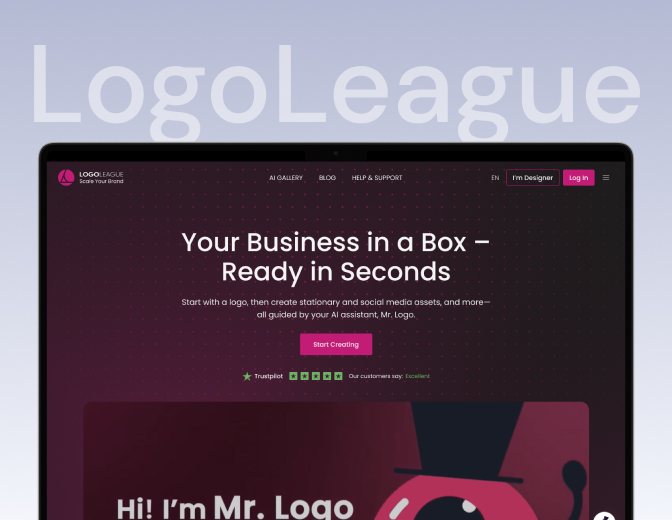
- LogoLeague: AI-powered design platform (Django, DRF, LangChain, OpenAI API)
The process
Tell us your stack, your delivery bottleneck, and your timeline. We send a shortlist of pre-screened senior Django developers within 48 hours. No intake form. No job posting. No recruiter coordination.
You interview the developers. You select who fits. They join your team, attend your standups, commit to your repository, and own delivery context across your full engineering cycle.
When the engagement ends, all code belongs to you. No IP clause. No lock-in.
The numbers
- $35/hr for senior Django developers
- No platform fee. No subscription. No markup.
- 370+ verified Upwork reviews. 100% Job Success score.
- 48 hours from brief to shortlist.
Our engineers work with Django, DRF, Celery, PostgreSQL, Redis, ElasticSearch, GraphQL, Docker, Kubernetes, AWS, and LangChain. Explore available developers in our Talent Lab or browse our full case study portfolio.
If you need one developer or a full Django product team, the matching process is the same.



Questions about hiring Django developers
Hiring navigation
Hire developers by role, technology, and service
Hire developers by role:
Hire developers by technology:
Why Choose Meduzzen
A faster, safer way to hire Django developers
- 48
- Developer onboarding
- 0
- Replacement guaranteed
- $35
- Senior Django developers
- 5
- Average developer experience