


Hire FastAPI Developers
48 days. That is the median time to hire a developer in tech. 59% of hiring managers say candidates now misrepresent their skills. Meduzzen matches you with vetted senior FastAPI developers in 48 hours, at $35/hr, with no platform fee and full code ownership.
Hire FastAPI developers-
Top-rated
agency on Upwork -
370+
verified client reviews -
100%
Job Success
FastAPI developers for hire, vetted and ready to start
Explore the Talent Lab




Value Proposition
What changes when you hire FastAPI developers the right way

Vetted FastAPI developers
Hire FastAPI developers with real production experience across async APIs, AI and LLM backends, and high-throughput services at scale.

Senior-backed matching
We match you with the right FastAPI engineers and support every engagement with senior architecture review and technical guidance.

Fast onboarding
Skip the 48-day hiring cycle and start with pre-vetted engineers in 48 hours without delivery delays or friction.

Full FastAPI stack coverage
Hire one FastAPI developer, add an async or LLM specialist, or build a dedicated FastAPI team around your product and roadmap.

Direct communication
Work directly with your FastAPI developers for faster feedback, clearer coordination, and smoother execution across teams.

Fast replacement
If the fit is not right, we replace the developer within days so delivery keeps moving. No restarts. No lost momentum.
Vetted FastAPI developers
Hire FastAPI developers with real production experience across async APIs, AI and LLM backends, and high-throughput services at scale.
Senior-backed matching
We match you with the right FastAPI engineers and support every engagement with senior architecture review and technical guidance.
Fast onboarding
Skip the 48-day hiring cycle and start with pre-vetted engineers in 48 hours without delivery delays or friction.
Full FastAPI stack coverage
Hire one FastAPI developer, add an async or LLM specialist, or build a dedicated FastAPI team around your product and roadmap.
Direct communication
Work directly with your FastAPI developers for faster feedback, clearer coordination, and smoother execution across teams.
Fast replacement
If the fit is not right, we replace the developer within days so delivery keeps moving. No restarts. No lost momentum.
Engagement models
Flexible ways to hire FastAPI developers
Industries we serve
Hire FastAPI developers with experience in your industry
Skills Grid
Hire FastAPI developers by framework, library, and stack
Core and async:
- FastAPI
- Starlette
- Pydantic v2
- async / await
- Uvicorn / Gunicorn
Data and messaging:
- PostgreSQL
- async SQLAlchemy
- Redis
- Celery
- Kafka
AI and LLM serving:
- OpenAI API
- LangChain
- RAG pipelines
- vLLM
- WebSockets
Cloud and DevOps:
- Docker
- Kubernetes
- AWS
- CI/CD
- Nginx
How it works
How we match you with the right FastAPI developers
Share requirements
Tell us about your product, your stack, your timeline, and the FastAPI work you need done.
Review matched developers
We shortlist FastAPI developers who fit your architecture, async requirements, and working style.
Interview developers
Meet the engineers, test for async correctness and real production experience, and choose the fit.
Start in 48 hours
Move forward with pre-vetted FastAPI developers, clear next steps, and no hiring delays.
Stories behind the success
What Meduzzen FastAPI teams have shipped
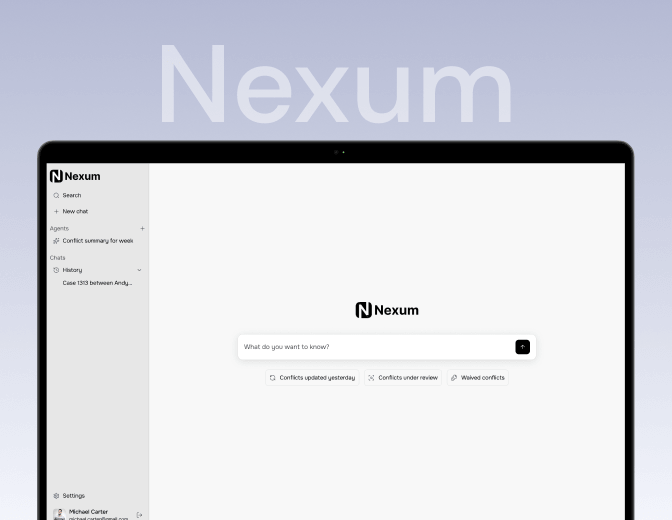
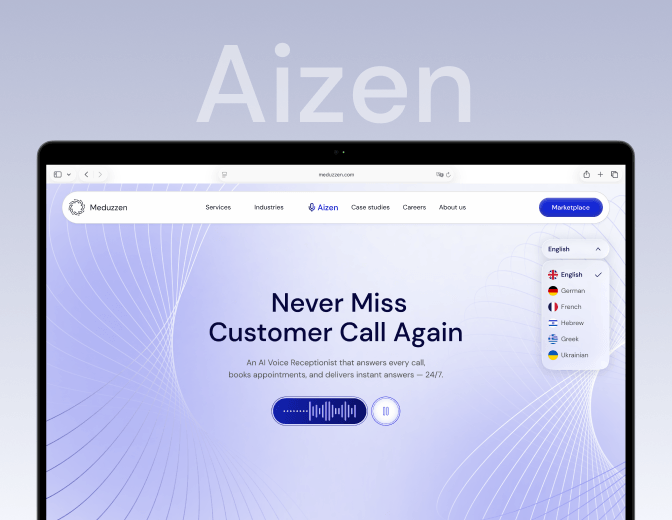

What our clients say
100% Job Success on
Upwork
Reviewed on


100% Job Success

Top Rated Plus
I had the pleasure of working with Meduzzen team, and I can confidently say they are one of the most talented Full Stack Developers I've come across. Their expertise in React and Python is outstanding, seamlessly handling both front-end and back-end development with precision and efficiency.

Full Stack development
Farhan Mahmood
AcademixHub · United Kingdom
Roman completed a Google Maps API project for us and helped with other front-end development work that required Jekyll and Django knowledge. He is responsive and easy to work and communicate with. I am sure we will work again in the future.

Front-End Developer for Google Maps API integration
Nikola Stefanov
Long Tail Marketing Limited · Canada
Great engineer, strong logic when approaching tasks and epics with the ability to bring new ideas and his experience to ensuring each project is built to the best standard.

Senior Back-End Engineer (Python, AWS CDK, FastAPI)
Jakub Lenski
Saber AI · United Kingdom
Very technical developer, helped build a custom Telegram script and additional development work. Will continue to work with – great communication and support. Thanks

Telegram Bot – scripting and automation expert
Tom Curry
Atlanta Group · United Kingdom
Very good communication. Very good web scraping work on a YouTube proxy project with Google Cloud support. I highly recommend Maksym for future web scraping projects.

YouTube Scraper – Production Debugging & DevOps Project
Gil Hildebrand
Supercharger Studio · United States
Working with Mark has been a great experience. He’s a talented developer who communicates tasks clearly and effectively. He takes initiative in solving complex problems and collaborates well with the team. His insights into our software design have been invaluable. Thank you for your dedication and hard work!

Python Expert with Fast API know-How
Emre Isik
skillbyte GmbH · Germany
Extremely experienced and professional freelancer. Hands-on approach with great attention to detail. Delivered high-quality results efficiently and independently. Highly recommended for any project requiring expertise and reliability.

Experienced Python Developer Hotfix Development
George Barsan
Damudo GmbH · Austria
Andrey is a reliable developer that is not afraid to take on any challenging task. He helped me with various n8n and zapier integrations with ghost and sendy and was always professional in his demeanour.

Ongoing dev troubleshooting
Barnaby Nagy
Common Sense UX Ltd · Colombia
Dmytro provided a python script that exactly satisfied my requirements. The code was very clean and logically structured. He made sure it worked in my application. I don't think he could have done a better job.

Full Time: Data Management and Business Analyst
David Greenbaum
OnPlan · United States
Vitaliy was excellent, he went over and above to deliver the project swiftly and provide a high-quality end product. Thank you!

Web Development using web scrapers and data analytics
Georgia Richards
Richello Limited · United Kingdom
An exceptional designer with a great eye for detail and creativity. Consistently delivers high-quality work, meets deadlines, and is a pleasure to collaborate with. Highly recommended!

UI/UX Designs figma
Farhan Mahmood
AcademixHub · United Kingdom
We enjoy working with Kirill very much. He is a reliable and skilled developer.

Developer for ML cloud platform developed in python and node.js
Kim Fanger
elunic AG · Germany
Its a pleasure to work with Andrew, he is a skilled engineer and he always deliver up to the expectations.

Cypress tests automated in github actions
Roch Delsalle
Roch & Cie · France
Working with Yurii has been a real pleasure. He is incredibly professional, responsive, and reliable. Every task was completed with attention to detail, clear communication, and a proactive mindset. What really stood out was his positive attitude, patience, and willingness to go the extra mile to make sure everything was just right. It’s rare to find someone who combines technical skills with high professionalism and kindness. I would highly recommend Yurii to anyone.

WordPress Developer
Ihor Zhabrovets
Amevalue · Ukraine
Comparison Section
Why companies hire FastAPI developers through Meduzzen
|
Key hiring factors
|

|
Talent Networks
|
Freelance Marketplaces
|
|---|---|---|---|
|
Developer vetting
|
Senior screening + async code review
|
Algorithm tests + interviews
|
No platform vetting
|
|
Architecture involvement
|
Senior architecture review
|
Depends on developer
|
No architecture support
|
|
Matching speed
|
~48 hours
|
2 days–2 weeks
|
Instant access, slow vetting
|
|
Platform fees
|
No platform fees
|
Placement fees / subscription
|
Transaction fees
|
|
Dedicated developers
|

|

|
|
|
Replacement guarantee
|
|
Depends
|
|
|
Direct communication
|
Direct with developers
|
Platform-managed communication
|
Direct but unmanaged
|
|
Team scaling
|
1 FastAPI developer → full FastAPI team
|
Mostly individual hires
|
Individual freelancers
|
|
Project accountability
|
Shared delivery responsibility
|
Freelancer responsible
|
Client responsible
|
|
Long-term collaboration
|
|
Mostly project-based
|
|
Start working with vetted FastAPI developers in 48 hours
- No platform fees
- Start in 48 hours
- Full code ownership
Remote FastAPI developer rates
How much does it cost to hire FastAPI developers in 2026?
| Experience | Meduzzen | Toptal | Upwork | Lemon.io | In-house (US) |
|---|---|---|---|---|---|
| Mid-level FastAPI developer | $35/hr | $60–110/hr | $50–75/hr | $41–70/hr | ~$95/hr (loaded) |
| Senior FastAPI developer | $35–40/hr | $110–200/hr | $75–130/hr | $70–94/hr | ~$130/hr (loaded) |
| Hiring time | 48 hours | 1–3 weeks | 1–4 weeks | 48 hours | 48 days |
| Platform fees | None | $500 deposit + $79/mo | 5–10% client fee + initiation | 160-hour minimum | N/A |
| Hidden costs | None | Up to 50% markup in rate | Freelancer markup priced into rate | Buyout fee + upfront deposit | Benefits, recruiting ($26K–44K), overhead |
Hiring Guide
How to hire FastAPI developers in 2026
Contents
You hire a developer who lists FastAPI on their profile. The demo runs fast. The code looks clean. Then real traffic arrives, and the API slows to a crawl for every user at once, with nothing in the error logs to explain it. You have just met the synchronous developer, and learning to spot them before they reach your codebase is the entire reason this guide exists.
Hiring FastAPI developers in 2026 looks simple and is not. The market is full of people who finished a tutorial, shipped a demo that worked on a laptop, and added the skill to their resume. On paper they are indistinguishable from the engineers who have actually run async systems in production. This guide shows you how to hire FastAPI developers who can keep an API fast under real load, whether you are a non-technical founder who needs an API built, a CTO scaling an AI backend, or an engineering lead adding async capacity. Each section gives you a decision framework and shows you how Meduzzen solves the problem at a fraction of the cost of hiring in-house or going through a premium platform.
What does a FastAPI developer actually do?
A FastAPI developer is a Python engineer who builds high-performance web APIs, microservices, and AI backends using FastAPI, the async Python web framework that became the most-used Python web framework in 2026 (JetBrains Python Developers Survey, 2024 data, published in JetBrains “State of Python 2025,” August 2025: FastAPI 38 percent, ahead of Django at 35 percent and Flask at 34 percent).
But the title hides a distinction that costs companies months when they get it wrong. FastAPI is built on asynchronous programming. It runs on a single-threaded event loop, and that design is the entire reason it can handle thousands of simultaneous connections on modest hardware. The performance only exists when the developer never blocks that event loop. A developer who writes async def and then fills the function with a blocking call, a synchronous database query, the requests library, a heavy computation, freezes every other request until that call finishes. The framework that was supposed to be fast now serves users one at a time.
This is the difference you are hiring for. Not whether someone can write a FastAPI endpoint, because anyone can. Whether they understand the concurrency model well enough to keep the API fast under real load. That difference is invisible in a portfolio and in a demo. It only shows up in production, after the hire is made, which is why the evaluation section below matters more than any resume.
If you are not technical, here is the one-sentence version: a real FastAPI developer is someone who keeps your API fast when a lot of people use it at once, and many candidates who claim the skill cannot actually do that. The rest of this guide shows you how to tell them apart, and how Meduzzen tells them apart for you before you ever see a profile.
FastAPI developer vs Python developer vs backend engineer
One of the most expensive early mistakes is writing a job description for the wrong role. “Python developer,” “backend engineer,” and “FastAPI developer” are not interchangeable, and choosing the wrong one sets your product back months.
| Role | What they own | When to hire them |
|---|---|---|
| FastAPI developer | Async APIs, model-serving backends, microservices, real-time services | You need high-throughput APIs, an AI or LLM backend, or async services |
| Python developer | General Python: scripting, data work, automation, mixed web work | You need broad Python work and the framework is secondary |
| Backend engineer | Server-side systems across any language and framework | You need architecture and infrastructure depth, language flexible |
| Django developer | Database-backed web apps, admin panels, content platforms | You need a full web application with built-in admin and auth |
The trap is treating these as one pool. A strong general Python developer with no async production experience is a junior FastAPI developer, regardless of how many years they have coded. The async model is the whole job, and it is exactly what generic Python experience does not cover.
Meduzzen matches against the specific role, not the keyword. If you need async API engineers, you meet async API engineers, not generalist profiles that happen to list the framework. If your backend genuinely needs both a web layer and an API layer, we will tell you that on the first call, and we also place Python developers, Django developers, and backend developers when the right answer is a different profile. The goal is the hire that ships your product, not the one that matches a job title.
Which FastAPI developer should you hire for your project?
FastAPI covers a wide range of work, and the right engineer for an AI backend is not the right engineer for a real-time system. Here are the most common FastAPI project types mapped to the seniority, team size, and timeline they actually need.
| Project type | Team size | Timeline | What it needs |
|---|---|---|---|
| AI / LLM backend (RAG, model serving, streaming) | 1-2 | 4-10 weeks | Senior async + ML serving experience |
| High-throughput REST API | 1-2 | 3-8 weeks | Async correctness, Pydantic v2, async ORM |
| Real-time service (WebSockets, live data) | 1-2 | 4-8 weeks | Connection management, memory discipline |
| Microservices backend | 2-3 | 8-16 weeks | Service design, deployment topology |
| API layer on an existing product | 1 | 2-6 weeks | Integration discipline, clean schemas |
The most common scoping mistake is using a generic FastAPI job post for a highly specific project. An AI model-serving backend needs someone who has handled streaming inference and concurrent long-lived requests. A real-time WebSocket service needs someone who can keep tens of thousands of idle connections alive without leaking memory. These are different specializations under one job title.
Every configuration above is available through Meduzzen at $35 to $40 an hour. The same senior engineer on a premium platform runs $60 to $140 an hour (Arc and Lemon.io published rates, 2026). The difference is platform markup, not talent quality. If you are not sure which configuration fits your product, describe the bottleneck on your first call and we will tell you what to hire. Talk to a hiring expert.
What skills should a senior FastAPI developer have in 2026?
The skill set has a clear hierarchy. One competency sits above all the others, and the rest follow from it.
Async correctness is the skill. Everything else is secondary to whether the engineer understands the event loop. A senior FastAPI developer knows when to use async def versus plain def, never puts a blocking call inside an async route, uses httpx.AsyncClient instead of requests, and reaches for asyncio.gather() to run independent calls in parallel. This single competency separates production engineers from tutorial graduates, and it is the thing your evaluation has to test for.
Pydantic v2 is now mandatory, not optional. FastAPI has fully dropped Pydantic v1 (FastAPI release notes, 2026: minimum Pydantic 2.7.0). A 2026 hire who has not migrated to v2 and cannot explain its Rust-core validation is behind the framework. Pydantic v2’s core is 5 to 50 times faster than v1, so this is a real performance skill, not a version number.
Async database access through async SQLAlchemy 2.0 or asyncpg, with correct per-request session handling, is where most production FastAPI bugs live. An engineer who manages database sessions wrong will corrupt data under concurrent load, and they will not see it in testing.
AI and model-serving skills are the fastest-growing area of demand. FastAPI is the de facto standard for serving machine learning models, because LLM inference is long-running and I/O-bound in exactly the way the async model handles best. The two leading open-source inference engines, vLLM and NVIDIA Triton, both expose their capabilities through FastAPI. If you are building an AI backend, look for OpenAI API, LangChain, and RAG pipeline experience on top of the async foundation.
Deployment topology rounds out the senior skill set: Uvicorn and Gunicorn worker configuration, containerization, and knowing how FastAPI behaves under Kubernetes rather than fighting the scheduler with the wrong worker setup.
One 2026 currency note worth using as a filter. Python 3.14, released October 2025, made free-threading officially supported (Python 3.14 release notes, 2025). A developer worth hiring knows what that does and does not mean for FastAPI: I/O-bound async endpoints, which is most API work, see essentially no change, while CPU-bound endpoints can gain significantly on the free-threaded build. Anyone who claims free-threading makes all async code faster does not understand either feature, and that is a useful thing to hear them say before you hire them.
How much does it cost to hire FastAPI developers?
The cost to hire FastAPI developers depends on where the engineer sits and how you engage them, and the spread between the most and least expensive route to the same quality of work is 3 to 5 times. For the full platform-by-platform hourly comparison, see the pricing table above this guide. This section covers the part that table does not: the salary economics that decide whether you hire abroad or in-house at all.
The async premium is real. FastAPI and async specialists earn more than general Python or Django CRUD developers because the skill is scarcer. A senior backend engineer in the United States working on FastAPI and async services earns a base salary of $158,000 to $192,000, versus $135,000 to $162,000 for senior Django CRUD work (KORE1 Backend Developer Salary Guide 2026). That is roughly a 17 to 18 percent premium for the async skill, before you add a single benefit.
Then the real cost of a US in-house hire stacks up on top of base salary. Add the employer burden documented by the US Bureau of Labor Statistics Employer Costs for Employee Compensation (December 2025), where benefits average about 30 percent of total compensation, plus recruiting at 15 to 25 percent of first-year salary, and the fully loaded cost of one senior FastAPI engineer lands around $250,000 a year, roughly $120 an hour once you divide it across a working year. Then add time: the technology-sector median time to fill a role is 48 days (SmartRecruiters Recruiting Benchmarks 2025). For a role you need filled this quarter, that delay is part of the cost.
The same seniority costs far less elsewhere, not because the engineers are weaker but because the cost of living is lower. A senior FastAPI developer’s annual cost runs $95,000 to $145,000 in Western Europe, $70,000 to $110,000 in Latin America, and $72,000 to $108,000 in Eastern Europe and Ukraine (KORE1 2026 for the US baseline; Arc and Lemon.io rate data and Djinni 2026 for the regional ranges).
This is the math that decides the hire for most companies at an early or growth stage. A senior FastAPI engineer through Meduzzen starts at $35 an hour, which is roughly $67,000 a year at full time, with no platform fee, no recruiting cost, and no 48-day wait. The same engineer hired in-house in the US is close to $250,000 fully loaded. The work is the same. The cost is not. If you are at the stage where a quarter-million-dollar hire is hard to justify, this is the line in the guide that matters most: you do not have to make that hire to get that engineer.
Why is it so hard to hire a good FastAPI developer?
The market has split into two pools that look identical on paper.
The first pool has shipped async systems to production. They have debugged the event loop under load, migrated Pydantic v1 to v2, scoped database sessions correctly under concurrency, and deployed FastAPI behind Kubernetes. The second pool has completed a tutorial, built a demo that worked locally, and added the skill to a profile. On a resume, both say the same thing.
The split exists because the framework grew faster than the senior talent pool. Adoption rose from 29 percent to 38 percent between survey cycles (JetBrains Python Developers Survey, 2024 data, published in JetBrains “State of Python 2025,” August 2025), and the Stack Overflow 2025 Developer Survey recorded one of the largest single-year gains of any web framework. Demand pulled in a wave of developers who learned the syntax quickly. The syntax is easy. The concurrency model is not, and it is the only part that matters under load.
This is why it is so easy to hire wrong. The interview-friendly candidate who explains FastAPI cleanly and shows a clean demo can be the synchronous developer who blocks your event loop in week three. Misrepresentation is common across all hiring, not just this role: 59 percent of hiring managers report candidates misrepresenting their skills (Checkr 2025). The defense is not a better resume screen. It is a technical evaluation that tests the one thing that separates the pools, which is the next section.
Meduzzen screens for the first pool before you see anyone. Every developer on our bench has been tested for async correctness, not just interviewed about it. That is the entire point of the model: you skip the 48-day search and the coin-flip on whether the confident candidate is actually senior, because the screening already happened.
How to evaluate a FastAPI developer before you hire
When you hire a FastAPI developer, the whole evaluation reduces to one question asked several ways: does this person understand that FastAPI’s speed depends on never blocking the event loop, and can they prove it under pressure? You do not need to be technical to run this. Ask the question, then compare the answer to the strong answer below. A senior engineer answers these instantly and specifically. A tutorial graduate gets vague.
1. The event loop trap. “You have an endpoint defined async def. Inside it you call a legacy API using the synchronous requests library. What happens under heavy load?” Weak answer: the endpoint is just a bit slow, or it waits and moves on. Strong answer: names it immediately as event-loop blocking, explains that the synchronous call freezes the single thread so no other request can be processed until it returns, and offers the fixes without being asked: switch to httpx.AsyncClient, wrap the call in asyncio.to_thread(), or make the route a plain def so FastAPI runs it in a threadpool.
2. Why plain def still exists. “If async def is faster, why does FastAPI let you define routes with plain def, and how does it run them?” Weak answer: it is legacy, or it just runs slower on the main thread. Strong answer: FastAPI runs a plain def route in a separate threadpool worker so blocking I/O does not freeze the event loop. Knowing this is the line between memorizing “always use async” and understanding what the framework actually does.
3. Database sessions under load. “How do you manage database sessions, and why not create one global session and import it everywhere?” Weak answer: a global session to save overhead. That is the anti-pattern. Strong answer: because requests run concurrently, a shared session produces interleaved transactions and data corruption; sessions must be scoped per request through dependency injection, with proper commit, rollback, and close.
4. The async ORM trap. “With async SQLAlchemy, you load a user and then access user.posts to return related records. What happens?” Weak answer: it fetches the data automatically. Strong answer: it raises an error, because lazy loading would need a hidden synchronous query inside an async context, and the fix is to load the relationship eagerly with selectinload. This is experience-only knowledge. People who have shipped async SQLAlchemy know it cold.
5. Deployment topology. “In Kubernetes, should each container run one process or several internal workers?” Weak answer: reflexively reaches for many workers. Strong answer: Kubernetes is already the process manager, so internal workers fight the scheduler and break health checks and autoscaling; run one process per container and let Kubernetes scale.
Two reference-check questions are worth more than a take-home test. First: did the candidate ever debug a production issue where the API did not crash but slowed across all endpoints at once? A senior engineer describes finding a hidden blocking call and moving it off the event loop. Second: how did they handle the Pydantic v1 to v2 migration? FastAPI now requires v2, so a senior engineer describes doing it, not avoiding it.
This is exactly the screen Meduzzen runs before a developer reaches you. You do not have to administer these tests. We already did, which is why our hiring path skips both the 48-day search and the risk that a confident interview hides a synchronous developer. See vetted FastAPI developers in the Talent Lab.
Five mistakes that kill FastAPI hiring
1. Hiring for syntax instead of concurrency. The single most expensive mistake. A developer who writes async def and fills it with blocking calls passes a casual interview and a demo, then collapses throughput under real load. Screen for it directly with question one above, before the offer, not after the first outage.
2. Treating FastAPI experience as the same as Flask or general Python. The async model is the whole framework, and it is exactly what generic Python experience does not cover. Hiring a strong synchronous developer and assuming they will pick up async on the job is how teams end up with a fast framework running slow.
3. Optimizing for the lowest hourly rate. The cheapest visible rate is rarely the cheapest total cost. A $30 freelancer who blocks the event loop, ships a global database session, and leaks data through loose response models costs far more than a $40 senior who prevents all three, once you count the rework and the outage. Price is not a proxy for the skill you are buying.
4. Skipping the systems conversation for a take-home test. Take-home tests measure whether someone can produce working code with unlimited time and no pressure. They do not measure whether the person understands what happens to the event loop under load. The five questions above measure the thing that matters, in fifteen minutes, in conversation.
5. Putting the hire under a process that cannot tell good from bad. If no one on your side can run the evaluation, you are trusting the resume, and the resume is exactly what does not distinguish the two talent pools. This is the structural reason to use a partner that screens for async correctness before you ever interview: it moves the judgment to someone who can make it. That is what Meduzzen does.
FastAPI vs Django, and when FastAPI is the wrong choice
The technology choices around FastAPI determine which engineer you actually need, so getting the architecture clear first prevents the most common scoping mistakes.
FastAPI vs Django is not a rivalry, it is a division of labor. Django is the right tool for content-heavy, database-backed web applications that need a built-in admin panel, server-side rendering, and batteries-included authentication. FastAPI is the right tool for APIs, microservices, real-time services, and AI backends. Many teams at the 50-to-500 person scale run both: Django for the web and admin layer, FastAPI for the API and model-serving layer. If your product is mostly a database-backed web app with heavy back-office needs, you may actually need a Django developer, or an engineer who can do both, and we will tell you honestly which one fits.
There is an honest case for not choosing FastAPI at all. If you do not have concurrent load, long-running I/O, or an AI backend, FastAPI’s async complexity buys you little and adds risk, because async code is harder to write correctly. A good hiring partner tells you when the simpler tool is the right one. FastAPI earns its complexity when you have real concurrency, streaming, or model serving, and not before.
Where FastAPI is non-negotiable is AI and model serving. If you are building anything that wraps an LLM, runs a RAG pipeline, or serves a model behind an API, this is the framework your competitors are already using, and the hire needs both async depth and ML-serving experience. This is where the AI developer and FastAPI skill sets overlap, and where the wrong hire is most expensive.
The reason this sits inside a hiring guide is that the architecture decision and the hiring decision are the same decision. Choose the stack, and you have chosen the engineer. Get the stack wrong, and no engineer can save the timeline. Meduzzen’s senior developers help you get this right before the build starts, which is worth more than any single line of code.
Why companies hire FastAPI developers from Ukraine
Everything in this guide points to the same conclusion: the hard part of hiring a FastAPI developer is not finding someone who lists the skill, it is finding someone with real async judgment, fast, without paying US in-house cost or premium-platform markup. That is the specific problem Meduzzen solves.
Ukraine is one of the largest engineering talent pools in Central and Eastern Europe, with 302,000 to 346,000 IT specialists and roughly 245,000 working domestically (IT Research Ukraine, 2025). Python is among the most popular languages in the country (DOU.ua, 2025), and 88 percent of Ukrainian developers are middle, senior, or lead level (Lviv IT Cluster, IT Research Ukraine 2025). The talent is deep, senior-skewed, and currently a buyer’s market for Western teams. English is strong, and the timezone gives full overlap with European business hours and a working-morning overlap with the US East Coast.
Here is what you get with Meduzzen, measured against the two options most companies compare it to:
| Meduzzen | Premium platform | In-house US | |
|---|---|---|---|
| Senior FastAPI rate | $35-40/hr | $60-140/hr | ~$120/hr loaded |
| Time to start | 48 hours | 1-3 weeks | 48 days |
| Async-correctness screening | Done before you interview | Varies | Your team’s job |
| Platform fee | None | Deposit + markup or subscription | N/A |
| Code and IP ownership | 100 percent yours | Yours | Yours |
| If the fit is wrong | Replaced in days | Varies | Re-hire from scratch |
Every developer on our bench is screened for the async correctness this entire guide is about, before they reach you. You get a shortlist in 48 hours, not 48 days. You get senior engineers at $35 an hour with no platform fee and full code ownership. And if the fit is not right, we replace the developer within days, so delivery keeps moving.
If you are at a stage where a $250,000 in-house hire is hard to justify and a $140-an-hour platform rate eats your runway, this is the model built for you. You get the senior async engineer without the price that comes with the other two routes.
See available FastAPI developers in the Talent Lab or talk to a hiring expert. Tell us what you are building, and we will match you with a pre-vetted senior FastAPI developer in 48 hours.



Questions about hiring FastAPI developers
Hiring navigation
Hire developers by role, technology, and service
Hire developers by role:
Hire developers by technology:
Why Choose Meduzzen
A faster, safer way to hire FastAPI developers
- 48
- Developer onboarding
- 0
- Replacement guaranteed
- $35
- Senior FastAPI developers
- 5
- Average developer experience