


Hire Developers in Ukraine
48 days. That is the median time to hire a developer in tech. Ukraine has one of Europe's largest talent pools and kept delivering right through the war. Meduzzen matches you with pre-vetted senior Ukrainian engineers in 48 hours, at $35/hr, with no platform fees and full code ownership.
Hire Ukrainian developers-
Top-rated
agency on Upwork -
370+
verified client reviews -
100%
Job Success
Ukrainian developers for hire, vetted and ready to start
Explore the Talent Lab




Value Proposition
What changes when you hire Ukrainian developers the right way

Senior by default
Every developer we send has shipped production systems under load, not tutorials, backed by 100% Job Success on Upwork and Top Rated Plus.

A shared workday
Ukrainian teams work European hours and give the US East Coast about two hours of daily overlap, so questions get same-day answers.

Proven under pressure
Ukraine's IT exports grew 5.8% in 2022, the year of the invasion, and computer-services exports still reached $6.65B in 2025.

No hidden markup
Talent networks add roughly 25 to 55 percent on top of the developer's rate. You pay us directly at one transparent rate, so that middleman cut never lands on your bill.

Hire on your terms
Scale a dedicated team, extend the one you have, or hand off a full delivery. The engagement bends to your plan, not the reverse.

Fast replacement
If a match is not working, we swap the engineer within days, without restarting your project, your onboarding, or your paperwork.
Senior by default
Every developer we send has shipped production systems under load, not tutorials, backed by 100% Job Success on Upwork and Top Rated Plus.
A shared workday
Ukrainian teams work European hours and give the US East Coast about two hours of daily overlap, so questions get same-day answers.
Proven under pressure
Ukraine's IT exports grew 5.8% in 2022, the year of the invasion, and computer-services exports still reached $6.65B in 2025.
No hidden markup
Talent networks add roughly 25 to 55 percent on top of the developer's rate. You pay us directly at one transparent rate, so that middleman cut never lands on your bill.
Hire on your terms
Scale a dedicated team, extend the one you have, or hand off a full delivery. The engagement bends to your plan, not the reverse.
Fast replacement
If a match is not working, we swap the engineer within days, without restarting your project, your onboarding, or your paperwork.
Engagement models
Flexible ways to hire Ukrainian developers
Industries we serve
Hire Ukrainian developers with experience in your industry
Skills Grid
Hire Ukrainian developers by framework, library, and stack
Frontend:
Backend:
Cloud and DevOps:
How it works
How we match you with the right Ukrainian developers
Share requirements
Tell us the stack, the seniority, and the problem you need solved.
Review matched developers
We shortlist Ukrainian developers who fit your stack, your timezone, and your working style.
Interview developers
Talk to the people who will do the work and test them on what matters to you.
Start in 48 hours
Move forward with vetted Ukrainian developers, clear next steps, and no hiring delays.
Stories behind the success
What Meduzzen's Ukrainian teams have shipped
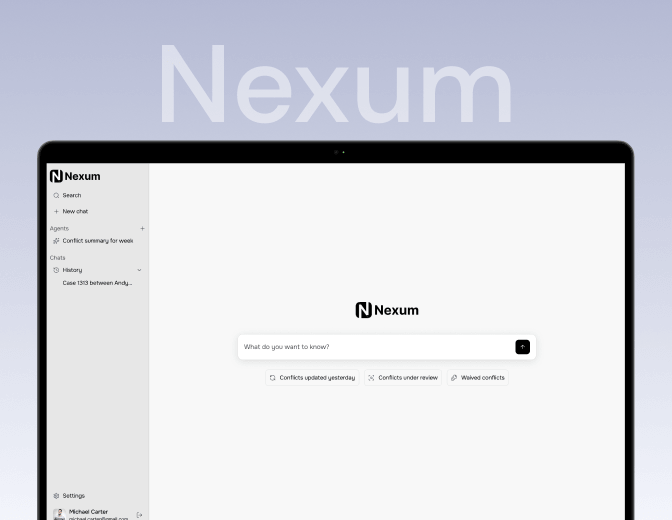
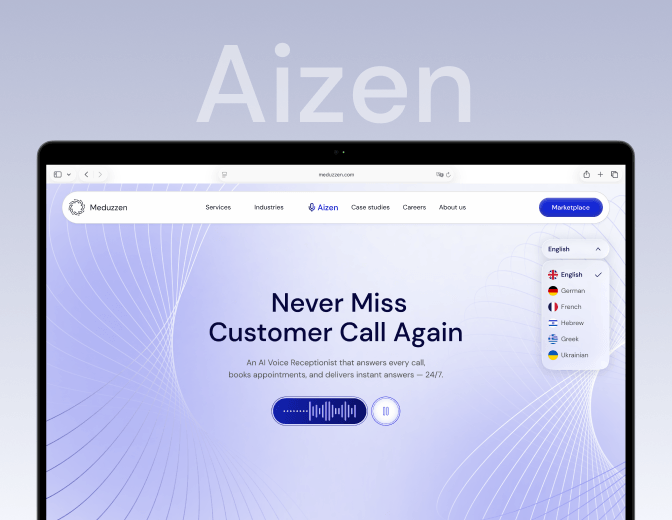

What our clients say
100% Job Success on
Upwork
Reviewed on


100% Job Success

Top Rated Plus
I had the pleasure of working with Meduzzen team, and I can confidently say they are one of the most talented Full Stack Developers I've come across. Their expertise in React and Python is outstanding, seamlessly handling both front-end and back-end development with precision and efficiency.

Full Stack development
Farhan Mahmood
AcademixHub · United Kingdom
Roman completed a Google Maps API project for us and helped with other front-end development work that required Jekyll and Django knowledge. He is responsive and easy to work and communicate with. I am sure we will work again in the future.

Front-End Developer for Google Maps API integration
Nikola Stefanov
Long Tail Marketing Limited · Canada
Great engineer, strong logic when approaching tasks and epics with the ability to bring new ideas and his experience to ensuring each project is built to the best standard.

Senior Back-End Engineer (Python, AWS CDK, FastAPI)
Jakub Lenski
Saber AI · United Kingdom
Very technical developer, helped build a custom Telegram script and additional development work. Will continue to work with – great communication and support. Thanks

Telegram Bot – scripting and automation expert
Tom Curry
Atlanta Group · United Kingdom
Very good communication. Very good web scraping work on a YouTube proxy project with Google Cloud support. I highly recommend Maksym for future web scraping projects.

YouTube Scraper – Production Debugging & DevOps Project
Gil Hildebrand
Supercharger Studio · United States
Working with Mark has been a great experience. He’s a talented developer who communicates tasks clearly and effectively. He takes initiative in solving complex problems and collaborates well with the team. His insights into our software design have been invaluable. Thank you for your dedication and hard work!

Python Expert with Fast API know-How
Emre Isik
skillbyte GmbH · Germany
Extremely experienced and professional freelancer. Hands-on approach with great attention to detail. Delivered high-quality results efficiently and independently. Highly recommended for any project requiring expertise and reliability.

Experienced Python Developer Hotfix Development
George Barsan
Damudo GmbH · Austria
Andrey is a reliable developer that is not afraid to take on any challenging task. He helped me with various n8n and zapier integrations with ghost and sendy and was always professional in his demeanour.

Ongoing dev troubleshooting
Barnaby Nagy
Common Sense UX Ltd · Colombia
Dmytro provided a python script that exactly satisfied my requirements. The code was very clean and logically structured. He made sure it worked in my application. I don't think he could have done a better job.

Full Time: Data Management and Business Analyst
David Greenbaum
OnPlan · United States
Vitaliy was excellent, he went over and above to deliver the project swiftly and provide a high-quality end product. Thank you!

Web Development using web scrapers and data analytics
Georgia Richards
Richello Limited · United Kingdom
An exceptional designer with a great eye for detail and creativity. Consistently delivers high-quality work, meets deadlines, and is a pleasure to collaborate with. Highly recommended!

UI/UX Designs figma
Farhan Mahmood
AcademixHub · United Kingdom
We enjoy working with Kirill very much. He is a reliable and skilled developer.

Developer for ML cloud platform developed in python and node.js
Kim Fanger
elunic AG · Germany
Its a pleasure to work with Andrew, he is a skilled engineer and he always deliver up to the expectations.

Cypress tests automated in github actions
Roch Delsalle
Roch & Cie · France
Working with Yurii has been a real pleasure. He is incredibly professional, responsive, and reliable. Every task was completed with attention to detail, clear communication, and a proactive mindset. What really stood out was his positive attitude, patience, and willingness to go the extra mile to make sure everything was just right. It’s rare to find someone who combines technical skills with high professionalism and kindness. I would highly recommend Yurii to anyone.

WordPress Developer
Ihor Zhabrovets
Amevalue · Ukraine
Comparison Section
Why companies hire developers in Ukraine through Meduzzen
|
Key hiring factors
|

|
Talent Networks
|
Freelance Marketplaces
|
|---|---|---|---|
|
Developer vetting
|
Senior engineer screening
|
Algorithm tests + interviews
|
No platform vetting
|
|
Architecture involvement
|
Senior architecture review
|
Depends on developer
|
No architecture support
|
|
Matching speed
|
~48 hours
|
2 days–2 weeks
|
Instant access, slow vetting
|
|
Platform fees
|
No platform fees
|
Placement fees / subscription
|
Transaction fees
|
|
Dedicated developers
|

|

|
|
|
Replacement guarantee
|
|
Depends
|
|
|
Direct communication
|
Direct with developers
|
Platform-managed communication
|
Direct but unmanaged
|
|
Team scaling
|
1 developer → full team
|
Mostly individual hires
|
Individual freelancers
|
|
Project accountability
|
Shared delivery responsibility
|
Freelancer responsible
|
Client responsible
|
|
Long-term collaboration
|
|
Mostly project-based
|
|
Start working with vetted Ukrainian developers in 48 hours
- No platform fees
- Start in 48 hours
- Full code ownership
Remote Ukrainian developer rates
How much does it cost to hire Ukrainian developers in 2026?
| Experience | Meduzzen | Toptal | Upwork | Lemon.io | In-house (US) |
|---|---|---|---|---|---|
| Mid-level Ukrainian developer | $35/hr | $60–110/hr | $50–75/hr | $41–70/hr | ~$95/hr (loaded) |
| Senior Ukrainian developer | $35–40/hr | $110–200/hr | $75–130/hr | $70–94/hr | ~$130/hr (loaded) |
| Hiring time | 48 hours | 1–3 weeks | 1–4 weeks | 48 hours | 48 days |
| Platform fees | None | $500 deposit + $79/mo | 5–10% client fee + initiation | 160-hour minimum | N/A |
| Hidden costs | None | Up to 50% markup in rate | Freelancer markup priced into rate | Buyout fee + upfront deposit | Benefits, recruiting ($26K–44K), overhead |
Hiring Guide
How to hire developers in Ukraine in 2026
Contents
You have heard Ukraine has some of the best engineers in Europe. You have also heard there is a war, that the rates look too low to be real, and that half the sites selling you “Ukrainian developers” are Western middlemen marking up a database they will not let you see. All of that is true at once, which is exactly why choosing a partner here feels harder than it should.
This guide cuts through it. It answers the questions you actually have, is it safe, are they any good, what does it really cost, who owns the code, and how do you tell a strong engineer from a confident one, in plain language and with sourced numbers instead of sales copy. Whether you are a CTO who wants the technical detail or a founder who just needs to make one confident hire, by the end you will know what to pay, how to vet a developer, what to sign, and which mistakes cost the most. Where it gets technical, there is a plain-language takeaway you can act on.
Why hire developers in Ukraine in 2026
Yes, you can hire developers in Ukraine right now, and the market is bigger and steadier than the headlines suggest. Ukraine has around 303,000 active IT specialists, with 245,000 of them working inside the country, a domestic workforce that grew 2.9% year over year per the Lviv IT Cluster’s IT Research Ukraine 2025 (December 2025). Computer-services exports hit USD 6.65 billion in 2025, up 3.3% on the year, per the National Bank of Ukraine‘s balance-of-payments data, with the United States as the single largest buyer at USD 2.39 billion. This is a mature supply of senior engineers, not a wartime improvisation.
Start with the depth of the bench. More than 88% of Ukrainian IT specialists sit at Middle, Senior, or Lead level, with a median age of 32.8 (Lviv IT Cluster, 2025). That matters, because the talent you actually want to hire, the people who ship without hand-holding, are the majority here rather than the exception. The sector is built on real institutions too: 2,062 verified IT companies (Lviv IT Cluster) and more than 4,000 resident companies inside the Diia.City legal regime, covering 148,000+ specialists (Ministry of Digital Transformation). And the growth is not a one-year fluke. IT services revenue grew 8.2% a year from 2019 through 2024, per the IT Ukraine Association’s Digital Tiger 2024. IT is now 41.6% of the country’s entire service exports.
Now the reason this matters for you: hiring senior developers at home has gotten genuinely hard.
The ManpowerGroup 2026 Talent Shortage Survey (39,063 employers across 41 countries) found 72% of employers worldwide cannot find the skilled people they need. Western Europe is tighter than the US: Germany 83%, France 74%, the UK 73%, the Netherlands 73%, against 69% in the States. For the first time in that survey, AI skills overtook traditional IT as the hardest capability to source.
The math on filling a role has quietly turned brutal.
The average hire now takes 44 days to fill and about 20 interviews to close, and getting a senior wrong costs a large share of that salary.
Time-to-fill runs 44 days on average (SHRM), and stretches to 72 days for AI roles in the UK (Hays). The average hire now takes about 20 interviews, up 42% since 2021. In the US specifically, the Bureau of Labor Statistics counts 1,687,890 developers employed at a median wage of USD 135,980, with the field projected to grow 15% through 2034. Demand is not cooling. And the cost of getting a hire wrong is not small: SHRM puts a bad hire at 50 to 200% of annual salary.
There is a structural shift underneath all of this. The WEF Future of Jobs 2025 projects 170 million new roles created and 92 million displaced by 2030, and McKinsey (April 2026) found 51% of organizations say generative AI is already cutting their need for entry-level developers. Companies are hollowing out their junior pipeline, which quietly guarantees a senior shortage a few years out. So the pressure to find proven, mid-and-senior engineers who can work alongside AI, not be replaced by it, only climbs from here.
Ukraine answers that pressure with a large, senior-weighted, export-hardened engineering base at a fraction of US loaded cost. That is the “why.” The “who” is where it gets specific.
This is also where the difference between a genuine Ukrainian company and a Western database reselling access shows up. Meduzzen is the former: a team of 120+ developers, the Top 1% of Ukrainian talent, founded in 2018. And we name them. Fifty sit in our public Talent Lab with profiles you can read before you speak to anyone. The track record is public too: on Upwork we have earned over $2M across 421 jobs and 54,000 hours at a 100% Job Success score, Top Rated Plus since 2020, with 24 documented case studies. You hire the developer directly, senior from $35 an hour, with a transparent margin instead of a hidden markup and a replacement guarantee in the contract. The rest of this guide walks through exactly how to do it well.
Is it safe to hire Ukrainian developers during the war?
This is the first question every buyer asks, and it deserves a straight answer, not a pep talk.
Start with the number that surprises people. Ukraine’s computer-services exports grew in 2022, the year of the full-scale invasion. NBU balance-of-payments data puts them at USD 7.35 billion in 2022, up 5.8% on 2021. An industry under missile fire posted a growth year. That is not spin. That is the central bank’s own ledger.
The reason is boring, and boring is what you want. Ukrainian software firms had already been running distributed, remote-first teams for years. When the invasion came, most of them kept their clients. The IT Ukraine Association surveyed 120 companies in December 2022 and found 85% had executed formal business-continuity plans. On contract retention, 52% kept 100% of their contracts and another 32% kept 90 to 99%. So roughly 84% held on to nearly all of their work through the worst year. Those are 2022 figures, and I am flagging them as historical on purpose. They describe how the industry behaved when things were hardest, not a promise about next quarter.
Ukraine’s IT exports grew 5.8% in 2022, the year Russia invaded. Continuity is the industry’s default setting, not its aspiration.
How the work keeps moving through blackouts
Power and connectivity are the real operational risks, and the industry engineered around them. An AmCham Ukraine and Deloitte survey of 139 CEOs in 2024 found 88% were prepared for outages and 86% ran diesel generators. On the connectivity side, more than 50,000 Starlink terminals were operating across Ukraine as of April 2025, funded by SpaceX, the US, Poland, Germany and others. This is an industry-level pattern, not a claim about any single vendor. Generators and satellite uplinks are now standard office equipment, the way a UPS used to be.
The macro picture holds too. The EBA surveyed 102 executives in February 2025: 75% were operating at full capacity and 72% held at least a year of financial reserves. Companies planning that far ahead do not fold on a bad week.
What happens if my developer is mobilised
This is the honest part competitors skip. Ukrainian law allows companies to reserve, “бронювати”, eligible staff from mobilisation. Under Cabinet Resolution No. 76, first adopted 27 January 2023 and updated since, a qualifying company can reserve up to 50% of its eligible conscripted workforce.
The conditions matter, and you should ask about them directly. The company must be a Diia.City resident, current on taxes, and paying an average salary above the legal threshold. And the developer must be a formal statutory employee on a labour contract. Freelancers on FOP status and gig-contractors do not qualify for reservation. So the safe answer is not “your developer can never be drafted.” The safe answer is “hire through a firm that employs its engineers properly and reserves them, and ask to see that it does.”
The practical safeguard: a real replacement clause
Even with reservation, individual risk exists, as it does anywhere. The thing that actually protects your roadmap is contractual, not emotional. A named replacement guarantee, written into the agreement, means that if an engineer becomes unavailable for any reason, a vetted equivalent steps in without you re-running a two-month search. Ask for it in writing. A vendor who is genuinely resilient has no reason to refuse.
For us, the practical answer is the replacement guarantee, written into the contract rather than promised in a sales deck: if an engineer becomes unavailable for any reason, a vetted equivalent steps in without you re-running a two-month search. When you weigh whether it is safe to hire developers in Ukraine, the test that matters is not the headline risk. It is whether the firm you pick has built for continuity and will put its guarantee in writing.
How much does it cost to hire developers in Ukraine?
Start with the honest floor, then work up to what you actually pay.
A senior Ukrainian developer earns about $4,500 net per month, per DOU’s Summer 2026 salary survey of 4,522 developers. Divide by a 160-hour month and the raw talent cost is roughly $28 an hour. That is the salary, not a bill rate. Nobody sells you a developer at their take-home pay. What varies, and what decides your real budget, is how much sits on top of that number and who collects it.
Here is the Ukrainian ladder by seniority, on the same net-salary basis (DOU, Summer 2026):
| Seniority | Net salary / month | Raw hourly (÷160h) |
|---|---|---|
| Junior | $990 | ~$6 |
| Mid | $2,500 | ~$16 |
| Senior | $4,500 | ~$28 |
Now the part that matters. The same senior engineer costs wildly different amounts depending on the channel you buy through, because most channels add a markup you never see itemized.
| Channel (senior) | What you pay | Fees / markup on top | Replacement |
|---|---|---|---|
| US in-house (loaded) | ~$130/hr | payroll tax + benefits already baked in | n/a |
| Toptal | $60–200+/hr | $500 deposit, $79/mo, ~30–50% markup (est.) | 14-day trial, none after |
| Upwork | market rate | up to ~22–34% combined fees | escrow only, no guarantee |
| Lemon.io (Ukraine) | $34–44/hr | $2,000 trial fee, 160h minimum | 30-day |
| Meduzzen (direct) | from $35/hr | none, you pay the developer | replacement guarantee |
Read the US row first, because it is the real benchmark. That $130 is not a base salary. It is a senior US base of $158,000 to $192,000 (Kore1 2026) loaded with payroll taxes, benefits, and overhead per the BLS Employer Costs for Employee Compensation series, the true cost of a W-2 seat. That is the apples-to-apples number to compare against, not a headline salary.
Against it, a direct Ukrainian senior at $35 an hour runs roughly three to four times cheaper. Not because the engineer is worth less. Because you removed the middleman.
A loaded US senior costs about $130 an hour. The Ukrainian raw cost is about $28, and a direct-hire senior starts at $35. The gap in between is mostly markup.
The marketplaces live in that gap. Arc.dev states it plainly in its own WeFunder filing: “we charge 25%-30% on top of what developers make.” Turing’s markup is estimated at 50 to 55 percent. Upwork’s blended take rate was 19.4 percent in its Q1-2026 SEC filing, and layered agency and client fees push the effective tax to 22 to 34 percent. Toptal adds a deposit, a monthly subscription, and an estimated 30 to 50 percent on the rate. Every one of these is money that leaves your budget and never reaches the person writing your code.
One honest caveat on the table above. Marketplaces publish clean rates mostly for senior talent, so a junior-versus-mid grid across every channel does not exist in verified form. The Ukrainian ladder is sourced; the per-channel junior rates are not, so we do not print numbers we cannot stand behind.
At $35 for a senior, Meduzzen sits about 24 percent over the raw domestic salary floor and at the lower bound of what verified commercial agencies charge, below Lemon.io and Talmatic. That is not a discount gimmick. It is what the arithmetic looks like when the middleman is gone and the margin is transparent rather than buried. You are hiring from a named company, 120+ developers with 50 in its public Talent Lab, not renting from a database that skims a hidden fee off the top. The rate you see is close to what the developer earns, plus one honest, disclosed agency margin, and nothing buried in between.
See what a direct senior at $35 an hour actually looks like: browse the Talent Lab and you can read the real profiles before you talk to anyone.
Are Ukrainian developers any good? Quality and English
Every buyer asks this. Most Google it and land on the same two stats: a HackerRank ranking that put Ukraine near the top, and a SkillValue index that put it at #4. Both are dead. The HackerRank number is from 2016, pre-war, and the program was discontinued. The SkillValue figure came out of one vendor’s own applicant funnel and no longer exists. If a supplier is quoting either one to you in 2026, they stopped checking their facts a decade ago.
Here is what the current, verifiable data actually says.
Engagement, at world scale. In the Stack Overflow 2025 Developer Survey, Ukraine placed 7th in the world by number of respondents, with 963 developers taking part. That is ahead of Poland and Italy, from a country in its fourth year of a full-scale war. You do not get 7th globally on a voluntary developer census unless the community underneath it is large, active, and serious about the craft.
Elite output, against the best. At the ICPC World Finals in Baku in September 2025, two Ukrainian teams, Taras Shevchenko Kyiv University and Lviv University, both took “High Honors,” finishing in the top 24 with six problems solved each. They did that in the same room as MIT, Harvard, and the top Chinese programs. The same summer, Ukrainian students brought home one silver and three bronze from the International Olympiad in Informatics. This is not marketing. It is the scoreboard.
Talent that outranks the infrastructure around it. Emerging Europe’s Future of IT 2024 placed Ukraine 16th overall for IT competitiveness, but 7th on the Talent sub-index specifically, scoring 17.62, ahead of Romania and close behind Poland. Read that gap honestly. The country’s roads and grid take hits. The people do not. The talent consistently outperforms the conditions it works under.
Now, English. This is where good suppliers get vague and bad ones lie. The honest number comes from the EF English Proficiency Index 2025, built on 2.2 million test-takers. Ukraine’s national score is 526, rank 45 of 123, which EF calls “Moderate.” But the IT sector on its own scores 568, which lands in the “High Proficiency” band. Lviv’s IT workforce scores 572, Kyiv 543. So the population number undersells the people you would actually hire.
The more useful detail is the skill split, and I will give it to you straight rather than round it up to “fluent.”
| English skill | Ukraine IT sector score | What it means for you |
|---|---|---|
| Reading | 544 | Strong. Specs, tickets, docs, PRs |
| Listening | 506 | Solid. Standups, reviews, calls |
| Writing | 486 | Good. Async updates, documentation |
| Speaking | 477 | Workable, with some friction on heavy verbal facilitation |
Ukrainian engineers are strongest exactly where daily software work lives: reading requirements and following the discussion. The friction, if any, shows up in long unscripted meetings, not in a code review.
That table is the whole answer to “will I be able to work with them.” For async-first teams and normal agile ceremonies, the fit is clean. If your role is 80% live client-facing facilitation, weight speaking more heavily when you interview. Anyone who tells you every Ukrainian developer is “fluent” is selling, not measuring.
At Meduzzen this is not a database we resell. We name our engineers, people like Roman G. and Vitaliy S., both Top Rated Plus at a 100% Job Success score on Upwork, and 50 of them sit in our public Talent Lab with profiles you can read. When you shortlist, you talk to the actual engineer and judge the English and the thinking yourself, on a call, before anything is signed. The data above tells you the odds are strongly in your favor. The interview tells you the rest.
Where the talent is: cities and tech stacks
Two questions come up on every first call. Which city should I hire from, and what will they actually build with. The honest answer to the first is: it matters less than you think. The answer to the second is backed by hard survey data.
Start with geography. Ukraine’s developers cluster in a handful of hubs, per DOU’s Winter 2026 survey (N=6,782). Kyiv holds 36 percent, down from roughly 45 percent before the war. Lviv is now 18 percent, up from 13 to 14 percent pre-war, and it peaked at 21 percent in 2022 as people moved west. Dnipro sits at 6 percent, Odesa at 4. Kharkiv is the hard story: it was 15 percent before the invasion and has collapsed to 3 to 4 percent, because it sits near the front and, unlike other cities, it did not recover. In 2022, DOU found 87 percent of Kharkiv developers left their home city.
Here is the part most vendors get wrong. There is no city-by-stack map. The idea that “Lviv does QA” or “Kyiv has the seniors” is a marketing myth. No such cross-tab data exists, and it would not mean much if it did, because Ukrainian IT went remote-first years ago. A senior Python engineer in Ivano-Frankivsk works the same way as one in Kyiv. Pick people, not postcodes.
The city a Ukrainian developer lives in tells you almost nothing about the code they write.
Now the stacks. This is where Ukraine is genuinely deep. All figures below are from DOU’s Рейтинг мов програмування 2026 (2 March 2026, N=6,782), measuring the language each developer uses as their primary tool.
| Language | Share of all Ukrainian devs | Where it runs deepest |
|---|---|---|
| TypeScript | 20.6% (up from 17.1%) | #1 in Ukraine; 33% of full-stack devs |
| Python | 15.9% | 75% of Data Science / ML / AI; 50% of DevOps |
| C# / .NET | 11.0% | 16% of backend, 34% of desktop |
| JavaScript | 11.5% (declining) | web front ends, legacy |
| Java | 10.0% | #1 in pure backend at 26% |
TypeScript is now the single most-used language in the country, and it has been climbing while JavaScript falls. Python is second overall but dominant where it counts: three quarters of everyone doing Data Science, ML and AI work in Python, and half of DevOps engineers use it. Java looks mid-table at 10 percent until you filter to pure backend, where it leads at 26 percent, which means the senior Java bench is real and experienced.
On mobile, the split is close. Within the mobile segment, Swift just edged past Kotlin in 2026 (31.8 to 31.5 percent), Kotlin runs 73 percent of native Android, Swift 72 percent of native iOS, and Flutter has grown to 20 percent of mobile work.
The pattern that matters for hiring is simple. TypeScript, Python, React and full-stack are Ukraine’s strongest, deepest talent pools, and those are exactly the stacks most product teams are hiring for right now.
If you are not technical: you do not need to memorise the percentages. Ukraine is deepest in the exact stacks most modern products are built on, TypeScript, Python, and React. The only thing that matters for your hire is a partner who staffs those strengths, so you get a proven engineer instead of the nearest available one.
That is the bench Meduzzen recruits from directly. Our public Talent Lab, 50 named engineers drawn from a 120+ developer team, is stacked toward those same strengths, TypeScript and Python and React and full-stack, because that is where the depth is. When you tell us the stack, we do not run a database search across an aggregator and email you a shortlist. We put forward named engineers from our own team, with case studies you can read and a 100 percent Job Success record on Upwork behind them, and a senior starts from 35 dollars an hour with no city surcharge and no hidden markup. Where they sit on the map is our problem to manage, not a variable you should be paying for.
Do Ukrainian developers overlap with your working hours?
Most offshore relationships die in the gap between “I sent the question” and “I got the answer.” Not on price. Not on skill. On the twelve hours where nobody on the other side is awake to unblock you.
Ukraine works a European day. In winter it runs on EET, in summer on EEST, and it follows EU daylight saving, so the alignment with your European teams does not drift twice a year. Zelenskyy rejected the bill to abolish DST, so this stays predictable.
Here is what that buys you, calculated straight from the IANA timezone data against a standard 09:00 to 18:00 workday.
| Their location | Overlap with a Ukrainian dev (9-6) |
|---|---|
| UK | 7 hours |
| Central Europe (CET) | 8 hours |
| US East Coast | 2 hours |
| US Central | 1 hour |
| US Pacific | 0 hours |
Now put the usual alternatives next to it. India gives you zero overlap with any US timezone, and about 3.5 to 4.5 hours with the UK. The Philippines: zero with the US. Mexico and the rest of LATAM flip the problem, 7 to 8 hours with US East but only 1 to 2 with Central Europe.
Ukraine is the one bridge that holds a near-full European day and still leaves a working US East Coast window. You get a live standup, a live code review, and a same-day answer to “why is staging broken,” without asking anyone to take a night shift to get it.
Ukraine is the only common nearshore option that overlaps both the EU and the US East Coast in the same working day.
The two-hour US window is the honest part. It is real, and it is enough for a daily sync, a demo, and the decisions that unblock a sprint. It is not a full American workday, and any vendor who tells you it is a nine-hour US overlap is selling you a map of a country that does not exist.
Does the overlap actually matter, or is it a talking point? The one clean academic study on this is Chauvin, Choudhury and Fang, “Working Around the Clock,” in Organization Science (2024). They tracked 12,038 employees at a Fortune-100 firm and used a daylight-saving shift as a natural experiment. Their finding: every extra hour of timezone distance cuts synchronous communication by 11 percent. The distance is not neutral. It quietly deletes the conversations that keep work moving.
There is an older engineering finding that says the same thing in plainer terms. Carmel and Agarwal, writing in IEEE Software, found that a 12-hour gap can stretch a 10-day task to 15 to 20 days. The work does not get harder. The waiting does.
You will notice I am not quoting the “McKinsey says 6-hour overlap makes delivery 23 to 25 percent faster” line, or the “HBR: 4-hour overlap, 35 percent higher satisfaction” one. They get passed around this industry constantly. Neither report exists. We would rather hand you the one real study than three convincing fabrications.
The market has already moved on this. Deloitte’s 2024 Global Outsourcing Survey shows cost as the primary outsourcing driver fell from 70 percent in 2020 to 34 percent in 2024, while specialized talent climbed to 42 percent. Buyers stopped optimizing for the cheapest hour and started optimizing for the hour they can actually talk to.
At Meduzzen, this is not a policy we invented. It is just where our engineers live and work, on the European clock, with 50 named developers in our Talent Lab you can meet before you commit. When you hire developers in Ukraine directly, the overlap is a fact of geography, not a concession you negotiate. You get the standup, the review, and the same-day answer, and you build the rest of your schedule around real hours instead of hoping someone replies overnight.
Engagement models, IP ownership, and compliance
Most buyers pick an engagement model on price and find out about the legal fine print later. Reverse that. The contract structure decides who owns your code, who is liable for your data, and whether a mobilised developer can be legally reserved. Sort that first. The rate is the easy part.
Six ways to actually put a Ukrainian developer on your team, and what each one costs you in control and overhead:
| Model | What it is | Trade-off |
|---|---|---|
| Dedicated team | A vendor-managed unit of 3+ engineers, 12+ months, billed monthly | Best for a long-running product. You direct the work, the vendor carries HR, payroll, and legal. One contract, one IP chain |
| Staff augmentation | Individual engineers slotted into your team, cost-plus or fixed monthly | Maximum control over day-to-day work, minimum admin. The vendor stays the employer of record for tax and reservation |
| Employer of Record (EOR) | A third party legally employs the developer for you | Fast, compliant entry with no local entity. You pay a per-seat fee and sit one step removed from the employment relationship |
| FOP contractor | You contract a self-employed Ukrainian sole proprietor directly | Cheapest on paper. But a FOP does not qualify for military reservation, and IP only transfers with a written assignment agreement, not by default |
| Your own entity | You register a Ukrainian company and hire directly | Total control and the highest setup burden. Only sane at real scale |
| Freelance platform | Marketplace-sourced individuals, escrow-based | Lowest commitment, weakest continuity. No reservation, no bench, no one accountable if the person disappears mid-sprint |
Who owns the code. Ukraine rewrote this in your favour. Under the Law on Copyright and Related Rights (No. 2811-IX, effective 1 January 2023), employee work-for-hire transfers economic rights to the employer automatically at creation, and commissioned work passes to the customer under a written contract. That law reversed the old Civil Code joint-ownership default that used to spook Western buyers. One catch worth knowing: the US “work-for-hire” doctrine does not exist in Ukrainian law, so you still execute a written agreement on the transfer of exclusive property rights alongside the MSA. It is a signature, not a risk. If a vendor cannot produce that document, walk.
The cleanest version of all: Diia.City. Under Law No. 1667-IX, a resident company’s gig-contract work belongs to the resident by statutory default (Art 24). Ironclad, hard-coded, no separate assignment needed. Diia.City residency also signals something else. To qualify, a firm needs average compensation at or above 1,200 euros a month, at least nine people, and an annual independent auditor report. That is a solvent, auditable company, not a body shop.
Compliance, said honestly. Three claims get thrown around that you should push on.
“100% GDPR compliant.” Ukraine has no EU adequacy decision. Transfers to a Ukrainian vendor need Standard Contractual Clauses plus a Data Transfer Impact Assessment after Schrems II. A vendor claiming full GDPR compliance with no mention of SCCs does not understand the regime.
“SOC 2 Certified.” There is no such thing. SOC 2 is an attestation report under AICPA SSAE 18, with no public registry. The real ask is to see the Type II report under NDA. A badge is not evidence.
“ISO 27001.” This one is real and verifiable. It is a genuine certification, checkable through IAF CertSearch, and Ukraine holds 1,390 valid ISO 27001 certificates across 1,769 sites per the ISO Survey. If a vendor claims it, confirm it in thirty seconds.
The tell of a serious partner is not the badge. It is whether they can hand you the document behind it.
If you are not technical: you can skip the statute numbers. Two things protect you, and you should insist on both in writing: a signed IP-assignment agreement so the code is unambiguously yours, and a replacement clause so one person leaving cannot stall your roadmap. A serious vendor hands you both without being asked. If they hedge, walk.
At Meduzzen we hire developers in Ukraine as a direct engagement, most often dedicated team or staff augmentation, with the IP-transfer agreement built into the MSA from day one. Same legal spine either way. The point is that you should never have to take any of it on faith, and you should ask any vendor, us included, to hand you the document behind every claim.
Where to find and how to hire Ukrainian developers
You have five ways to bring on a Ukrainian developer, and they are not priced the same. The talent underneath is often identical. What changes is how many hands touch the transaction before you do, and how much each hand takes.
Start with the channels.
Freelance marketplaces (Upwork). You post, you sort, you vet, you carry all the risk. The listed rate looks low, but the real cost climbs once you add fees. Per GigRadar’s analysis, the effective agency tax on Upwork runs 22 to 34 percent, and the platform’s own Q1-2026 SEC filing puts its blended take rate at 19.4 percent. There is no replacement guarantee. Escrow protects the payment, not the hire.
Curated talent networks (Toptal, Turing, Arc.dev, Lemon.io). These pre-screen and hand you a shortlist, which saves time. You pay for it in markup, most of it invisible. Arc.dev states in its own WeFunder/SEC filing that it charges “25% to 30% on top of what developers make.” Turing’s markup is estimated at 50 to 55 percent. Toptal adds a $500 deposit plus a $79/month subscription and a 14-day trial with no replacement after it lapses.
Staffing and staff-augmentation partners (Ukrainian agencies). You hire a vetted engineer through a firm that employs them directly. Per the IT Ukraine Association, senior bill rates land at $45 to $65 per hour, with no platform fees and a 30 to 90 day replacement guarantee as the industry norm. Clutch scores across these firms average 4.86 out of 5.
Job boards (Djinni, DOU). Direct access to the Ukrainian market, in the local language, on local hiring norms. Cheapest in fees, heaviest in effort. You run the entire pipeline yourself, from screening to contracts to IP assignment.
Direct hire. You contract the engineer or a lean agency with no reseller in between. No arbitrage, and the rate you see is close to the rate the developer earns.
The talent is the same. The markup is the variable.
Here is the same picture in numbers.
| Channel | Senior rate | Hidden cost | Replacement |
|---|---|---|---|
| Upwork | listed rate | 22–34% effective fees (GigRadar) | none (escrow only) |
| Toptal | $60–200+/hr | $500 deposit + $79/mo | 14-day trial, none after |
| Arc.dev | $60–120+/hr | 25–30% markup (own SEC filing) | 14-day trial |
| Turing | $100–200+/hr | ~50–55% markup (est) | 14–21 day trial |
| Ukrainian agency | $45–65/hr | no platform fee | 30–90 days |
Note what the marketplaces sell as a guarantee. A “risk-free trial” is a billing waiver, not a replacement guarantee. It refunds the platform’s hours if the fit fails. It does not refund your team’s onboarding time, which is the expensive part. With a bad hire costing 50 to 200 percent of annual salary per SHRM, that gap matters.
How to run the process, in order:
- Write the role as an outcome, not a keyword list. Say what ships in 90 days.
- Pick the channel by risk tolerance. Board and job board if you have time to vet. Agency or direct if you want a guarantee and a fixed rate.
- Ask for the real cost, not the headline rate. Deposits, subscriptions, and markup percentages.
- Vet on work, not tenure. A short paid trial or work-sample beats a resume read.
- Get the guarantee and the IP assignment in writing before day one.
- Start with a paid trial period, then convert.
The context makes the channel choice urgent. Per ManpowerGroup’s 2026 survey, 72 percent of employers cannot find the skilled talent they need. Per SHRM, the average role now takes 44 days to fill, through roughly 20 interviews. Slow, layered channels compound both numbers.
This is where a direct model earns its keep. Meduzzen hires senior Ukrainian developers to you directly from $35 per hour, which sits at the floor of verified commercial pricing and below Lemon.io and Turing. You get the curation of an agency without the 25 to 55 percent arbitrage sitting quietly in the bill. A 120+ developer team with 50 named engineers in the public Talent Lab, a replacement guarantee, and a start inside 48 hours, with no marketplace standing between you and the person writing your code.
How to evaluate developers before you hire
Most hiring failures do not start with a bad candidate. They start with a bad method. And the most common method, the one almost every company still runs on, is the one the science says barely works.
Here is the uncomfortable data. In the modern authority on selection validity (Sackett, Zhang, Berry and Lievens, 2022), industrial psychologists ranked how well each hiring method actually predicts job performance. Years of experience scored 0.07. That is close to zero. Tenure on a resume tells you almost nothing about how someone will perform, because skill plateaus after roughly five years. The signal you trust most is the signal that lies to you most.
What predicts performance:
| Method | Predictive validity (Sackett et al. 2022) |
|---|---|
| Structured interview | 0.42 (highest standalone) |
| Job-knowledge test | 0.40 |
| Work-sample test | 0.33 |
| Cognitive ability (GMA) | 0.31 (contested) |
| Unstructured interview | 0.19 |
| Years of experience | 0.07 |
Read the top and the bottom together. A structured interview (0.42), same questions, same rubric, same scoring for every candidate, predicts performance more than twice as well as the unstructured “let’s just chat and see if there’s a fit” interview (0.19) that most teams actually run. Structure is the entire difference. It is nearly free, and almost nobody does it.
Two more numbers worth sitting with.
Google ran the experiment on interview volume and found what they called the Rule of Four: four structured interviews reach 86% confidence in a hire, and every interviewer after the fourth adds one percent or less (Laszlo Bock, Work Rules!, 2015). More rounds is not more rigor. It is theater that costs your team days.
And the failures, when they come, are rarely about code. Leadership IQ tracked 20,000 hires and found 46% failed within 18 months, of which 89% failed on attitude, coachability, motivation, temperament, not skill. Only 11% failed on technical ability. So the technical screen, the part everyone obsesses over, catches barely a tenth of the people who go on to fail.
That matters because a bad technical hire runs 30 to 50% of first-year salary in cost (SHRM), 45 to 75 thousand dollars on a 150k senior, before you count the schedule slip and the morale hit.
Structure beats intuition. Simulating the work beats talking about it. And a resume full of years tells you the least of all.
Two honest caveats, because the point of this chapter is to be right, not to sell. Cognitive-ability testing (GMA, 0.31) is contested, Sackett’s own 2024 update pushed the estimate lower, so treat it as a conservative signal, not a verdict. And the coding-platform validity claims you will see quoted, HackerRank, CodeSignal, Codility, have no peer-reviewed predictive-validity study behind them. Those numbers are marketing, not science. Anyone citing them as proof is selling you a tool.
How we vet maps to the evidence, not to habit:
| Meduzzen step | What the science calls it | Validity |
|---|---|---|
| Upwork Job Success Score and track record | biodata / reference-check signal | 0.38 / 0.26 |
| Portfolio and case-study review | job-knowledge test | 0.40 |
| Live or async technical assessment, or a paid trial | work-sample test | 0.33 |
| Structured interview | structured interview | 0.42 |
One honest note on the first row. Upwork’s Job Success Score has no direct academic validity study. We treat it as a strong industry-standard reference signal, by analogy to biodata, not as scientifically proven on its own. Every other step in the stack sits on peer-reviewed ground.
If you are not technical: ignore the coefficients and keep one rule. The best predictor of a strong hire is a structured interview plus a real work sample, not a resume full of years. If you cannot run that yourself, hire through someone who does.
When you hire developers in Ukraine through us, this is the filter every engineer we put forward has already passed, and our 100% Job Success across 421 Upwork jobs is that reference signal doing its job. You are not the one running the validity checks. We already did, before the CV ever reached you.
Common mistakes when hiring developers in Ukraine
Most hiring failures in Ukraine have nothing to do with Ukraine. They are the same mistakes buyers make everywhere, and they get expensive fast. A bad technical hire costs 30 to 50 percent of first-year salary in hard costs, per SHRM, which on a $150k senior is $45k to $75k gone before you count the schedule slip. Here are the six that cost the most, and what the evidence says to do instead.
1. Hiring on price alone.
The whole reason to look at Ukraine is cost, so it is tempting to sort by hourly rate and pick the bottom. That inverts the math. A cheap developer who fails inside 18 months does not save you money, they cost you a full replacement cycle plus the shipped work you now have to redo. Treat rate as a filter, not the decision. The right question is cost per unit of shipped, reliable work, not cost per hour.
2. Skipping structured vetting.
This is the big one. Sackett, Zhang, Berry and Lievens (2022), the current authority in selection science, put structured interviews at the top of the validity table (r = .42), predicting on-the-job performance more than twice as well as the unstructured, conversational interview (r = .19) most companies actually run. Add a work-sample test (r = .33), where the candidate does a slice of the real job, and you are measuring execution instead of charisma. Structure beats intuition roughly two to one. A pleasant call is not a vetting process.
3. Trusting years of experience.
“10 years of React” reads like a guarantee. It is close to noise. Years of experience alone predicts performance at r = .07 in the 2022 data, and tenure plateaus after about five years. Screening a stack of resumes by seniority label feels rigorous and filters for almost nothing. What the person can build this week is the signal. What their profile claims they did eight years ago is not.
4. Ignoring communication and attitude.
Buyers over-index on the technical screen and under-index on everything else. Leadership IQ tracked 20,000 hires and found 46 percent failed within 18 months, and 89 percent of those failures were attitudinal, coachability, temperament, motivation, not a lack of skill. Only 11 percent were technical. For a remote engineer in another country, communication is not a soft nice-to-have, it is the thing that decides whether the arrangement works. Vet for how they write, how they surface blockers, and how they take feedback.
5. Choosing the wrong engagement model.
A two-month fixed-price project and a two-year core-product build are not the same purchase, and stapling the wrong contract shape onto the work causes slow, quiet damage. Staff augmentation, a dedicated team, and project-based delivery each fit a different stage and risk profile. Decide what you are actually buying, long-term capacity or a bounded deliverable, before you sign, not after the first missed milestone.
6. Skipping IP and compliance checks.
The friendly-sounding claims are the ones to slow down on. “SOC 2 Certified” is not a real thing. SOC 2 is an attestation report, not a certification, so ask to see the Type II report under NDA rather than trusting a badge. “100 percent GDPR compliant” means little without Standard Contractual Clauses and a transfer assessment behind it, since Ukraine has no EU adequacy decision. And US-style work-for-hire does not exist in Ukrainian law, so IP transfer belongs in a written assignment agreement, not an assumption.
Every one of these is a process failure, not a geography failure. Ukraine gives you a deep, senior bench. Whether you get value out of it comes down to how you vet, contract, and communicate.
This is exactly where working with a settled Ukrainian company earns its keep. At Meduzzen the vetting is already run against these signals, the engagement model is chosen with you rather than sold to you, and IP assignment and compliance sit in the contract from day one, so the mistakes above are handled before they reach you.
Proof: global software built by Ukrainians
The fastest way to judge a country’s engineers is to look at what they have already shipped. Not brochures. Products you have probably used this week.
Start with GitLab. It was co-founded by Dmitriy Zaporozhets, a Ukrainian engineer who wrote the first version in Kharkiv, in a house without running water. Today GitLab is a Nasdaq company. Its SEC 10-K filing (17 March 2026) reports FY2026 revenue of $955.2 million, up 26 percent year over year, and more than half of the Fortune 100 run on it. That is not a scrappy origin story with a modest ending. That is core infrastructure for enterprise software, started by one Ukrainian developer.
Then Grammarly. Founded in Kyiv in 2009 by Max Lytvyn, Alex Shevchenko, and Dmytro Lider. It reached a $13 billion valuation in 2021 and, in May 2025, raised $1 billion in non-dilutive financing at that same $13 billion mark. The writing assistant that more than 40 million people use every day, by the company’s own count, was built by Ukrainians.
Preply, the language-learning marketplace, was also founded in Kyiv, in 2012. In January 2026 it raised a $150 million Series D led by WestCap, crossing a $1.2 billion valuation. A unicorn, no down-rounds along the way, headquartered on Ukrainian engineering.
Snapchat’s Lenses came from Odesa.
That one surprises people. The face-filter technology inside Snapchat started as Looksery, an Odesa company. Snap acquired it in 2015. The real figure, from Snap’s own S-1 filing, is $79.4 million plus $71.2 million in retention, not the “$150 million” that gets misquoted online. Either way, Snap did not just buy a feature. It bought the Ukrainian engineers who built the computer-vision pipeline behind it.
The list runs longer. airSlate, founded by a Ukrainian-born entrepreneur, runs roughly 900 R&D staff in Kyiv and reached a $1.25 billion valuation. Depositphotos, built in Kyiv, was acquired by Cimpress for $85 million in 2021. Samsung has run an R&D institute in Kyiv since 2009, working on AI, computer vision, and AR/VR, with hundreds of engineers at its peak before wartime restructuring. Global names keep their deep engineering work in Ukraine because the output holds up.
Here is the pattern worth sitting with. These are not outsourcing contracts. These are companies where Ukrainian engineers made the hard technical decisions: the version-control model at GitLab, the natural-language processing at Grammarly, the real-time face tracking at Looksery. The interesting part was the engineering, and Ukrainians owned it.
| Company | Ukrainian origin | Verified milestone |
|---|---|---|
| GitLab | Built in Kharkiv by Dmitriy Zaporozhets | $955.2M FY2026 revenue (SEC 10-K) |
| Grammarly | Founded Kyiv, 2009 | $1B raised May 2025 at $13B valuation |
| Preply | Founded Kyiv, 2012 | $1.2B unicorn, Series D Jan 2026 |
| Looksery → Snap | Built in Odesa | Acquired 2015, $79.4M + $71.2M (Snap S-1) |
| airSlate | Ukrainian-born founder, ~900 R&D in Kyiv | $1.25B valuation |
None of this makes any one developer you hire a GitLab co-founder. It sets the ceiling, not the floor. It tells you the talent pool that produced these products is the same pool you are hiring from when you hire developers in Ukraine.
The honest question is how you get access to that pool without a middleman between you and the person doing the work. That is the gap Meduzzen fills. Our 50 named Talent Lab engineers are Ukrainian developers with public profiles and real project histories, part of a 120+ developer team with over $2M earned across 421 Upwork jobs at a 100 percent Job Success score. You see who you are hiring, you talk to them directly, and the engineer starts on your problem rather than disappearing behind a database.
Can Ukraine actually build AI? The honest answer
Ask a vendor how much AI talent Ukraine has and you will hear a big round number. 350,000. It sounds impressive. It is also wrong, and the way it is wrong tells you a lot about who you are talking to.
That 350,000 is the country’s entire Python and general IT pool, relabeled as “AI talent.” It counts every backend engineer who once imported a library. The honest number for people who actually architect models, build RAG pipelines, and fine-tune systems is much smaller.
There are roughly 5,200 dedicated AI and ML specialists in Ukraine (AI HOUSE x Roosh, Jan 2024). That is under 1% of the 300,000-plus IT workforce. The bench grew fivefold over the past decade, and 63% of it carries a Data Scientist or ML Engineer title. Small, deep, and premium. Not a warehouse of cheap model-builders.
The 350,000 number is the whole IT pool wearing an AI costume. The dedicated AI bench is 5,200.
Here is the distinction that matters, and almost no vendor draws it. There are three populations, not one.
Population A is those 5,200 dedicated specialists. Scarce and expensive by design.
Population B is everyone else who codes with AI in the loop. And this is where Ukraine is genuinely strong. 81% of Ukrainian IT professionals use tools like ChatGPT, Claude, and Copilot daily, with 89% reporting a clear benefit (DOU, Dec 2025, N=12,349). For context, Stack Overflow’s 2025 global survey puts AI adoption at 84%. So Ukrainian engineers use AI at essentially the global rate, and they do it through blackouts. That is an AI-augmented general workforce, which is a different thing from a foundational-AI workforce.
Population C is the elite product-R&D talent locked inside companies like Grammarly, whose Kyiv team of roughly 150 works on applied NLP and its “AI agents” pivot. That talent proves the ceiling exists. It is also not available for staff augmentation, so treat it as evidence, not inventory.
Confusing A, B, and C is the whole trick. When someone sells you “hundreds of thousands of AI engineers,” they have quietly merged all three and counted the plumbers as architects.
The scarcity is easy to verify in the market itself. A senior AI and ML engineer with 7-plus years earns a median of about $5,000 a month net (Djinni, late 2025), a premium that held its ground while the broader senior-developer rate slid toward $4,500. Data Science vacancies rose 41% year over year by Q3 2025. And the demand signal is stark: a Data Science or Data Engineering opening draws 3 to 5 applicants a month, while a frontend JavaScript role pulls 59. AI talent here is sought after, not sitting idle waiting to be discounted.
The capital agrees. AI-component Ukrainian startups raised $302M in venture funding in 2025, 2.8 times what non-AI startups pulled, across 26 deals (AVentures DealBook 2026). The money is going into applied AI and defense-adjacent dual-use work, not foundational model training. That is an ecosystem worth building in, described accurately.
So, can Ukraine build AI? Yes, with a caveat you should want to hear. It has a small, premium bench of genuine AI and ML engineers, and a large general workforce that uses AI tools at global parity. If your project needs a fine-tuned model or a production RAG system, you are hiring from a scarce pool and you should budget for it. If you need strong engineers who ship AI-augmented software, that pool is deep.
That is the version of Ukraine’s AI story we will tell you before you sign anything. It is also why our Talent Lab lists named engineers and their actual stacks rather than a headcount we rounded up. When you hire Ukrainian developers through us, you are matched against the honest number, not the marketing one.
Ready to hire developers in Ukraine?
You now know why Ukraine: a deep, senior-weighted bench, export-hardened through the war, on your working clock, at a fraction of US loaded cost. Here is why especially Meduzzen.
Most vendors sell you access to a database and keep the developer hidden behind it. We do the opposite. Every engineer is named, with a public profile you can read before you speak to anyone. We are a 120+ developer team, the Top 1% of Ukrainian talent, with over $2M earned across 421 Upwork jobs, 54,000 hours, and a 100% Job Success score, Top Rated Plus. You hire the developer directly, so the 25 to 55 percent marketplace markup never reaches your bill. And the vetting they passed is the one the science actually rates, a structured interview plus a real work sample, not a resume read. That is the difference between renting a name and hiring a proven engineer.
The last step is the easy one, and you do not have to take any of it on faith. Browse the Talent Lab and meet the engineers. Read the case studies to see what they have shipped. Or book a consultation and have a vetted senior on your team inside 48 hours.
Direct from $35 an hour. No hidden markup. A replacement guarantee in writing. You see exactly who you are hiring before anything is signed.



Questions about hiring Ukrainian developers
Hiring navigation
Hire developers by role, technology, and service
Hire developers by role:
Hire developers by technology:
Why Choose Meduzzen
A faster, safer way to hire Ukrainian developers
- 48
- Developer onboarding
- 0
- Replacement guaranteed
- $35
- Senior Ukrainian developers
- 5
- Average developer experience