


In this article
AI-powered software: key components and startup insights
AI & Automation
Mar 28, 2026
10 min read
Learn what AI-powered software really is, how it differs from traditional tools, and how startup founders can evaluate and adopt it with confidence in 2026.

Most founders assume that if a tool automates something, it must be AI. That assumption is costing startups real money and real time. AI-powered software integrates AI models to perform human-like tasks, which is fundamentally different from scripted automation that simply follows a checklist. The gap between the two shapes every decision you make about efficiency, scalability, and product direction. This guide will define what AI-powered software actually is, contrast it with traditional approaches, walk through its architecture, and give you a practical framework for evaluating and adopting the right solutions
Key Takeaways
| Point | Details |
|---|---|
| Core definition | AI-powered software uses machine learning models to replicate human-like adaptability in a way traditional code can’t. |
| Performance realities | Benchmarks show 65-80%+ accuracy but edge cases require extra governance and oversight. |
| Architecture matters | Modern AI solutions rely on multi-layer stacks that improve reliability and flexibility. |
| Best-fit tips | Startups should pilot modular AI tools and prioritize governance for mission-critical use cases. |
| Role of expert partners | Specialist firms can accelerate AI adoption and reduce operational risks for startup teams. |
What is AI-powered software?
Let’s start with a clean definition. AI-powered software uses AI models such as machine learning and deep learning to perform tasks that once required human judgment, including understanding natural language, recognizing images, and generating personalized recommendations. This is not just a smarter version of a spreadsheet formula. It is a system that learns from data and adjusts its behavior over time.
Modern AI software is rarely a single model. It typically layers several components together:
- Data ingestion and context: Raw inputs from users, sensors, or databases
- Foundation models: Large pre-trained models like transformers that handle language or vision tasks
- Orchestration tools: Workflow managers that coordinate model calls and external APIs
- Application and governance layer: Security controls, audit logs, and user-facing interfaces
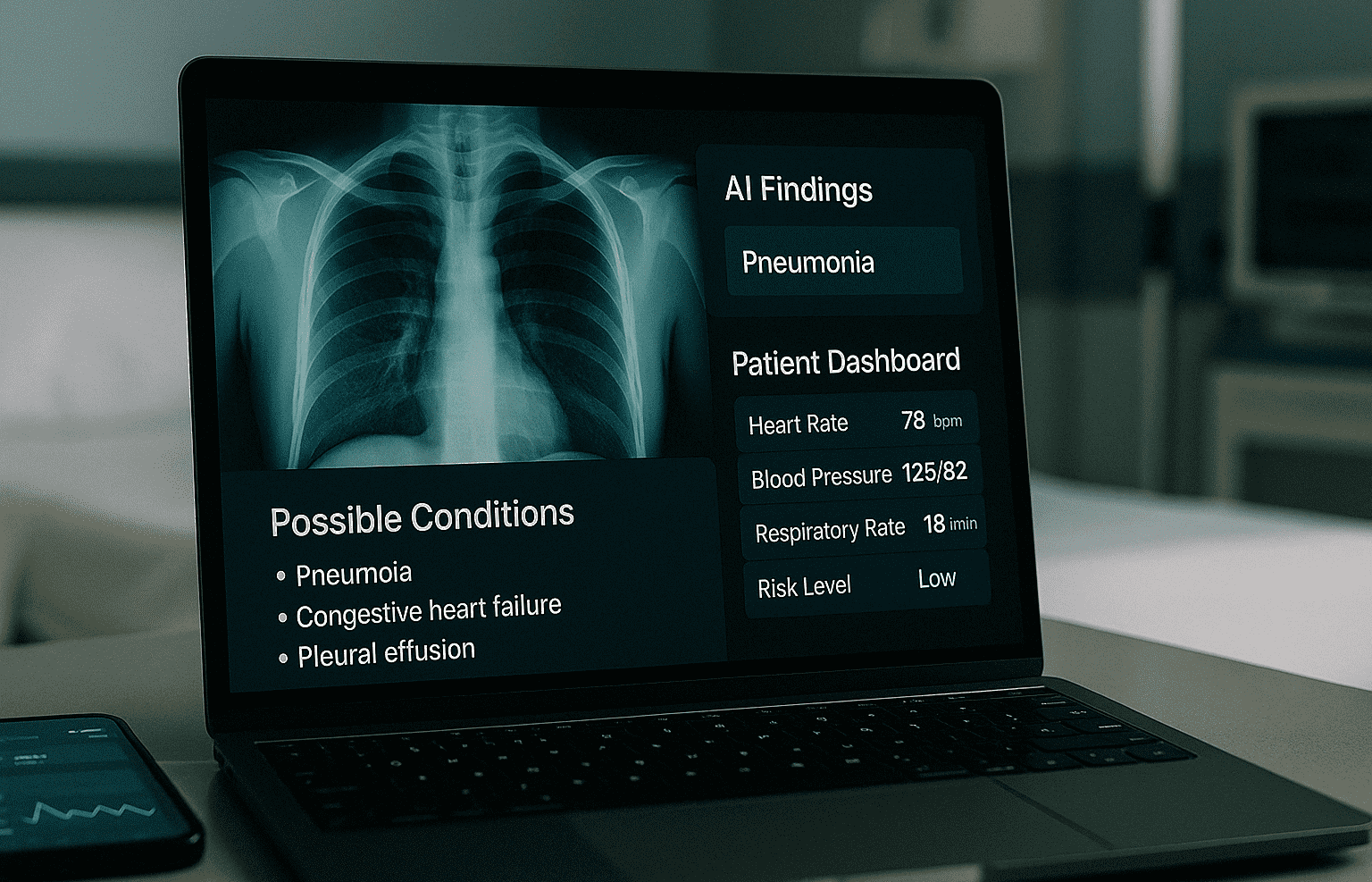
The performance of these systems is improving fast. Foundation models are now delivering 65 to 76% accuracy on complex orchestration benchmarks, a number that would have seemed ambitious just two years ago. You can also see how these capabilities are reshaping entire industries by exploring AI trends in software development and specific verticals like AI in healthcare.
Examples of AI-powered software in the wild include customer-facing chatbots, facial recognition systems, automated content generators, fraud detection engines, and predictive analytics dashboards. Each one learns. Each one adapts. That is the defining quality.
How is AI-powered software different from traditional software?
Traditional software is deterministic. You write a rule, the system follows it. Every time. If a user enters X, the system returns Y. Predictable, stable, and relatively easy to audit.
AI-powered software works differently. AI development is probabilistic and data-focused, contrasting sharply with deterministic rule-based coding. The system does not follow a script. It makes statistically informed predictions based on patterns it has learned from large datasets. That means outputs can vary, and the system can improve with more data, but it can also degrade if the data changes.

Here is a side-by-side comparison to make this concrete:
| Dimension | Traditional software | AI-powered software |
|---|---|---|
| Logic | Rule-based (if-then-else) | Statistical and learned |
| Output | Deterministic | Probabilistic |
| Development cycle | Linear, feature-driven sprints | Iterative, experiment-driven |
| Maintenance | Stable post-launch | Requires ongoing retraining |
| Failure mode | Crashes or wrong logic | Drift, hallucination, bias |
Development workflows reflect this difference too. AI projects require constant monitoring, data pipelines, and retraining cycles. Traditional projects ship a feature and move on. If you are mastering AI development for the first time, this shift in mindset is often the hardest adjustment.
Pro Tip: For critical business processes, combine AI’s flexibility with rule-based checks. Let the AI handle pattern recognition, but use deterministic guardrails to catch outputs that fall outside acceptable ranges. This hybrid approach builds stability out of chaos.
The architecture of modern AI-powered software
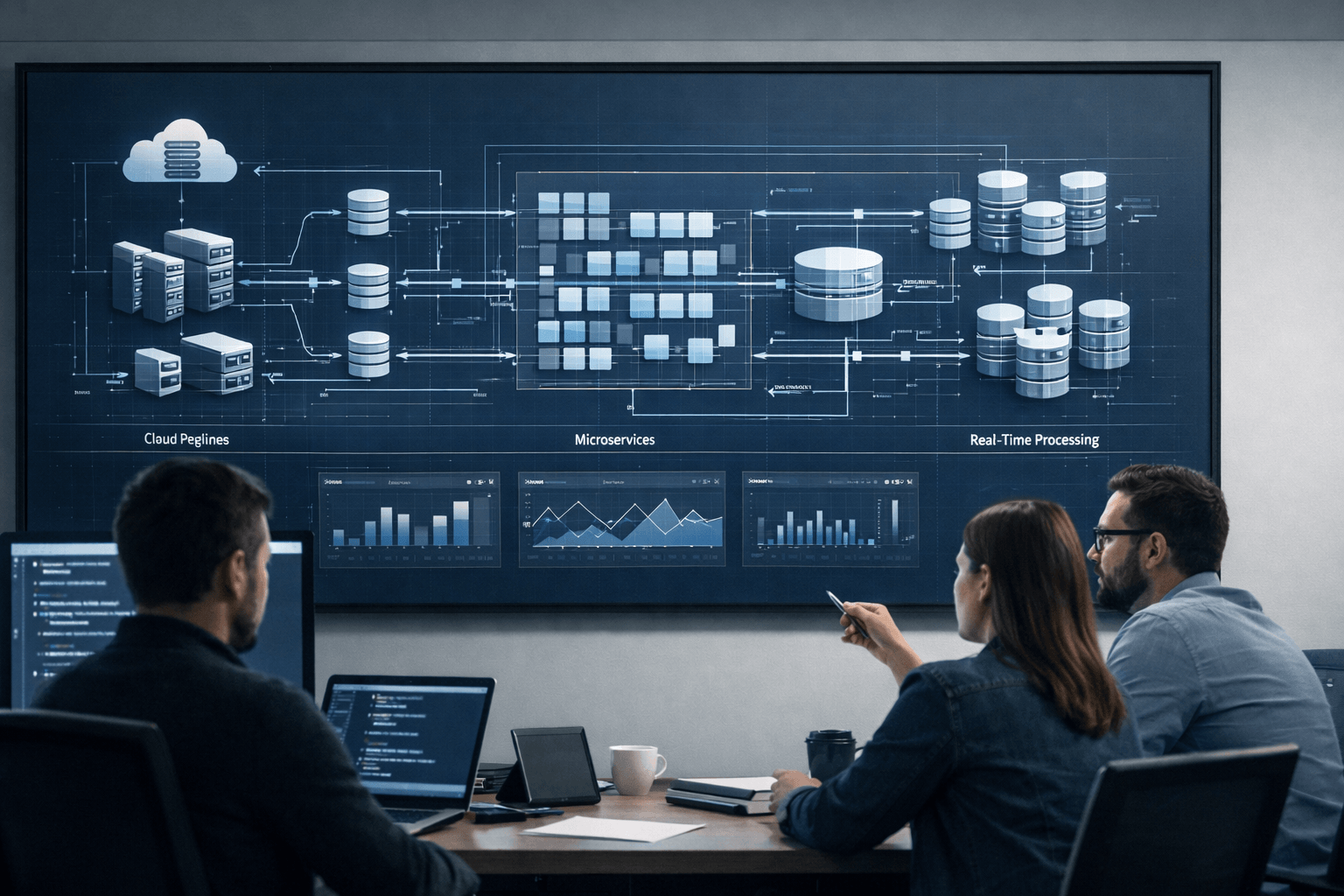
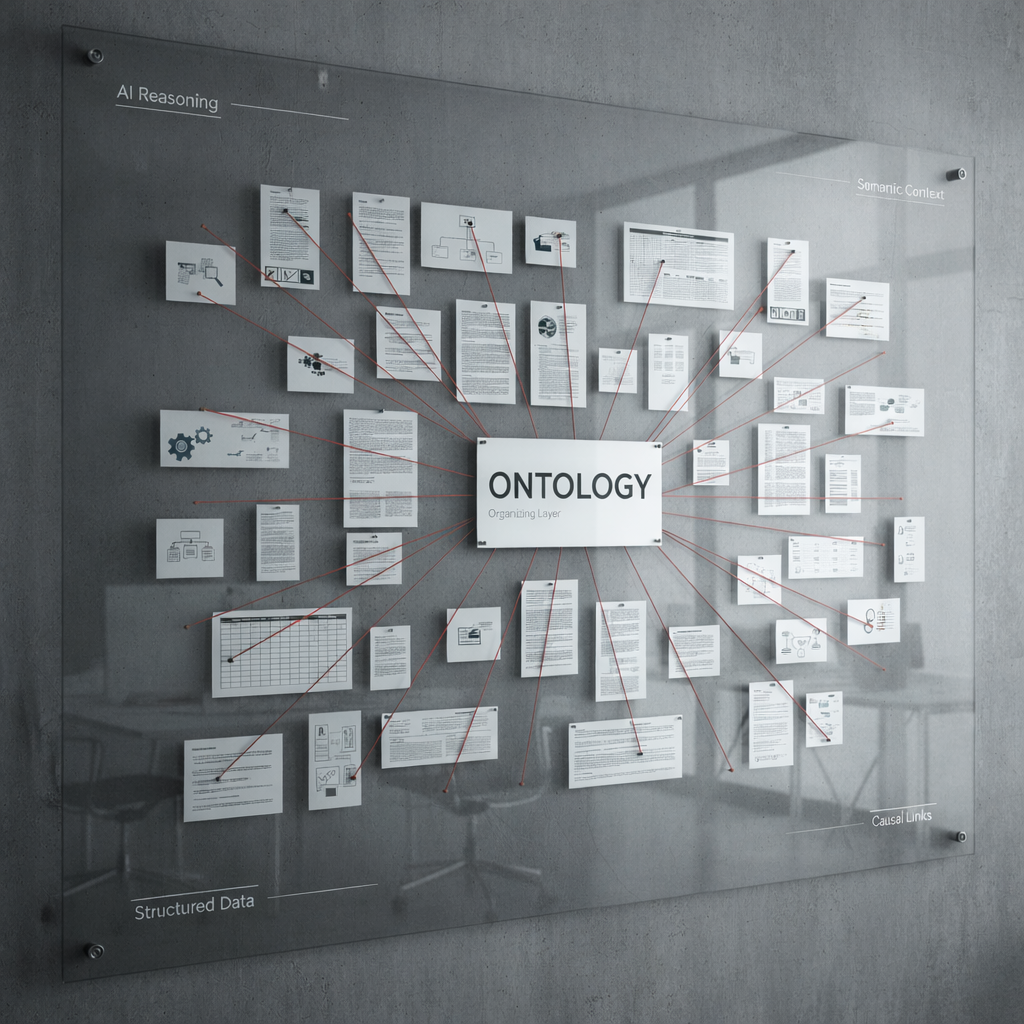
Visualizing the stack helps. A complete stack includes layers for data collection, modeling, orchestration, and governance. Each layer has a distinct job, and a weakness in any one of them can undermine the whole system.
Here is how raw data becomes intelligent output in a modern AI-powered application:
- Data collection and context: The system pulls structured and unstructured data from databases, APIs, or real-time streams. Retrieval-Augmented Generation (RAG) is a common technique here, allowing models to reference external knowledge without retraining.
- Core model processing: A foundation model or specialized ML engine processes the input. Transformers handle language; convolutional networks handle images; gradient-boosted trees handle tabular predictions.
- Orchestration and tool use: Workflow platforms coordinate multi-step tasks, calling external APIs, running function calls, and chaining model outputs together.
- Application and governance: The final layer handles user interfaces, access controls, audit logging, and compliance checks. This is where security and accountability live.
Governance is not optional. Without auditing and security checks, AI models can drift toward outputs that are biased, inaccurate, or even harmful. If you want to go deeper on implementation, our AI integration services page outlines how we approach each of these layers for client teams.
Major types of AI-powered software and use cases for startups
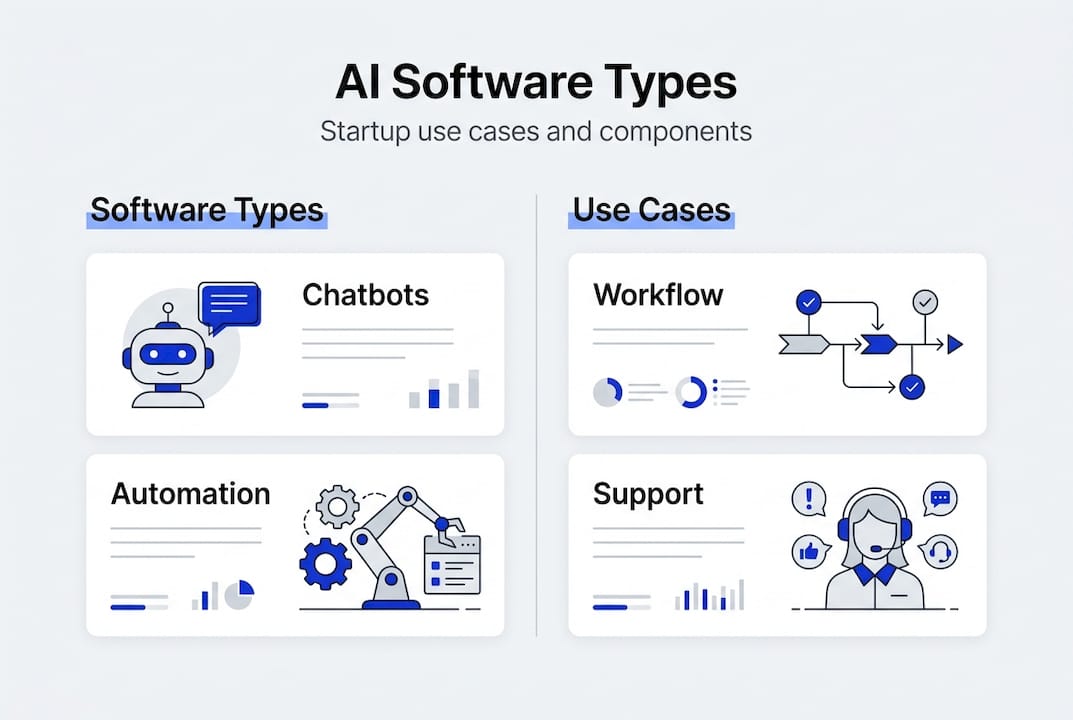
Not all AI-powered software is the same category of product. AI-powered software includes end-user tools, development platforms, and embedded features, and each serves a different strategic purpose.
- End-user AI apps: Chatbots, content generators, voice assistants. These are customer-facing and often the fastest to pilot.
- AI development platforms: MLOps and LLMOps tools that help teams build, train, and monitor their own models.
- AI-embedded features: Capabilities baked into existing products, like CRM lead scoring, in-app recommendations, or smart search.
For startups, the most common and highest-value use cases right now include workflow automation, intelligent customer support, advanced analytics, real-time personalization, and R&D assistants that accelerate research cycles. Agentic orchestration systems, which chain multiple AI actions together autonomously, are achieving 65 to 76% accuracy on long-task benchmarks, making them viable for complex internal workflows.
Pro Tip: Early-stage startups should pilot with modular, off-the-shelf AI tools before committing to custom model development. Validate the use case first. Build custom only when the off-the-shelf ceiling becomes a real constraint. You can explore current AI tech trends and practical guidance on scalable SaaS AI solutions to sharpen your evaluation criteria.
Top five startup-ready AI-powered products by task and value:
- Customer support chatbots: Reduce support costs, available 24/7
- AI-powered analytics dashboards: Surface insights from data without a data science team
- Content generation tools: Accelerate marketing and documentation output
- Predictive lead scoring: Prioritize sales efforts with ML-ranked pipelines
- Automated code review tools: Catch bugs and enforce standards at scale
Benchmarks, accuracy, and common edge cases
Choosing the right type of AI-powered software is only half the story. You also need to understand how well these systems actually perform, and where they break.
Recent data is encouraging. Frontier models achieve 65 to 76% accuracy on orchestration benchmarks, and coding performance has jumped from under 20% to over 80% in just a few years. That is a remarkable trajectory. But benchmarks measure controlled conditions. Real-world performance on novel or adversarial data is a different story.
Common failure modes that every founder should plan for:
- Hallucination: The model generates confident, plausible-sounding output that is factually wrong
- Brittleness: Performance drops sharply when input data differs from training data
- Model drift: Accuracy degrades over time as real-world data patterns shift
- Adversarial attacks: Malicious inputs designed to manipulate model outputs
These are not hypothetical risks. They are documented edge cases that show up in production systems regularly. Planning for them is part of responsible AI adoption, not an afterthought.
“AI excels at automation, standardization, and personalization, but it demands ongoing monitoring, governance, and human oversight to remain reliable in production environments.” — Expert insight on AI in enterprise software
For a deeper look at how to set realistic expectations and measure progress, the AI project benchmarks resource walks through evaluation frameworks we use with our own clients.
Best practices for startup teams adopting AI-powered software
Pulling from everything above, here is a practical sequence for founders and product managers ready to move from evaluation to implementation.
- Adopt a hybrid architecture when reliability matters. Pair AI components with rule-based checks for any workflow where errors carry real cost. This is the single most effective way to build trust in AI outputs early.
- Evaluate vendors on accuracy, cost, transparency, and governance support. Features are easy to demo. Ask vendors for benchmark data, failure rate disclosures, and audit trail capabilities before signing anything.
- Baseline with public benchmarks, then stress-test edge cases. Run your specific data through the model before committing. Generic benchmarks tell you the ceiling; your data tells you the floor.
- Start modular, expand as maturity grows. Plug in one AI component at a time. Measure impact. Only scale what is working. This keeps risk contained and learning fast.
- Monitor for data drift and retrain proactively. Set up monitoring pipelines from day one. Building scalable AI solutions means treating model maintenance as a continuous product responsibility, not a one-time deployment.
Founders who prioritize hybrid AI-traditional stacks, evaluate cost-accuracy tradeoffs honestly, and build governance into the architecture from the start are the ones who avoid the expensive rebuilds that come from moving too fast without a plan.
How Meduzzen accelerates your AI-powered journey
Now that you have a clear picture of what AI-powered software is, how it differs from traditional tools, and what it takes to adopt it responsibly, the next question is: who helps you build it well?
At Meduzzen, we work with startup founders and product teams who are serious about getting AI right, not just getting it shipped. Our AI services for business growth cover everything from architecture design and model integration to full-stack development and ongoing governance support. Whether you need a dedicated team to build a custom AI feature or expert engineers to accelerate your SaaS development services, we bring 10 years of experience and 150+ pre-vetted engineers to the table. We also offer deep web development expertise for teams that need AI embedded into modern, scalable front-end and back-end systems. The goal is always the same: reliable delivery, transparent communication, and results that hold up in production.
Frequently asked questions
What makes software ‘AI-powered’ versus just automated?
AI-powered software adapts and learns from data over time, while automated tools follow fixed, pre-written rules and cannot improve their own performance without manual reprogramming.
Are AI-powered solutions reliable enough for business-critical tasks?
Advances have pushed coding accuracy above 80% on some benchmarks, but governance frameworks and human oversight remain essential, particularly for edge cases and high-stakes decisions.
How do startups choose the right type of AI-powered software?
Prioritize fit with your current workflows, and look for modular, transparent solutions that come with solid benchmark data and built-in governance features before committing to a vendor or custom build.
What are common failure modes for AI-powered applications?
The most frequent issues are hallucinations, brittleness, and adversarial risks, all of which require proactive monitoring and governance to manage effectively in production.