In this article
Modern Web Development Tools 2026: 45% Faster Builds
Tech & Infrastructure
Discover how 78% of developers use AI tools to boost productivity by 45%. Compare Next.js, Vue, Django frameworks and choose the right stack for your startup in 2026.

Choosing the right web development tools can make or break your startup’s ability to scale efficiently. With over 78% of professional developers now using AI coding assistants daily, boosting productivity by up to 45%, the technology landscape has shifted dramatically. This guide walks CTOs and founders through proven selection criteria, reviews leading AI-augmented tools and frameworks, compares tradeoffs, and delivers tailored recommendations to accelerate your product roadmap while controlling costs.
Key Takeaways
| Point | Details |
|---|---|
| Selection criteria | Evaluate scalability, AI productivity gains, team skills, cost, and cloud integration to match tools with startup goals. |
| AI coding assistants | Increase developer productivity by 35-45%, costing $20-$40/month per developer with strong ROI for rapid delivery. |
| Frontend frameworks | Next.js enables scalable SEO-friendly apps; Vue.js suits small teams; Angular fits enterprise scale; SvelteKit optimizes performance. |
| Backend frameworks | Django offers batteries-included Python development; ASP.NET Core targets enterprise scale with robust tooling. |
| Situational guidance | Match framework choice to startup size, product goals, and team expertise for optimal velocity and maintainability. |
How to Choose Modern Web Development Tools: Key Selection Criteria
Selecting the right web development stack requires balancing multiple factors that directly impact your startup’s growth trajectory. The first consideration is development velocity. Startups adopting modern full-stack and AI-augmented tools report significantly faster time-to-market and reduced maintenance burdens. AI coding assistants can accelerate feature delivery by 35-45%, but you need frameworks that complement this speed without sacrificing code quality.
Scalability matters from day one. Your initial framework choice determines how easily you can handle user growth, add features, and maintain performance under load. Evaluate whether a framework supports horizontal scaling, efficient database queries, and caching strategies. Frameworks like Next.js and Django provide built-in optimization paths, while lightweight options like Flask require more manual scaling work.
Team skillset compatibility drives adoption speed and long-term maintenance costs. If your developers know JavaScript deeply, React-based frameworks like Next.js reduce onboarding time. Conversely, forcing a Python team onto a Node.js stack creates friction and slows delivery. Assess your team’s current expertise and willingness to learn before committing to new technology.
Cost considerations extend beyond licensing fees. Factor in training time, third-party service integrations, hosting expenses, and ongoing maintenance. AI tools typically cost $20-$40 per developer monthly, which pays off quickly through productivity gains. Open-source frameworks eliminate licensing costs but may require more DevOps investment.
Integration with cloud-native deployment and CI/CD workflows ensures smooth releases and reduces manual errors. Tools that work seamlessly with platforms like Vercel, AWS, or Azure enable automated testing, staging environments, and zero-downtime deployments. This integration becomes critical as your team grows and release frequency increases.
Pro Tip: Start with a framework that matches 80% of your current team skills rather than chasing the newest technology. You can always introduce modern tools incrementally as your team expands and expertise deepens.
Key evaluation checklist:
- Does the framework support your target scale (thousands vs millions of users)?
- Can your team start building productively within two weeks?
- Does it integrate with your preferred cloud provider and CI/CD pipeline?
- What is the total cost including tools, hosting, and training?
- How active is the community for troubleshooting and finding talent?
For deeper insights into building scalable architectures, explore AI-driven software development approaches that combine framework selection with intelligent tooling. Understanding modern web development frameworks 2026 trends helps align your technology choices with industry best practices.
AI-Augmented Development Tools
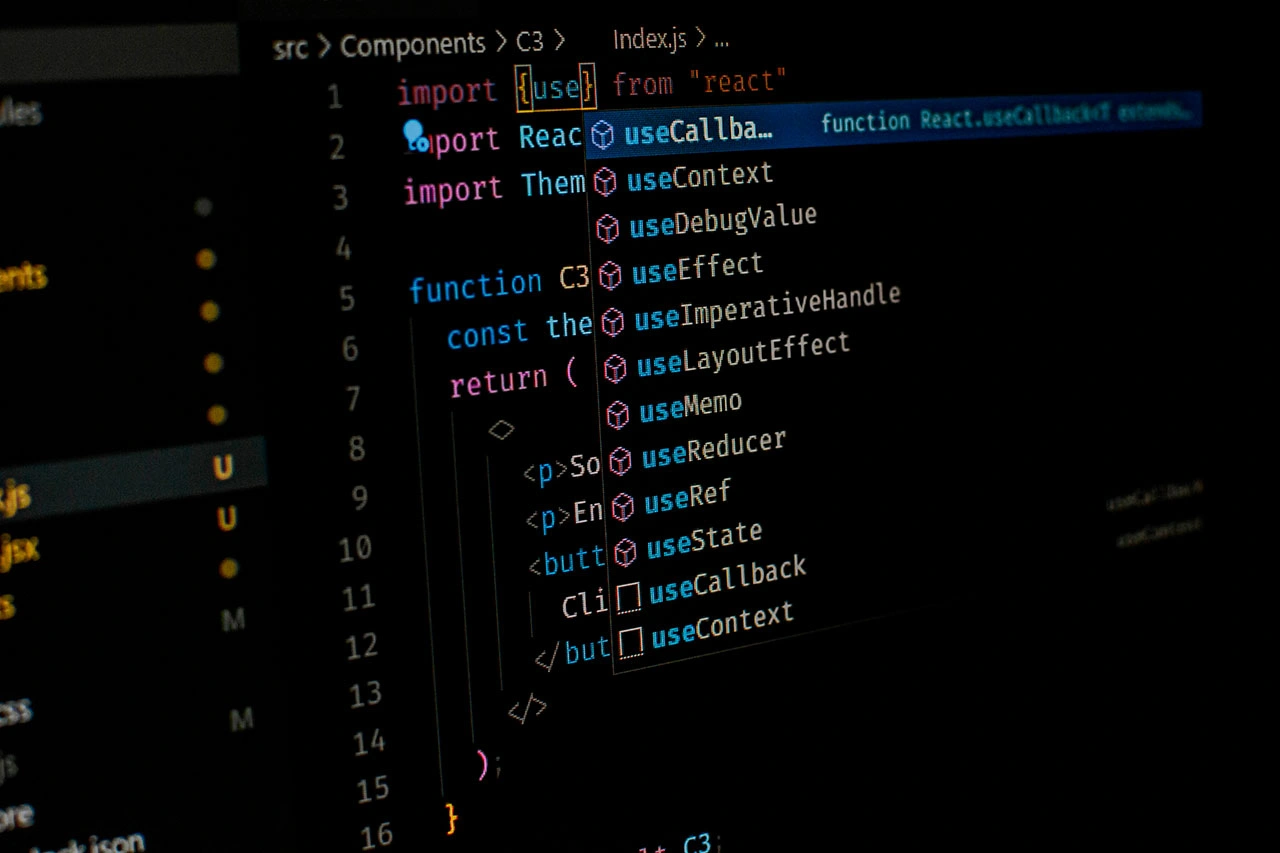
AI coding assistants have fundamentally changed how developers write, test, and refactor code. Over 78% of professional developers rely daily on AI coding assistants, boosting productivity by up to 45%. Tools like GitHub Copilot, Tabnine, and Base44 provide real-time code suggestions, automate boilerplate generation, and catch common bugs before they reach production.
The financial case is compelling. Most AI coding tools cost $20-$40 per developer monthly. If a developer writes 30% more code or reduces debugging time by 40%, the ROI becomes positive within weeks. For a five-person development team, that investment translates to roughly one extra full-time developer’s output without hiring costs.
AI tools excel at repetitive tasks like writing unit tests, converting legacy code, and generating API documentation. They accelerate code completion by predicting entire functions based on context. However, human oversight remains essential for architectural decisions, security reviews, and maintaining code quality standards. AI suggests solutions but developers must validate business logic and edge cases.
Automated testing tools powered by AI can generate test cases, identify coverage gaps, and even predict which code changes are most likely to introduce bugs. This reduces the manual testing burden and catches regressions earlier in the development cycle. Integrating AI testing with your CI/CD pipeline creates a safety net that speeds releases without sacrificing stability.
The effect on time to market is measurable. Startups using AI-augmented workflows report 25-40% faster feature delivery and 30% fewer critical bugs in production. This velocity advantage compounds over time, letting you iterate faster based on user feedback and outpace competitors.
Pro Tip: Introduce AI coding assistants gradually. Start with code completion and test generation, then expand to refactoring and documentation as your team builds trust in the tooling.
Key AI tool categories:
- Code completion and generation (GitHub Copilot, Tabnine)
- Automated testing and bug detection (Testim, Mabl)
- Code review and security scanning (DeepCode, Snyk)
- Documentation generation (Mintlify, Swimm)
For teams building modern web applications, combining AI tools with the right framework creates a productivity multiplier. Explore JavaScript development services, Angular development expertise, and Vue.js development services to see how professional teams leverage these technologies. Understanding AI development tools impact helps you make informed investment decisions.
Leading Frontend Frameworks in 2026
Frontend framework selection shapes user experience, SEO performance, and development speed. Next.js supports hybrid static/dynamic sites, React Server Components, and edge functions enabling scalable, SEO-friendly apps. Its tight integration with Vercel simplifies deployment and provides automatic performance optimizations. Next.js works well for content-heavy sites, e-commerce platforms, and SaaS products that need both fast initial loads and dynamic interactivity.

Vue.js remains a favorite for teams prioritizing simplicity and flexibility. Vue.js offers simple setup, low learning curve, and flexibility, ideal for small teams needing rapid development. Its gentle learning curve means junior developers become productive quickly. Vue’s component system encourages reusable code, and the ecosystem provides solid libraries for routing, state management, and testing. Startups with small teams or limited frontend experience often choose Vue to accelerate MVP delivery.
Angular provides enterprise-grade stability and comprehensive tooling for complex applications. Its opinionated structure enforces consistent code patterns across large teams, reducing architectural debates. Angular’s built-in dependency injection, routing, and form validation save time compared to assembling separate libraries. The tradeoff is a steeper learning curve and more boilerplate code. Angular shines for internal tools, admin dashboards, and applications requiring strict type safety.
SvelteKit takes a different approach by compiling components to vanilla JavaScript at build time rather than shipping a runtime framework. SvelteKit’s compile-time approach reduces runtime overhead, delivering faster loading for interactive UIs. This results in smaller bundle sizes and faster initial page loads, particularly valuable for mobile users or performance-critical applications. SvelteKit suits projects where raw speed matters more than ecosystem size.
Matching frameworks to startup needs requires honest assessment of priorities. A content-focused startup benefits from Next.js’s SEO strengths. A resource-constrained team might choose Vue.js for its simplicity. An enterprise product with complex workflows leans toward Angular’s structure. A performance-critical app considers SvelteKit’s speed advantage.
Key framework strengths:
- Next.js: Hybrid rendering, SEO optimization, edge functions, strong ecosystem
- Vue.js: Low learning curve, flexible architecture, excellent documentation
- Angular: Enterprise tooling, type safety, comprehensive features
- SvelteKit: Minimal runtime, exceptional performance, clean syntax
Explore specialized expertise through JavaScript frontend development, Angular frontend services, and Vue.js frontend development to accelerate your frontend roadmap. Detailed comparisons of Next.js and SvelteKit features and Vue.js strengths in 2026 provide additional decision-making context.
Top Backend and Full-Stack Frameworks
Backend frameworks provide the server-side logic, database access, authentication, and API endpoints that power modern web applications. Django’s batteries-included Python ecosystem enables rapid development with built-in admin, security, and scalability. Its ORM simplifies database interactions, the admin interface provides instant CRUD operations, and the security defaults protect against common vulnerabilities. Django suits content management systems, API backends, and applications requiring quick delivery with strong data integrity.
Flask and FastAPI offer lightweight alternatives for developers who prefer flexibility over convention. Flask provides the basics (routing, templates, sessions) and lets you choose libraries for everything else. FastAPI focuses on building high-performance APIs with automatic validation, documentation, and async support. Both frameworks excel for microservices, RESTful APIs, and projects where you want precise control over dependencies.
Laravel dominates PHP development with elegant syntax and rich features. Its Eloquent ORM, Blade templating, and built-in authentication reduce development time. Laravel’s ecosystem includes queuing, caching, and real-time broadcasting out of the box. It works well for traditional web applications, content platforms, and projects leveraging existing PHP infrastructure.
ASP.NET Core supports enterprise-grade scalable applications with comprehensive tooling, strong typing, and tight Azure integration. Its performance rivals Node.js while providing robust libraries for authentication, logging, and data access. ASP.NET Core fits large organizations, regulated industries, and applications requiring Windows infrastructure compatibility.
Full-stack frameworks that combine frontend and backend reduce assembly time and improve maintainability. Next.js with API routes, SvelteKit with server endpoints, and Nuxt.js with server middleware let you build complete applications within a single framework. This approach simplifies deployment, reduces context switching, and ensures consistent patterns across your codebase.
Key backend framework capabilities:
- Django: Comprehensive features, rapid development, strong security defaults
- Flask/FastAPI: Lightweight, flexible, excellent API development
- Laravel: Elegant PHP development, rich ecosystem, quick iteration
- ASP.NET Core: Enterprise scale, strong typing, Azure integration
Leverage professional expertise through Python backend development, C# backend development, and DevOps services to build robust server infrastructure. Comprehensive analysis of backend framework features 2026 helps inform your technology stack decisions.
Cloud Deployment and Collaboration Tools
Cloud-native deployment platforms and collaboration tools form the connective tissue between code and production. Vercel’s integration with Next.js and GitHub simplifies CI/CD and accelerates release cycles. Pushing to your main branch automatically triggers builds, runs tests, and deploys to production within minutes. Edge functions run code close to users globally, reducing latency for API calls and dynamic content.
GitHub remains essential for version control, code review, and team collaboration. Pull requests create natural checkpoints for discussing changes before merging. GitHub Actions automate testing, linting, and deployment workflows without third-party CI tools. The platform’s integration with project management and documentation tools centralizes development activity.
Agile project management tools like monday.com enhance team coordination through real-time task tracking, sprint planning, and progress visualization. These platforms connect development work to business goals, making priorities transparent to both technical and non-technical stakeholders. Integrations with GitHub and Slack keep everyone informed without requiring manual status updates.
CI/CD pipelines reduce manual deployment errors and speed releases by automating build, test, and deployment processes. Modern pipelines include automated security scanning, performance testing, and gradual rollouts that catch issues before they affect all users. This automation becomes critical as release frequency increases from monthly to daily or even hourly.
Cloud tools enhance transparency by providing real-time insights into application health, user behavior, and infrastructure costs. Monitoring solutions alert teams to performance degradation before users complain. Analytics dashboards inform product decisions with actual usage data rather than assumptions.
Essential cloud and collaboration tools:
- Deployment platforms (Vercel, Netlify, AWS Amplify)
- Version control (GitHub, GitLab, Bitbucket)
- Project management (monday.com, Linear, Jira)
- CI/CD automation (GitHub Actions, CircleCI, Jenkins)
- Monitoring and analytics (Datadog, New Relic, Sentry)
Professional DevOps and CI/CD services ensure smooth deployment workflows and infrastructure reliability. Explore modern cloud deployment tools to optimize your release pipeline.
Comparative Framework Analysis and Tradeoffs
Understanding framework tradeoffs helps you match technology to your specific context rather than following hype. React’s flexibility and ecosystem size surpass Vue.js and Angular in popularity; Angular excels in enterprise stability. React’s massive community means more third-party libraries, tutorials, and available talent. However, this flexibility requires more architectural decisions upfront.
| Framework | Learning Curve | Scalability | Performance | Community Size | Best For |
|---|---|---|---|---|---|
| Next.js | Medium | Excellent | Very Good | Large | SEO-critical apps, content platforms |
| Vue.js | Easy | Good | Very Good | Large | Small teams, rapid MVPs |
| Angular | Steep | Excellent | Good | Large | Enterprise apps, large teams |
| SvelteKit | Easy | Good | Excellent | Medium | Performance-critical UIs |
| Django | Medium | Excellent | Very Good | Large | Data-driven apps, CMSs |
| Laravel | Medium | Good | Good | Large | PHP shops, traditional web apps |
| ASP.NET Core | Steep | Excellent | Excellent | Large | Enterprise, Windows infrastructure |
The tradeoff between flexibility and convention affects long-term maintainability. Flask and React offer maximum flexibility, letting you structure projects however you want. This freedom accelerates initial development but can lead to inconsistent patterns as teams grow. Django and Angular enforce conventions that feel restrictive initially but create predictable codebases that scale across teams.
Performance differences matter most at scale. SvelteKit’s compile-time optimization delivers exceptional speed but lacks the ecosystem maturity of React. Next.js provides excellent performance through automatic code splitting and image optimization while maintaining a rich plugin ecosystem. Django handles high loads efficiently with proper caching but requires more infrastructure tuning than serverless-friendly frameworks.
Learning curve impacts time to productivity. A junior developer becomes productive with Vue.js within days, while Angular requires weeks of study. However, Angular’s structure prevents common mistakes that Vue.js’s flexibility allows. Balance immediate productivity against long-term maintainability based on your team’s experience level.
Community size determines available resources for troubleshooting, hiring, and extending functionality. React and Vue.js have enormous communities with abundant tutorials and libraries. Emerging frameworks like SvelteKit offer technical advantages but smaller talent pools and fewer pre-built solutions.
Pro Tip: Prototype with two frameworks if you’re between options. Build the same feature in both to compare developer experience, code clarity, and performance before committing your entire product.
Framework selection significantly impacts hiring. React developers are abundant but competitive to hire. Angular developers command premium salaries due to enterprise demand. Vue.js strikes a balance with good availability and reasonable compensation expectations.
For tailored framework guidance, explore frameworks comparison for startups and detailed framework comparison and tradeoffs analysis.
Situational Recommendations: Choosing the Right Tools for Your Startup
Your optimal technology stack depends on specific startup characteristics rather than universal best practices. Here’s how to match tools to common scenarios.
- Rapid MVP Development: Choose Next.js or Vue.js combined with AI coding assistants. Next.js enables quick iteration with excellent SEO for landing pages. Vue.js provides faster learning for small teams. Add GitHub Copilot to accelerate feature delivery by 35-45%. Deploy on Vercel for zero-config CI/CD. This stack gets you from idea to market in weeks rather than months.
- Enterprise-Scale Stable Architecture: Adopt Angular or Django for applications requiring long-term maintainability and team coordination. Angular’s opinionated structure prevents architectural drift across large teams. Django’s batteries-included approach reduces security risks and provides proven scalability patterns. Both frameworks have mature tooling for testing, monitoring, and performance optimization.
- Performance-Critical Interactive UIs: Select SvelteKit for applications where load time and runtime performance directly impact user engagement. Gaming platforms, data visualization tools, and mobile-first apps benefit from SvelteKit’s minimal runtime overhead. Combine with edge computing to deliver sub-100ms response times globally.
- Small Teams with Limited Resources: Leverage low-code platforms and AI-augmented development to maximize output per developer. Tools like Retool or Budibase handle admin interfaces and internal tools quickly. AI coding assistants compensate for limited team size by accelerating routine coding tasks. Focus engineering effort on unique product features rather than building generic functionality.
- API-First SaaS Products: Use FastAPI or Express.js for backend services with Next.js or React for the frontend. This separation enables independent scaling and lets specialized teams work in parallel. FastAPI’s automatic API documentation and validation reduce maintenance overhead as your API grows.
- Content-Heavy Applications: Choose Next.js with its hybrid rendering, automatic image optimization, and built-in SEO features. Static site generation accelerates page loads while incremental static regeneration keeps content fresh. This approach handles high traffic efficiently while maintaining excellent search engine visibility.
Match your tool choices to available team skills and project goals. A Python-experienced team builds faster with Django than learning Node.js. A greenfield project with no legacy constraints explores modern options like SvelteKit. An existing React codebase extends more easily with Next.js than migrating to Vue.js.
Pro Tip: Start with one framework for both frontend and backend (like Next.js or SvelteKit) to reduce complexity. Separate them only when scaling demands or team specialization justifies the additional overhead.
Resource availability determines appropriate technology choices. Well-funded startups can invest in team training for optimal long-term tools. Bootstrap startups prioritize tools that match existing skills to minimize time to revenue.
Explore professional guidance through JavaScript solutions for startups and cloud software development services to accelerate your implementation.
Discover Expert Web Development Services to Elevate Your Startup
Navigating modern web development tools requires balancing technical excellence with business realities. Meduzzen delivers expert software development services integrating AI-augmented tools, scalable frameworks, and cloud-native architectures tailored to startup needs.
Our experienced engineers specialize in JavaScript, Python, cloud deployment, and team-efficient development workflows. We help startups choose the right technology stack, build MVPs quickly, and scale seamlessly as user demand grows.
Partner with Meduzzen to accelerate your product roadmap while controlling costs. Explore comprehensive web development services, specialized JavaScript software development, and robust cloud software development to transform your startup vision into production-ready applications.
Frequently Asked Questions
What are the best AI coding assistants for startups in 2026?
GitHub Copilot leads in code completion and suggestion quality, integrating seamlessly with VS Code and JetBrains IDEs. Tabnine offers stronger privacy controls for startups handling sensitive data. Both tools cost $20-$40 monthly per developer and typically pay for themselves within weeks through productivity gains.
How do I balance scalability and development speed when choosing frameworks?
Start with frameworks that support your target scale without overengineering. Next.js and Django provide clear scaling paths while enabling rapid initial development. Avoid premature optimization but choose architectures that don’t require complete rewrites at 10x growth.
Can small teams effectively leverage low-code tools?
Yes, low-code platforms handle generic functionality like admin panels and internal dashboards quickly, freeing developers for unique product features. Use low-code for 20-30% of your application while custom-coding differentiated capabilities. This hybrid approach maximizes small team output.
What frameworks integrate best with cloud CI/CD pipelines?
Next.js with Vercel, Django with AWS Elastic Beanstalk, and ASP.NET Core with Azure DevOps provide the smoothest CI/CD experiences. These combinations offer one-click deployments, automatic scaling, and built-in monitoring with minimal configuration.
How do I measure ROI of adopting modern web development tools?
Track time from commit to production, bug rates in production, and developer velocity (story points or features per sprint). Compare these metrics before and after tool adoption. Most AI coding tools and modern frameworks show measurable improvements within 30-60 days.
Should I prioritize framework popularity or technical fit?
Prioritize technical fit for your specific use case, but don’t ignore popularity entirely. Popular frameworks ensure easier hiring and abundant resources. If two frameworks fit technically, choose the more popular one for better long-term support and talent availability.