


Hire Full Stack Developers
Everyone claims full stack. Few can debug a broken API at 2 AM and fix the UI that caused it by morning. Meduzzen matches you with engineers who own the entire product, not just one layer. 48 hours. $35/hr. Zero platform fees.
Hire full stack developers-
Top-rated
agency on Upwork -
370+
verified client reviews -
100%
Job Success
Full stack developers for hire, vetted and ready to start
Explore the Talent Lab




Value Proposition
What changes when you hire full stack developers the right way

Production-tested talent
Hire full stack developers with real deployment experience across frontend, backend, databases, and cloud infrastructure at scale.

Senior-backed matching
We match you with the right full stack engineers and validate every profile against your stack, project scope, and team structure.

Fast onboarding
Skip the 60-day hiring cycle and start with pre-vetted full stack engineers in 48 hours without delivery delays or friction.

Full-spectrum coverage
Hire one full stack engineer for your MVP, add a frontend specialist, or build a dedicated full stack team around your product roadmap.

Direct communication
Work directly with your full stack developers for faster feedback, clearer coordination, and smoother execution across teams.

Fast replacement
If the fit is not right, we replace the developer within days so delivery keeps moving without interruption or delay.
Engagement models
Flexible ways to hire dedicated full stack developers
Industries we serve
Industries we build full stack solutions for
Skills Grid
Hire full stack developers by technology and stack
Frontend:
- React
- Next.js
- Vue.js
- Angular
- TypeScript
Backend:
- Node.js
- Python
- NestJS
- FastAPI
- Django
Data and APIs:
- PostgreSQL
- MongoDB
- Redis
- Prisma
- GraphQL
Cloud and DevOps:
- AWS
- Docker
- Kubernetes
- GitHub Actions
- Terraform
How it works
How we match you with the right full stack developers
Share requirements
Tell us about your project, system architecture, tech stack preferences, and the type of full stack engineers you need.
Review matched developers
We shortlist full stack developers who match your tech stack, deployment experience, and working style.
Interview developers
Meet the full stack engineers, assess technical depth across frontend, backend, and infrastructure, and choose the right fit.
Start in 48 hours
Move forward quickly with pre-vetted full stack developers, clear next steps, and no hiring delays.
Stories behind the success
What happens when you hire the right full stack developers
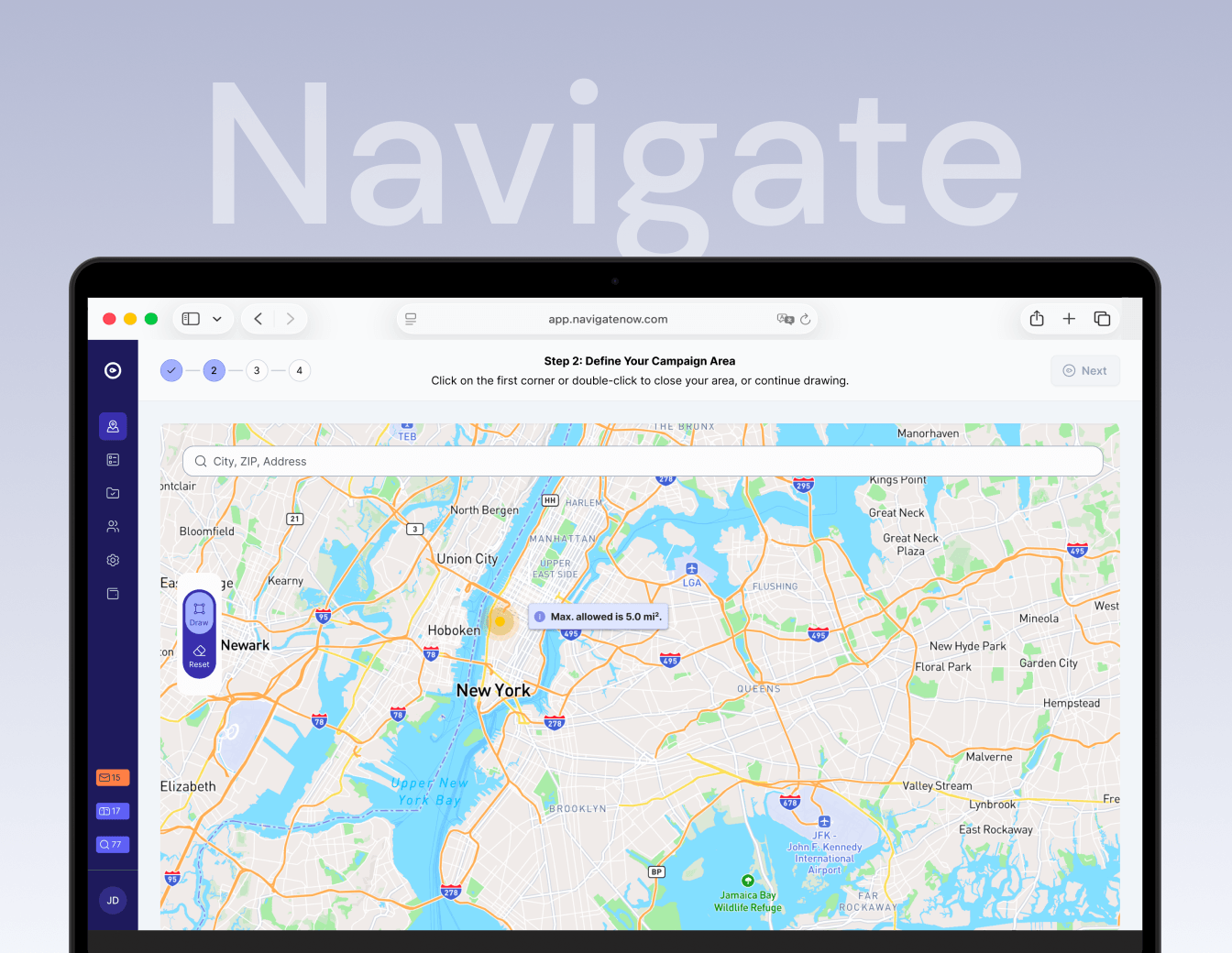


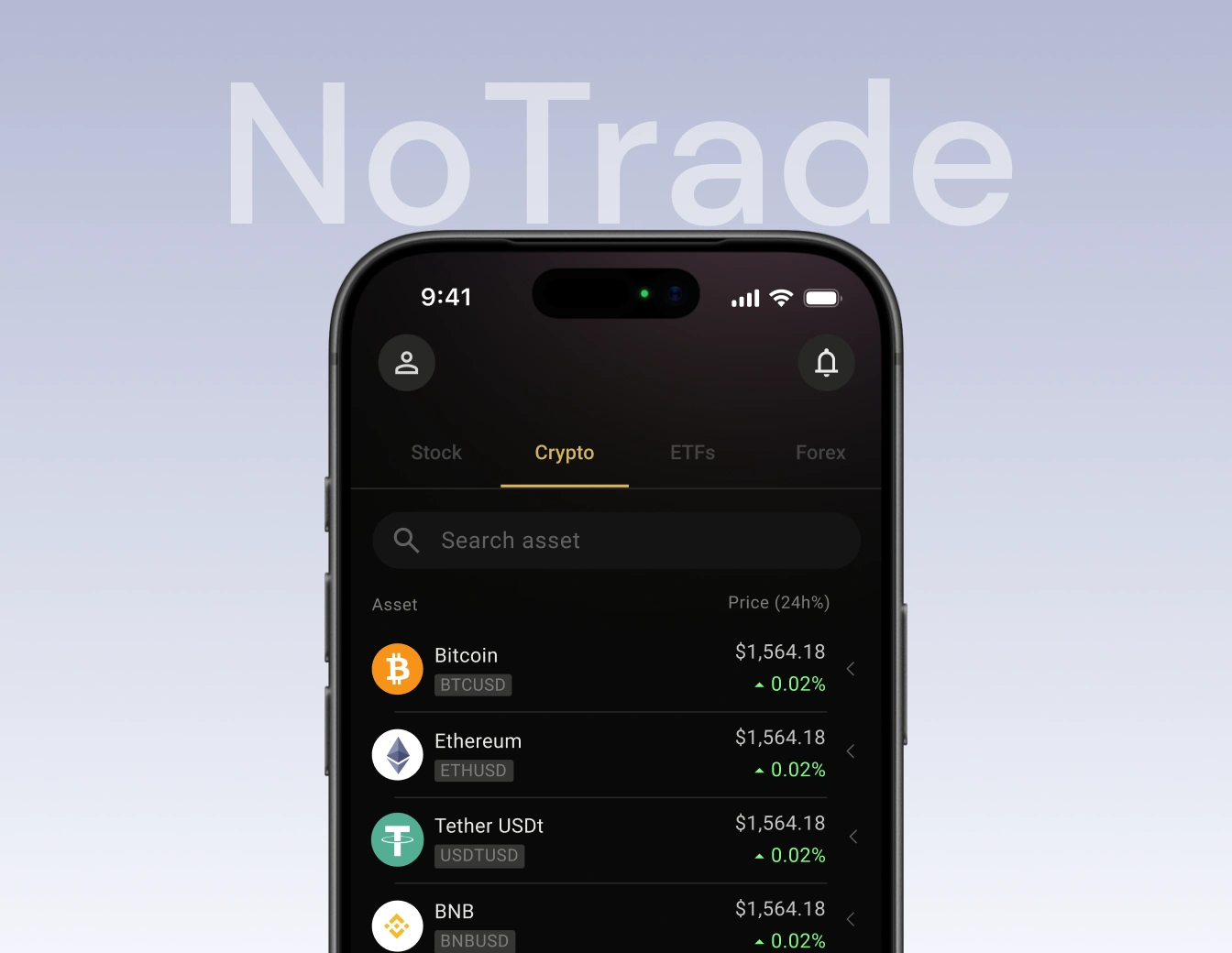
What our clients say
100% Job Success on
Upwork
Reviewed on


100% Job Success

Top Rated Plus
I had the pleasure of working with Meduzzen team, and I can confidently say they are one of the most talented Full Stack Developers I've come across. Their expertise in React and Python is outstanding, seamlessly handling both front-end and back-end development with precision and efficiency.

Full Stack development
Farhan Mahmood
AcademixHub · United Kingdom
Roman completed a Google Maps API project for us and helped with other front-end development work that required Jekyll and Django knowledge. He is responsive and easy to work and communicate with. I am sure we will work again in the future.

Front-End Developer for Google Maps API integration
Nikola Stefanov
Long Tail Marketing Limited · Canada
Great engineer, strong logic when approaching tasks and epics with the ability to bring new ideas and his experience to ensuring each project is built to the best standard.

Senior Back-End Engineer (Python, AWS CDK, FastAPI)
Jakub Lenski
Saber AI · United Kingdom
Very technical developer, helped build a custom Telegram script and additional development work. Will continue to work with – great communication and support. Thanks

Telegram Bot – scripting and automation expert
Tom Curry
Atlanta Group · United Kingdom
Very good communication. Very good web scraping work on a YouTube proxy project with Google Cloud support. I highly recommend Maksym for future web scraping projects.

YouTube Scraper – Production Debugging & DevOps Project
Gil Hildebrand
Supercharger Studio · United States
Working with Mark has been a great experience. He’s a talented developer who communicates tasks clearly and effectively. He takes initiative in solving complex problems and collaborates well with the team. His insights into our software design have been invaluable. Thank you for your dedication and hard work!

Python Expert with Fast API know-How
Emre Isik
skillbyte GmbH · Germany
Extremely experienced and professional freelancer. Hands-on approach with great attention to detail. Delivered high-quality results efficiently and independently. Highly recommended for any project requiring expertise and reliability.

Experienced Python Developer Hotfix Development
George Barsan
Damudo GmbH · Austria
Andrey is a reliable developer that is not afraid to take on any challenging task. He helped me with various n8n and zapier integrations with ghost and sendy and was always professional in his demeanour.

Ongoing dev troubleshooting
Barnaby Nagy
Common Sense UX Ltd · Colombia
Dmytro provided a python script that exactly satisfied my requirements. The code was very clean and logically structured. He made sure it worked in my application. I don't think he could have done a better job.

Full Time: Data Management and Business Analyst
David Greenbaum
OnPlan · United States
Vitaliy was excellent, he went over and above to deliver the project swiftly and provide a high-quality end product. Thank you!

Web Development using web scrapers and data analytics
Georgia Richards
Richello Limited · United Kingdom
An exceptional designer with a great eye for detail and creativity. Consistently delivers high-quality work, meets deadlines, and is a pleasure to collaborate with. Highly recommended!

UI/UX Designs figma
Farhan Mahmood
AcademixHub · United Kingdom
We enjoy working with Kirill very much. He is a reliable and skilled developer.

Developer for ML cloud platform developed in python and node.js
Kim Fanger
elunic AG · Germany
Its a pleasure to work with Andrew, he is a skilled engineer and he always deliver up to the expectations.

Cypress tests automated in github actions
Roch Delsalle
Roch & Cie · France
Working with Yurii has been a real pleasure. He is incredibly professional, responsive, and reliable. Every task was completed with attention to detail, clear communication, and a proactive mindset. What really stood out was his positive attitude, patience, and willingness to go the extra mile to make sure everything was just right. It’s rare to find someone who combines technical skills with high professionalism and kindness. I would highly recommend Yurii to anyone.

WordPress Developer
Ihor Zhabrovets
Amevalue · Ukraine
Comparison Section
Why companies hire full stack developers through Meduzzen
|
Key hiring factors
|

|
Talent Networks
|
Freelance Marketplaces
|
|---|---|---|---|
|
Developer vetting
|
Senior full stack engineer screening
|
Algorithm tests + interviews
|
No platform vetting
|
|
Architecture involvement
|
Senior backend architecture review
|
Depends on developer
|
No architecture support
|
|
Matching speed
|
~48 hours
|
2 days–2 weeks
|
Instant access, slow vetting
|
|
Platform fees
|
No platform fees
|
Placement fees / subscription
|
Transaction fees
|
|
Dedicated developers
|

|

|
|
|
Replacement guarantee
|
|
Depends
|
|
|
Direct communication
|
Direct with developers
|
Platform-managed communication
|
Direct but unmanaged
|
|
Team scaling
|
1 full stack developer → full product team
|
Mostly individual hires
|
Individual freelancers
|
|
Project accountability
|
Shared delivery responsibility
|
Freelancer responsible
|
Client responsible
|
|
Long-term collaboration
|
|
Mostly project-based
|
|
Start working with vetted full stack developers in 48 hours
- No recruitment fees
- Start in 48 hours
- Transparent process.
Remote full stack developer rates
How much does it cost to hire full stack developers in 2026?
| Experience | Meduzzen | Toptal | Upwork | Lemon.io | In-house (US) |
|---|---|---|---|---|---|
| Senior full stack developer | $35/hr | $60-150/hr | $75-100+/hr | $81-140/hr | $148/hr (loaded) |
| Hiring time | 48 hours | 1-3 weeks | 1-4 weeks | 48 hours | 60-142 days |
| Platform fees | None | $500 deposit + $79/mo | 3-10% client fee | ~40-60% embedded markup | N/A |
| Hidden costs | None | 30-50% markup in rate | Contract initiation fee | Minimum hour commitments may apply | Benefits, recruiting ($26-44K), overhead |
Hiring Guide
How to hire full stack developers in 2026
Contents
The label “full stack developer” is everywhere. The actual skill set is not.
In 2023, 33.48% of developers worldwide called themselves full stack on the Stack Overflow survey (76,872 respondents, 185 countries). By 2025, that share had dropped to 27% (Stack Overflow 2025 survey). The role is not disappearing. It is splitting. Junior developers claim the title to get interviews. Platforms inflate it to fill pipelines. What you find when you interview them is frequently a React developer who has run a few Node.js scripts, or a Django engineer who has never touched a production frontend.
This guide is written for one person: the founder or operator who needs to hire full stack developers in the next 30 days, has a real budget, has never run a structured technical interview, and cannot afford to waste three months and $200,000 on the wrong hire.
By the end you will know exactly what to look for, how to evaluate it, what it costs, and how to avoid the mistakes that kill most processes when companies try to hire full stack developers.
What is a full stack developer
A full stack developer owns the entire delivery chain of a web application, from the interface a user touches to the database that stores their data. They write frontend code, build backend APIs, design database schemas, configure deployment pipelines, and debug across all of it.
The word “full stack” describes ownership, not omniscience. A senior full stack developer is not equally expert in every layer. They have vertical depth in one area, typically frontend or backend, and enough horizontal competence across the rest to ship features end-to-end without handing off to a specialist for every task.
This is what makes them valuable for growing companies. You are not paying for 40 hours a week of pure React or pure Python. You are paying for someone who can take a product requirement from brief to deployed without creating bottlenecks. That is why companies hire full stack developers instead of assembling specialist teams for early-stage products.
The three layers of full stack work
Frontend. The visual layer users interact with. HTML, CSS, and JavaScript are the foundation. In 2026, React dominates with roughly 123 million weekly npm downloads (npmcharts.com, April 2026), more than seven times the combined weekly downloads of Vue and Angular. TypeScript is now the standard: 40% of developers write exclusively in TypeScript (State of JavaScript 2025, 20,000+ respondents). A full stack developer who only knows JavaScript without TypeScript is working with a 2020 skill set.
Backend. Server-side logic, APIs, and data processing. Node.js remains the most common runtime for full stack JavaScript work. Python with FastAPI or Django dominates data-heavy and AI-integrated applications. The backend is where most full stack developers have their vertical depth, and where generalists without that depth create the most expensive failures.
Data layer. Database design, queries, and optimization. PostgreSQL is the current default for most modern applications. According to the Stack Overflow 2025 Developer Survey, it ranks first for developer desirability for the third consecutive year. Any full stack developer you hire needs to understand relational database design, indexing, and query optimization, not just ORM usage.
Read more about modern web development tools in 2026
Full stack developer vs specialist: how to decide
Before you write the job description and start to hire full stack developers, settle this question first. It is the most consequential decision in the entire process.
When the data favors generalists
The 2024 DORA State of DevOps Report, based on data from 39,000 technology professionals, found that small autonomous cross-functional squads of five to seven people consistently outperform larger specialized departmental teams. Elite teams deploy 182 times more frequently, have 127 times faster lead time, and recover from incidents 2,293 times faster than low performers. The data favors generalists who can own features end-to-end without handoffs.
Where generalists fail
Full stack generalists have a hard ceiling at scale. A case documented by Sadique Ahmed (Medium, August 2025) describes a Series A HealthTech startup that built a HIPAA-compliant patient management platform using only generalist full stack developers. After 18 months, the system collapsed under production load and security vulnerabilities were discovered. The Series A funding was depleted. The failure was not a React problem or a Python problem. It was a depth problem.
The decision rule
Hire full stack when: you are under 15 engineers, speed to market matters more than optimization, you need one person to own a feature end-to-end, or you are building an MVP with a focused scope.
Hire specialists when: your system handles high concurrency or financial transactions, you need deep security expertise (healthcare, fintech, legal), your database scale requires genuine query optimization expertise, or you have already scaled past 15 engineers and need platform or infrastructure depth.
For most founders reading this guide, the answer is full stack. You are scaling a product, not running an infrastructure team. The risk is not hiring a generalist. The risk is hiring someone who calls themselves full stack but cannot actually function across the entire stack under pressure. The evaluation section later in this guide shows exactly how to separate the two when you hire full stack developers.
More on choosing between staff augmentation, freelancers, and in-house teams
Most in-demand full stack developer skills in 2026
The technology landscape has shifted significantly since 2022. If you hire full stack developers based on 2022 job descriptions, you will get 2022 hires. Here is what 2026 actually requires.
TypeScript proficiency
40% of developers write exclusively in TypeScript according to the State of JavaScript 2025 survey. Only 6% still use plain JavaScript exclusively. A candidate who cannot work confidently with generics, utility types, and strict mode is below the current market standard.
More on why TypeScript became the JavaScript default
Modern frontend tooling
React remains the dominant UI library, but the surrounding tooling has shifted. According to State of JavaScript 2025, Vite has 98% developer satisfaction versus Webpack’s 26%. A candidate still configuring Webpack for new projects is using a legacy tool for modern work.
Async backend competency
The most common and most expensive category of full stack failure is synchronous database calls inside asynchronous frameworks. A developer who uses psycopg2 inside a FastAPI handler, or executes synchronous I/O in a Node.js event loop, will not break your application on day one. They will break it under real production load. Every full stack developer you hire must understand async/await patterns, connection pooling, and non-blocking I/O as working practice, not theory.
AI integration competency
According to the Dice 2025 Tech Jobs Report, 53% of US tech job postings now require or strongly prefer AI or machine learning skills. The Stack Overflow 2025 Developer Survey reports that 84% of developers use AI tools, but only 29% trust the accuracy of AI-generated code, down from 40% in 2024. A full stack developer who cannot audit AI-generated code is a liability. When you hire full stack developers in 2026, AI competency is not a bonus. It is a baseline.
Skills that command salary premiums
According to Lightcast’s July 2025 analysis of 1.3 billion job postings, AI skills carry a 28% salary premium, roughly $18,000 annually. High-premium areas include RAG architecture and vector database integration (15-25% premium), LLM API orchestration, and agentic workflow automation.
LinkedIn’s 2026 Jobs on the Rise report ranks AI Engineer as the fastest-growing job title in the US.
Database expertise
PostgreSQL handles relational data with ACID compliance, supports JSON columns for flexibility, and has the deepest scaling ecosystem. Any senior full stack developer should be able to design a normalized schema, write optimized queries, and explain when they would choose NoSQL over relational.
How much does it cost to hire a full stack developer
Founders who plan to hire full stack developers usually anchor on the salary number. That number is roughly half the actual cost. Here is the full math.
Full stack developer salary by source (US, April 2026)
| Source | Average | Methodology |
|---|---|---|
| Salary.com | $153,312 | Employer-reported HR data |
| Built In (7+ years) | $174,485 | Filtered employee responses |
| Indeed | $134,900 | Aggregated job postings |
| Levels.fyi (Big Tech) | $313,000 base | Verified W2s and offers |
The realistic benchmark for most founders hiring their first senior full stack engineer is $150,000-$175,000 base for a US-based hire.
Salary by US city
| City | Senior salary range |
|---|---|
| San Francisco | $185,000-$195,000 |
| New York City | $170,000-$185,000 |
| Seattle | $155,000-$175,000 |
| Austin | $130,000-$160,000 |
Sources: Built In, Indeed, Salary.com (April 2026 data)
Salary by global market
| Market | Senior monthly | Senior hourly |
|---|---|---|
| US in-house | ~$13,000 | ~$87 (loaded) |
| Ukraine | $5,000-$6,500 | $30-$39 |
| Poland | $5,800-$6,900 | $65-$90 |
| India | $1,000-$2,000 | $28-$55 |
Sources: DOU.ua Winter 2026 (Ukraine, 4,575 developers); NoFluffJobs (Poland); PayScale (India)
The fully loaded cost of a US in-house hire
The Bureau of Labor Statistics ECEC report (December 2025, published March 2026) shows that for civilian workers, benefits represent 31.3% of total compensation. Applied to a $180,000 base, this means roughly $64,000 in employer-paid taxes, insurance, retirement, and paid leave. Add recruiting and onboarding:
| Line item | Cost |
|---|---|
| Base salary | $180,000 |
| FICA, insurance, retirement, leave | $64,165 |
| Recruiting agency fee (20%) | $36,000 |
| Onboarding ramp (3-6 months) | $60,000 |
| Equipment and tooling | $4,000 |
| Total first-year cost | ~$344,000 |
The cost of one failed hire
SHRM’s framework for senior specialized roles puts the cost of a failed hire between 50% and 200% of annual salary. For a $180,000 hire who leaves at 3 months:
| Cost category | Amount |
|---|---|
| Salary and benefits paid (3 months) | $65,502 |
| Recruitment fees (non-refundable) | $36,000 |
| Lost productivity (ramp-up waste) | $60,000 |
| Replacement hiring cost | $36,000 |
| Total tangible loss | $197,502 |
Three cost scenarios
12-month team of three senior developers. US in-house: $1,032,000. Toptal at $110/hr: $634,000. Upwork senior at $90/hr: $518,400. Meduzzen at $35/hr: $201,600.
6-month MVP with two developers. US in-house: $324,000. Toptal: $211,000. Upwork: $172,800. Meduzzen at $35/hr: $67,200.
Single developer, 6 months. Meduzzen: $33,600. That is less than the recruiting agency fee alone for a single US-based hire.
How the options compare
| Option | 6-mo cost (2 devs) | Vetting | Dedicated | Time to start |
|---|---|---|---|---|
| US in-house | $324,000 | You run it | Yes | 60 days avg |
| Toptal | $211,000 | Platform | Partial | 1-2 weeks |
| Upwork | $172,800 | None | No | Days |
| Meduzzen | $67,200 | Pre-screened | Yes | 48 hours |
Meduzzen rate: $35/hr. Toptal rate: $110/hr. Upwork senior: $90/hr. All figures use 960 hours per developer per six months.
If a US in-house hire costs $344,000 in year one and Meduzzen delivers the same senior engineer at $35/hr with pre-screening included, the decision is not complex. Book a discovery call with Meduzzen and we match you with a vetted senior full stack developer within 48 hours.
Hiring models for full stack developers
You have four ways to hire full stack developers. Each has a real use case and a real failure mode.
In-house hire
Right for companies past Series A with recurring engineering needs, stable product direction, and the management bandwidth to onboard properly. Wrong for MVPs, short sprints, and companies under 15 engineers.
Freelance marketplace
Right for short, well-scoped projects with clear deliverables. Wrong for long-term product development where context accumulation matters. Toptal embeds a 30-50% markup in the rate the client sees. Upwork at the senior tier runs $75-100+/hr.
Development agency
Right for large complex projects with defined scope. Wrong for startups that need product ownership and iteration speed.
Staff augmentation
Right for companies that need senior engineers working as dedicated team members, without the overhead of in-house employment. The developer integrates into your workflow, attends your standups, uses your tools, and is accountable to your product roadmap. Meduzzen operates on this model: senior full stack developers at $35/hr, matched in 48 hours, no platform fees.
The distinction matters for anyone who wants to hire full stack developers at scale. A marketplace connects you to available developers. When you hire full stack developers through staff augmentation, you get vetted engineers who function as dedicated team members. The accountability model is fundamentally different.
Read more on dedicated development team structures
The full stack developer market in 2026
If you plan to hire full stack developers in 2026, the supply-demand picture is paradoxical. There are more developers than ever, and top talent is harder to reach than ever.
The velocity paradox
According to Greenhouse’s 2025 recruiting benchmarks (6,000 companies, 640 million applications), the average time-to-fill for a technical role in 2025 was 59.67 days, a 37% increase from 43 days in 2022. The top 10% of candidates are off the market within 10 days.
Your 60-day hiring process is structurally designed to miss the best people. Every week of delay when you hire full stack developers is a week where the top 10% accepts someone else’s offer.
The application flood
Applications per recruiter increased 412% between 2022 and 2025 according to Greenhouse, while the average recruiting team shrank 56%. More noise, fewer processors, slower decisions.
Offer acceptance rates
The HackerRank 2026 survey (39,000+ developers, reported via Birjob) shows that the offer acceptance rate for technical roles has dropped from 78% in 2022 to 69% in 2026. One in three candidates who reach offer stage declines.
The four-interview ceiling
Google’s internal research, documented in Work Rules! by Laszlo Bock, found that four interviews provide 86% confidence in a hiring decision. Each additional interview after four adds approximately 1% of predictive power while extending time-to-offer by 5-7 business days.
Ukraine market context
The DOU Winter 2026 survey (4,575 developers, November-December 2025) shows senior developer salaries have declined approximately $200 year-over-year across all company types except startups. This is supply-side market saturation at the senior tier. For Western companies accessing Ukrainian talent in 2026, it is an unusually favorable market.
How to evaluate full stack developers
Most companies that hire full stack developers fail not because the question sets are wrong, but because they are measuring the wrong things.
If you are a non-technical founder who has never run a structured technical interview, you cannot run these tasks alone. You need a technical advisor in the room, or a partner who pre-screens candidates against these evaluations before you speak to anyone. Meduzzen does this by default. Every developer we place has already passed these five tasks. You interview only people who cleared them.
What actually predicts performance
The Sackett et al. (2022) meta-analysis published in the Journal of Applied Psychology (Vol. 107, No. 11) overturned the decades-old Schmidt and Hunter (1998) consensus on what predicts job performance:
| Method | Validity (r) |
|---|---|
| Structured interviews | 0.42 |
| Work sample tests | 0.33 |
| Cognitive ability tests | 0.31 |
| Unstructured interviews | 0.19 |
| Years of experience | 0.07-0.08 |
Years of experience explains less than 1% of job performance variance. Structured interviews are twice as predictive as raw cognitive ability.
Why LeetCode is obsolete
Modern AI coding assistants solve the majority of standard coding tasks on first attempt. An algorithm test in 2026 measures how well a candidate can prompt an AI, not whether they can architect production systems. What does predict performance: tasks that require cross-stack reasoning, system design under real constraints, and debugging problems that cannot be solved by generating code.
Full stack developer interview questions: five tasks that work
These five tasks, run in a four-interview process, give you 86% confidence in 12-14 business days.
Task 1: Portfolio architecture trade-off (15-20 min, live). Ask: “Walk me through an application you built from scratch. If you had a month to rebuild it today, what would you change about the architecture and why?” Strong answer names specific technology choices with trade-off reasoning across frontend and backend. Weak answer lists technologies without explaining why.
Task 2: Async architecture and concurrency (15-20 min, live). Ask: “Our backend is a Python FastAPI application. We’re seeing timeouts under load. Walk me through what you would look for.” Strong answer checks whether database calls use async drivers (asyncpg vs psycopg2) and identifies synchronous blocking inside async handlers. Weak answer jumps to “add more servers.”
Task 3: Secure API design (15-20 min, live). Ask: “How would you store a user’s password and design the authentication flow from the frontend to the database?” Strong answer mentions bcrypt or Argon2 hashing, salting, HTTPS-only transmission, and token-based session management. Weak answer mentions encryption without hashing.
Task 4: Legacy debugging (60-90 min, take-home). Provide a multi-file repository where an API endpoint times out under load. Ask the candidate to identify the root cause and propose a fix before writing any code. Strong answer traces the issue from frontend through API to database. Weak answer adds caching without understanding the underlying problem.
Task 5: System design for a dashboard (45 min, live). Ask: “Design the data pipeline, backend API, and frontend for a real-time analytics dashboard.” Strong answer starts with the data model and works outward. Weak answer starts with “I’d use Chart.js” without defining what data feeds it.
Interview process structure
| Stage | Task | Format | Duration |
|---|---|---|---|
| 1. Screening call | Task 1 (portfolio) | Live video | 30 min |
| 2. Take-home | Task 4 (debugging) | Async | 60-90 min |
| 3. Technical deep-dive | Tasks 2 + 3 | Live video | 60 min |
| 4. System design + culture | Task 5 + behavioral | Live video | 60 min |
GitHub signals to look for
Strong signals: pull requests that modify both backend API controllers and frontend state in the same commit, database migration files alongside application code, README files that explain architecture.
Red flags: repositories with only frontend code from someone claiming full stack, active GitHub profiles with no database schemas or backend routes anywhere.
More on evaluating developer skill across stacks
Do not have a technical co-founder to run these evaluations? Meduzzen pre-screens every candidate against these five tasks before you interview anyone.
Five mistakes that kill your ability to hire full stack developers
Mistake 1: Treating “full stack” as a binary skill
64.2% of candidates admit to having lied about skills on their resume at least once (StandOut CV, 2,100 respondents). The fix is not more interview rounds. It is evaluation tasks that require cross-stack demonstration.
Mistake 2: Optimizing for speed over structure
The average hiring process takes 59.67 days. Top talent is off the market in 10. A structured four-interview process completed in 12 days captures better talent than an unstructured six-interview process stretched over six weeks.
Mistake 3: Filtering on years of experience
Experience explains less than 1% of job performance variance per Sackett 2022. Test the skills, not the tenure.
Mistake 4: Using algorithm tests as the primary evaluation
Modern AI coding assistants solve most standard coding challenges on first attempt. A candidate who passes your LeetCode test has demonstrated they can prompt an AI. Neither predicts whether they can debug a production failure.
Mistake 5: Missing the soft skill failure mode
Leadership IQ’s study of 20,000 hires found that 46% of new hires fail within 18 months. Only 11% of those failures are technical:
| Failure reason | % of failures |
|---|---|
| Cannot accept feedback | 26% |
| Emotional intelligence | 23% |
| Motivation | 17% |
| Temperament | 15% |
| Technical skill gaps | 11% |
Where to find full stack developers
Meduzzen: staff augmentation built for this problem
If you need a vetted senior full stack developer working inside your team within two weeks, staff augmentation is the right model. Meduzzen matches vetted senior full stack developers at $35/hr, within 48 hours, with no platform fees and no markup on the rate. Every developer has already passed the five evaluation tasks in this guide before you speak to them. You do not run the technical screen. We do.
Book a discovery call with Meduzzen
Vetted talent platforms
If staff augmentation is not the right fit, vetted talent platforms are the next best alternative. The key difference is that someone other than you has already filtered the candidate pool. Platforms vary on markup model, acceptance rate, and how dedicated the developer is to your engagement.
Direct sourcing
For founders with 30-60 days and a technical co-founder to run evaluations, direct sourcing through communities produces high-fit candidates at zero platform cost. Senior engineers post in Reddit r/ExperiencedDevs and r/webdev. GitHub contributors to open-source projects in your stack are pre-qualified by their public work.
The tradeoff: direct sourcing puts you back into the 59-day average hiring timeline, competing against faster processes when you hire full stack developers through the same channels as everyone else.
Read more on hiring software developers for startup success
Why companies hire remote full stack developers from Ukraine
According to the IT Ukraine Association’s 2026 study, Ukraine has 305,000 active IT professionals working across 2,243 companies. The sector generated $7.85 billion in 2025, equivalent to 41.6% of Ukraine’s total national service exports.
Cost
Senior full stack developers at $5,000-$6,500/month (DOU Winter 2026 survey). Senior rates declined approximately $200 year-over-year due to market saturation at the senior tier. For 2026, this is a buyer’s market. Companies that hire full stack developers from Ukraine in 2026 access senior talent at rates that peaked in 2023 and have not recovered.
Time zone
Ukraine operates on UTC+2/3 providing 2-3 hours of morning overlap with US Eastern time and 7-8 hours of full overlap with Western Europe.
English proficiency
80% of Ukrainian IT specialists hold B2 (Upper-Intermediate) or higher English proficiency (DOU Portrait survey). Ukraine scores 526 on the EF English Proficiency Index.
Continuity
Over 80% of Ukrainian IT companies preserved nearly 100% of their international contracts through the ongoing conflict (Grid Dynamics analysis). Approximately 96% of developers maintained employment (DOU survey).
How Ukraine compares
| Market | Senior hourly | US East overlap |
|---|---|---|
| Ukraine | $30-39 | 2-3 hours |
| Poland | $65-90 | 3-4 hours |
| India | $28-55 | <1 hour |
| Philippines | $22-40 | 0 hours |
Read more on hiring developers from Ukraine
How to get started
Define the scope first
“Full stack developer” is not a job description. What are the three most important features they will build in the first 90 days? What is the existing tech stack? Twenty minutes of upfront definition eliminates three weeks of misaligned applications. The companies that hire full stack developers fastest are the ones that define scope before they post.
Run a structured interview process
Four rounds, 12-14 business days from first call to offer, 86% confidence in the hiring decision.
Price it correctly
The true first-year cost of a US in-house hire is $300,000-$350,000. If that is not in your budget, staff augmentation at $35/hr for a dedicated senior engineer is not a compromise. It is the financially rational decision.
Move immediately on strong candidates
Top candidates accept competing offers while slower processes are still scheduling second interviews.
Read more on developer onboarding for startup founders and CTOs
Hire full stack developers with Meduzzen
Meduzzen helps companies hire full stack developers through staff augmentation. We have roughly 150 engineers, headquartered in Odesa with EU offices. We are not a marketplace. We do not mark up rates. We do not charge a platform fee.
Within 48 hours of your discovery call, we send you a shortlist of pre-screened senior full stack developers matched to your stack. Every developer has already passed the five evaluation tasks in this guide. You interview only people who cleared a structured technical evaluation.
Your developer joins your team at $35/hr. They attend your standups. They use your tools. They ship on your product roadmap.
When you hire full stack developers through Meduzzen, the 59-day average hiring timeline does not apply. Neither does the $344,000 first-year cost of a US in-house hire.



Questions about hiring full stack developers
Hiring navigation
Hire developers by role, technology, and service
Hire developers by role:
Hire developers by technology:
Why Choose Meduzzen
A faster, safer way to hire full stack developers
- 48
- Developer onboarding
- 0
- Replacement guaranteed
- $35
- Senior full stack developers
- 5
- Average developer experience