


In this article
Product design is not decoration. It is the foundation that defines how a product works, scales, and delivers value. When design is reduced to visuals, products may look better, but results rarely improve.
There is a moment in a designer’s career that becomes more painful than deadlines or endless revisions. It is the moment when the profession itself is reduced to something superficial.
“Draw it.”
“Just tweak it.”
“Make it look nice.”
Most of the time, these words come without bad intent. They exist because people still confuse design with visuals. In that confusion, the most important thing disappears. A designer is not an artist, and design is not about creating pictures.
Product design is the foundation of a product, shaping how it works, scales, and delivers real value.
Every successful web or mobile product begins long before screens and colors appear. It begins with understanding who the product is for, what problem it solves, the context in which it is used, and why a user should choose it over alternatives. This is where product design starts, and this is where a designer becomes essential.
When a business approaches a designer, the issue is almost never an “ugly interface.” The real problems run deeper. Users fail to reach key actions. The product feels complex and unclear. Trust does not form. Metrics do not grow.
Visual changes alone cannot solve these problems. They are structural by nature, and product design exists to address structure, logic, and flow.
Why Execution-Only Design Fails Products
I once worked with a company that clearly demonstrated how differently teams can interpret the role of a designer. On the surface, everything looked stable. Tasks were clear. Conditions were reasonable. Work felt predictable.
Very quickly, it became obvious that the company did not expect thinking. It expected execution.
Generate screens.
Move elements.
Follow instructions without questioning them.
When I proposed alternative solutions, explained logic, and spoke about user pain points, UX principles, heuristics, and usage scenarios, the team judged everything through a purely visual lens. Do we like it or not. Does it look good or not.
No one showed interest in how the product actually worked or why it failed to reach its goals.
Design Reduced to Execution
As a result, the product stayed in the same place. Problems did not disappear. They only changed form. One week we adjusted icons. The next week buttons. Later, colors. Metrics remained flat. Users stayed confused. The product did not improve.
Most founders recognize this pattern immediately. A redesign takes months. Design, development, QA. The interface looks cleaner. The release goes live. Then nothing happens. Conversion stays the same. Churn does not move. Support tickets continue.
Teams start discussing another redesign, not because the product evolved, but because no one knows what else to change. By that point, time, budget, and energy are already gone.
The real problem was never visual. The product logic was never questioned early enough.
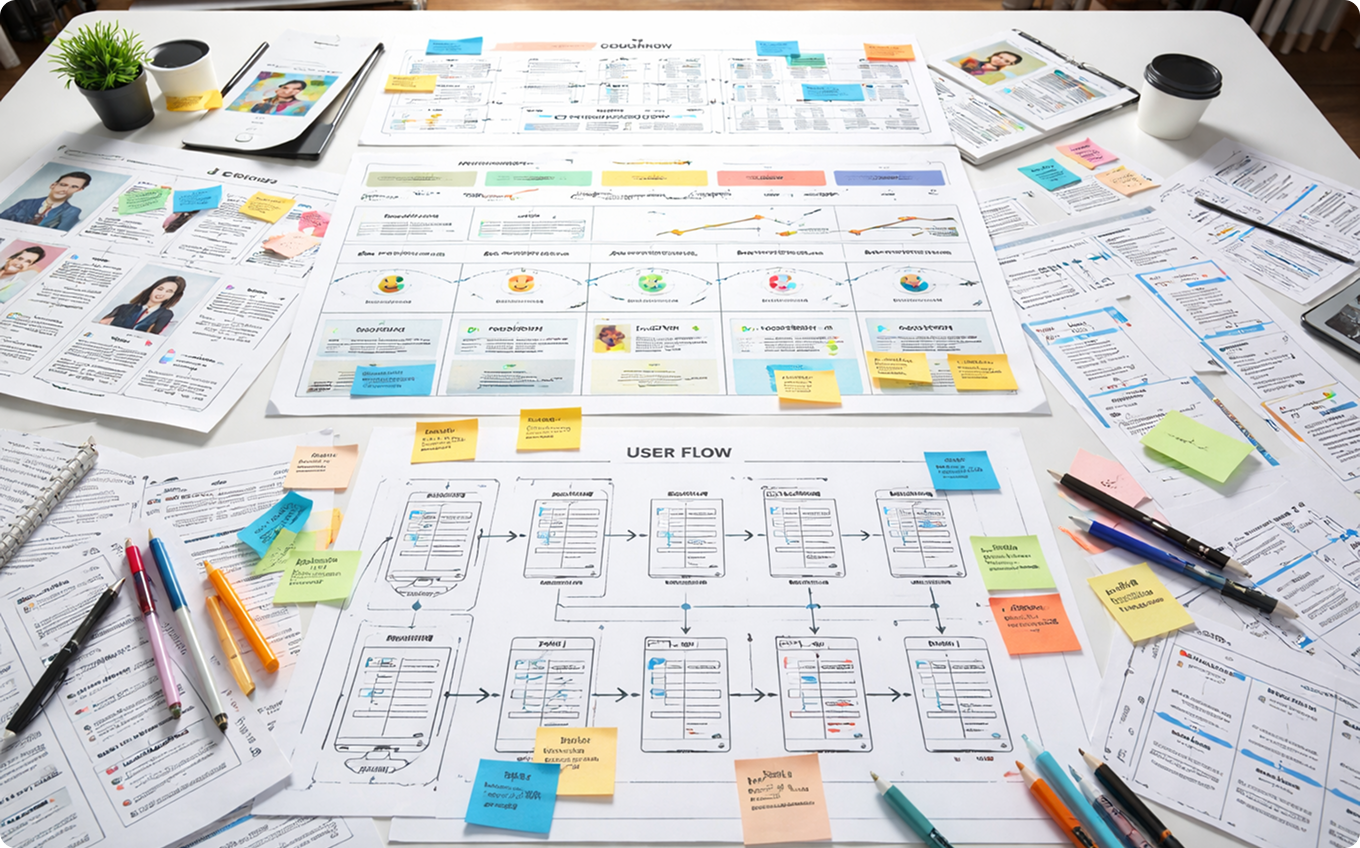
Why Metrics Do Not Move After Redesigns
The issue was never an icon or a button shape, even though details matter. The real problem was structural. The product was built around personal preferences instead of user scenarios and product goals.
Taste drove decisions instead of behavior.
In this environment, a designer stops being a product specialist. They lose the ability to influence decisions, build logic, and take responsibility for outcomes. Their role shrinks to the outer layer of the product.
This type of collaboration does not create open conflict. It creates exhaustion. The root cause stays visible and untouchable.
Eventually, I chose to leave. Financially, it was not the safest decision. The conditions were comfortable, and staying would have been easy. But I did not want my name associated with a product where design existed only as decoration.
For me, design means responsibility. Responsibility for the product, the result, and how people actually use it.
When Design Becomes the Foundation
The real value of a designer lies in the ability to think. It means asking questions, challenging assumptions, and proposing alternatives. At the same time, a designer must see the product through the user’s eyes while understanding business goals.
Design as a System of Decisions
At the design stage, teams decide whether a product will feel intuitive or mentally exhausting. They decide whether users move forward confidently or hesitate at every step.
Cosmetic changes later cannot fix these issues. Teams must address them early, or they become permanent.
Design is not a set of screens. It is a system of decisions. Buttons, copy, states, and transitions are not decorative. Together, they form a mechanism. When one part fails, the entire product suffers.
When teams treat design as the foundation, it directly affects business results. Trust, retention, and conversion become predictable instead of accidental. Design stops being subjective and becomes measurable. It either works or it does not.
That is why designers cannot be treated as task executors. Product design requires analysis, ownership, and responsibility. When teams add it as an afterthought, products may look good, but they rarely last.
About Choice
With experience comes a simple realization. The value of design is not measured by the number of screens or how trendy they look. It becomes visible when a product works on its own, without explanations, constant fixes, or users having to think harder than necessary.
Design is always a choice.
It sits between speed and correctness.
It forces a decision between a quick fix and a solid foundation.
Ultimately, it separates short-term comfort from long-term viability.
That is why design should never be the final stage of product development. A designer should be involved the same way an architect is involved in building a house. Architects do not decorate. They calculate structure, load, and how elements interact.
When these decisions are correct, the building stands without constant repairs.
Products follow the same logic.
A designer lays the foundation of a product: its structure, scenarios, interaction logic, and the user’s path to results. When this foundation is solid, the product grows, scales, and reaches its goals. When it is not, no redesign will save it.
I do not believe in design as decoration.
And I do not work with products where designers are expected to deliver visuals only.
For me, product design is the base. A way to create products that do not just look good, but work, bring value to users, and deliver real business results.
If you want to build a product that lasts, design must be there from the beginning. The foundation determines everything that follows.